Geomechanics, Streamlined.
© 2026 Geomechanics.io. All rights reserved.
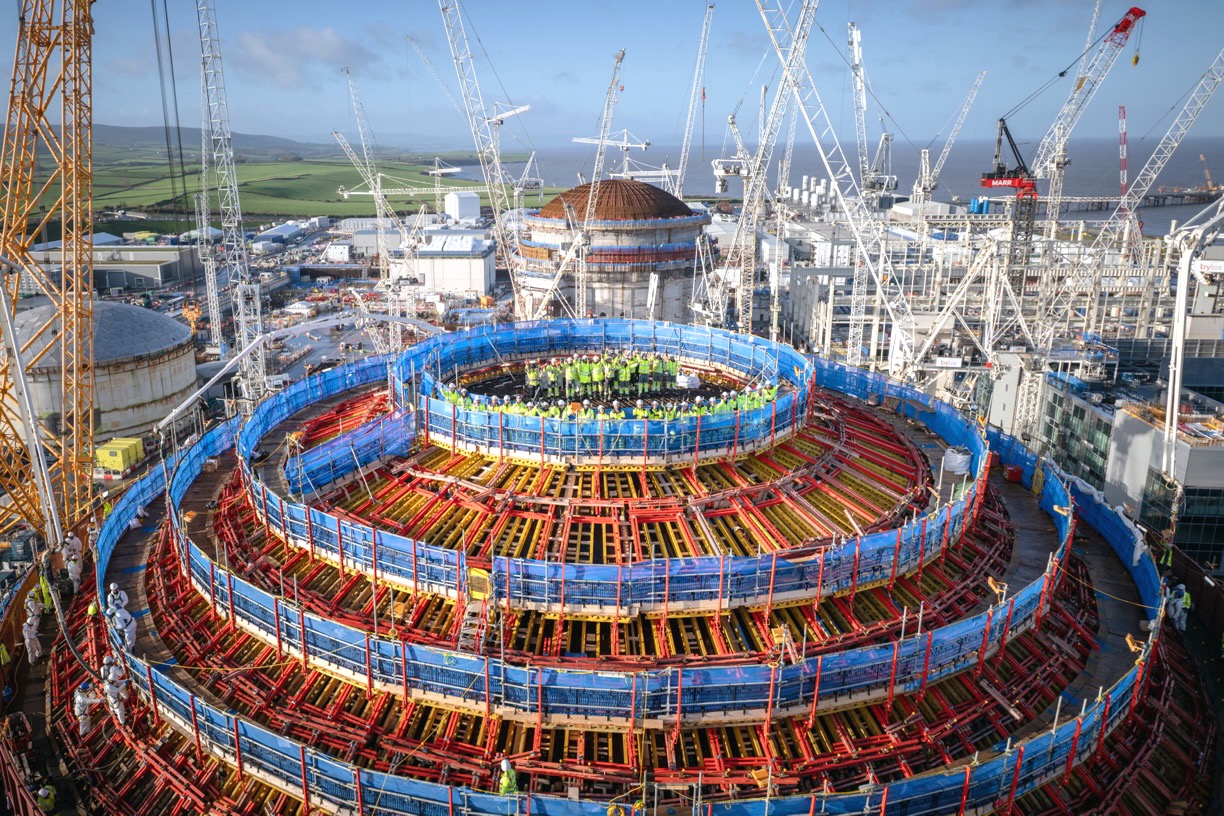
Peri UK has delivered a bespoke formwork system for the Hinkley Point C reactor domes, enabling multi-directional curved concrete pours about 45 m above ground without conventional through-ties due to the inner 6 mm airtight steel shell. The solution combined Vario formwork with 199 custom panels, Rundflex transition panels, SCS Starter Brace with 550 Strongbacks, and reconfigured SB platforms forming 5 m-wide horizontal working decks, all anchored via special 45° adapters to carry fresh concrete and equipment loads. Extensive 2D-to-3D digital modelling and precise anchor coordination around dense rebar grids cut Unit 2 platform installation to under 14 days and reduced on-site redesign.
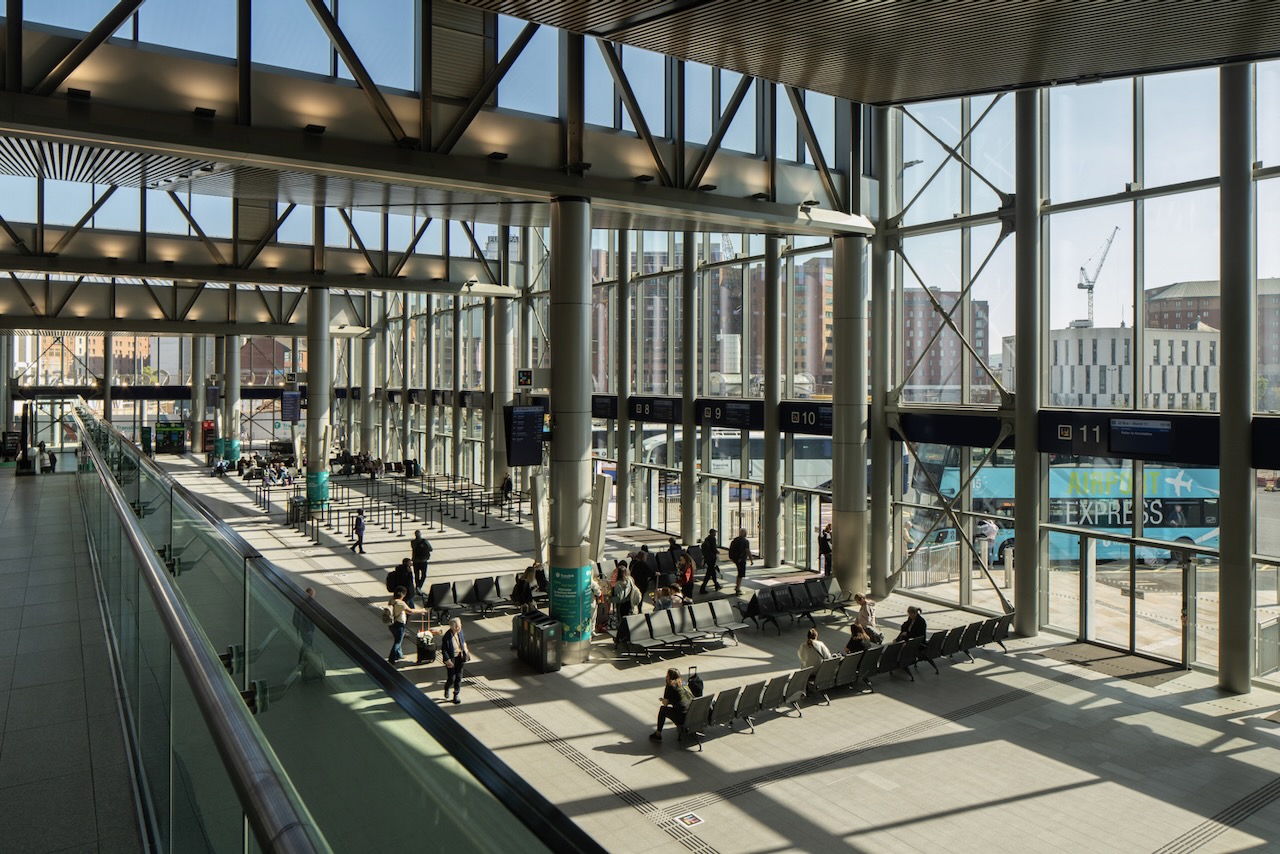
Pyroguard and Schüco have supplied more than 400 m² of Pyroguard Protect fire safety glass integrated into Schüco FW 50+ FR 60 curtain walling for Belfast’s new £340m Grand Central Station, designed by RPP and delivered by Carey Glass and specialist contractor Williaam Cox. The glass specification, Pyroguard Protect T-EI60/25-3, provides 60 minutes’ fire resistance while allowing large pane sizes and uninterrupted sightlines across multiple façades. As Ireland’s largest integrated transport hub, designed for up to 20 million passenger journeys a year, the station’s fire strategy depends on combining this EI60 performance with high natural light, thermal and acoustic control.
McPhillips has completed the £4.23m Talbot Park scheme in Kidderminster, replacing a stepped access route between Worcester Street and Bromsgrove Street with a fully landscaped community space funded by the Government’s Future High Streets Fund under an NEC4 Option A contract. Works introduced levelled routes with improved disabled access, a dedicated play area, LED lighting, new paving, extensive soft landscaping and street furniture in a steeply sloping town centre site with deep drainage infrastructure. Construction had to manage complex legacy ground conditions from previous demolitions, buried concrete blocks and concurrent works on a new National Grid substation, but finished on programme and to budget.
Strabag and Group company Züblin have secured the design-and-build structural works for the ABS Gäubahn Nord/Pfaffensteig Tunnel in south-west Germany, centred on an 11km twin-bore rail tunnel linking Stuttgart Airport station directly to the Gäubahn line towards Switzerland. About 9.8km will be driven by two TBMs, with conventional tunnelling for the A8 motorway undercrossing and airport connection, plus a 240m cut-and-cover section, retaining structures, railway underpasses and a grade-separated crossing. A 3km surface section will be upgraded and partially realigned for 200km/h operation, delivered under an integrated project delivery model with Ed. Züblin, Wayss & Freytag and Strabag AG sharing tunnelling, structural and earthworks packages.
Offsite timber frame manufacturer Donaldson Timber Systems has created a new UK-wide head of technical role and appointed long-serving engineer Grant Sanderson, who joined the firm in 2015 and became engineering manager in 2020. Sanderson, a Napier University civil engineering graduate with nearly 20 years’ experience including offshore oil and gas jacket and topside fabrication support, will lead technical coordination, engineering, design development and project governance from tender through delivery. The move consolidates technical oversight across Donaldson’s network of manufacturing and technical centres, signalling tighter control of timber frame design quality and compliance.
L&Q has appointed Cardo as a delivery partner on its 15‑year, £3bn Major Works Investment Programme, which covers all L&Q rented homes and communal areas in mixed‑tenure blocks. Cardo will focus initially on fire remediation from 2026/27, then wider planned works including mechanical and engineering upgrades, fire safety works, and energy efficiency measures to lift all homes to at least EPC C through insulation and other fabric improvements. More than 21,000 homes have already been upgraded, with Cardo joining nine existing partners including Kier Places, Morgan Sindall Property Services and Wates Property Services.
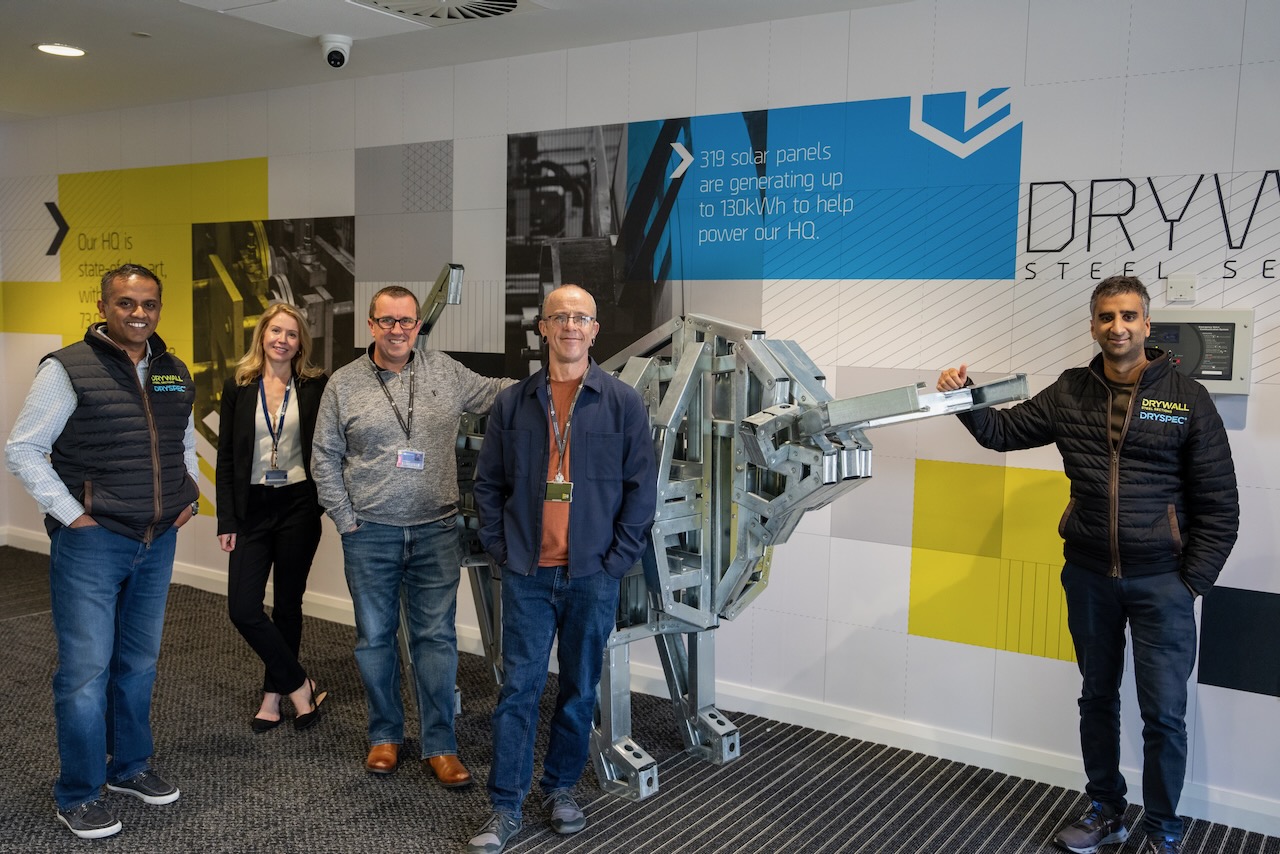
The University of Wolverhampton has begun a Knowledge Transfer Partnership with Drywall Steel Sections Ltd to develop AI-powered tools for designing and costing light gauge steel framing and drywall systems. Current manual take-off and pricing workflows can take several weeks and are often unrecoverable pre-contract costs, while the planned digital system aims to cut this to a few hours and improve quantity and cost accuracy. For contractors and designers, faster, more reliable steel stud and board layouts could tighten bid margins, reduce abortive design effort and support more standardised detailing.
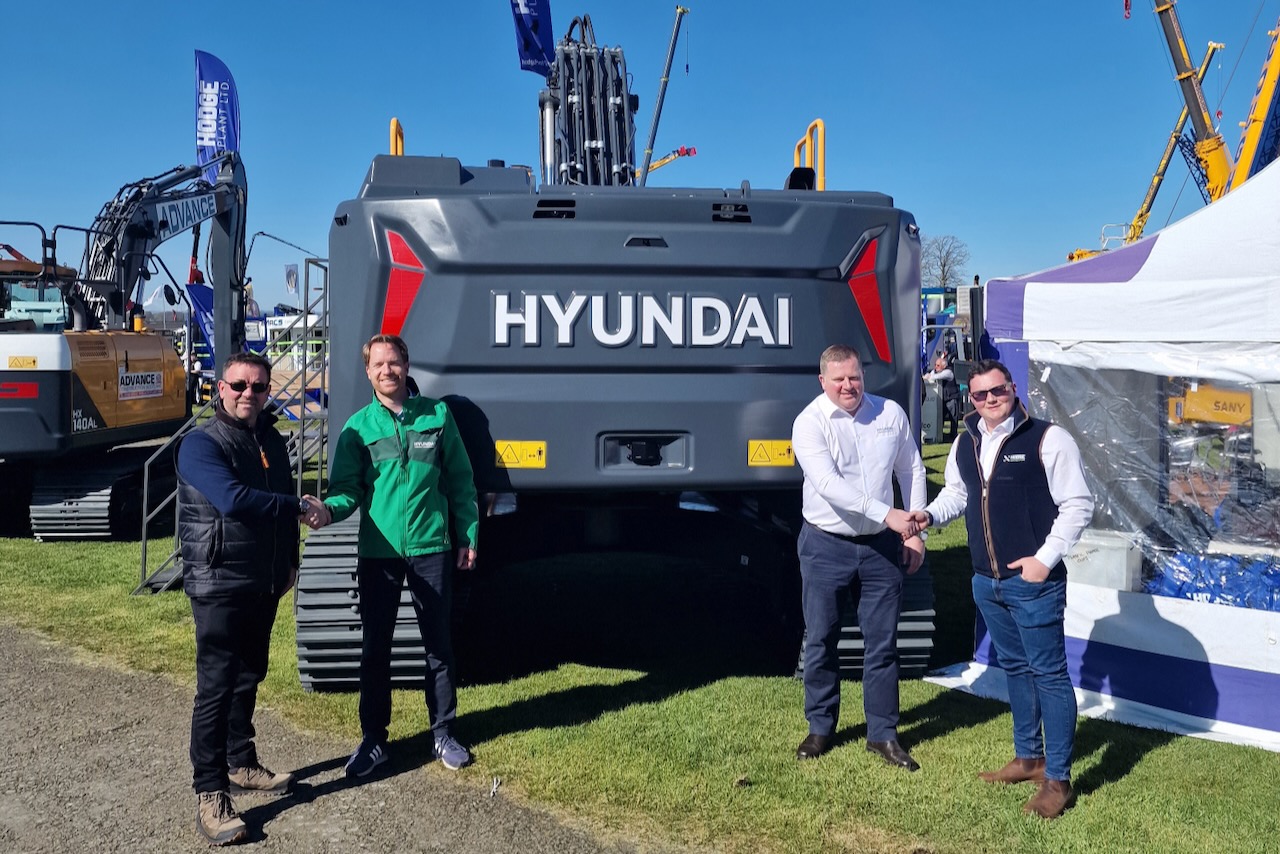
Hyundai Construction Equipment has appointed Hodge Plant as its dealer for Scotland, with coverage across the country except Dumfries and Galloway and initial sales, parts and service run from Hodge’s main Hamilton workshops. A new Stirling/Northern depot, with building works already underway and completion targeted for spring 2027, is intended to strengthen support for central, northern and rural regions via an expanded sub-dealer network. Hodge currently fields four road-based service engineers, backed by fabrication and in-house paint facilities, signalling increased local capacity for heavy equipment maintenance.
Thames Water has appointed Barhale to deliver Phase Three of the £17m Greenwich Trunk Main, installing the final 1km of ductile iron pipeline by open-cut from the Blackwall Lane roundabout to the O2 arena and connecting 350mm–800mm diameter sections to the existing 800mm main at Croon’s Hill. Barhale and specialist contractor Suez will commission the 4km main using ice pigging rather than swabbing and high-velocity flushing, saving about 1.8m litres of water and cutting required pits from 25 to six. The approach trims project costs by roughly £800,000, reduces carbon and brings forward commissioning of Phases Two and Three to May 2027.
British Land has awarded McLaren a £99m design-and-build contract to retrofit and expand the late-1970s West One building above Bond Street Underground Station into 93,517 sq ft of premium offices over seven storeys. The scheme retains around 60% of the existing concrete frame, adds three extra office floors using a lightweight steel structure from second floor upwards, and reconfigures the block to two retail levels (basement and ground) with offices from first to seventh floors. Targeting NABERS 5*, BREEAM Excellent, EPC A and WELL Enabled, the project is constrained by a dense tunnel network, limiting new foundations to a single concrete core.
Mexico City’s subsidence has been mapped in new detail by the NASA–ISRO NISAR L-band radar mission, revealing metropolitan zones sinking by more than 50cm per year over clay-rich former lakebed deposits. Interferometric SAR time-series show differential settlement across key infrastructure corridors, with some districts exhibiting cumulative subsidence of several metres over recent decades, far exceeding typical building serviceability limits. The data set offers geotechnical engineers block-scale deformation rates to refine foundation design, tunnel and metro monitoring, and groundwater extraction management.
Rosh Pinah Zinc and Appian Capital Advisory have commissioned a new process water treatment plant at the Rosh Pinah mine in Namibia as a core element of the RP2.0 expansion. The plant is engineered to retreat and recycle process water from multiple circuits across the operation, cutting freshwater draw and reducing discharge volumes to the site’s TSF and evaporation facilities. For mine planners and process engineers, the scheme tightens the site water balance and may enable higher throughput under existing abstraction permits.
Shuanglin has unveiled an autonomous, battery-electric multi-axle mining truck using distributed drive technology, entering a niche previously explored by China Space Sanjiang Group’s 220 t WTW220E (16 wheels in eight pairs) and ETF’s 218 t MT-240. The new platform targets ultra-heavy haul with multiple driven axles to spread ground pressure and improve traction on weak pit floors, while removing the mechanical drive train. For mine planners and geotechnical teams, such configurations could materially change haul road design, turning radius constraints and underfoot bearing capacity assumptions.
Ivanhoe Electric plans to acquire Robbins’ purpose-built Crossover XRE tunnel boring machine and material handling system, previously used at Anglo American’s Grosvenor coal mine, for its Santa Cruz copper project in Arizona. The mixed-face XRE TBM is designed to handle both hard rock and soft ground, allowing continuous, segmentally lined access tunnels instead of conventional drill-and-blast shafts. For geotechnical and mine development teams, this signals potential for faster, lower-disturbance underground access in complex ground conditions typical of Arizona copper deposits.
£20M of National Highways upgrades on the A21 between Hastings and Flimwell are being criticised by local MP Huw Merriman for failing to tackle what he calls the “underlying cause” of serious collisions on the single-carriageway sections. Works reportedly focus on resurfacing, signage and minor junction changes rather than full dualling or major realignment of substandard bends and short sightlines. For designers and safety engineers, the row centres on whether incremental measures can manage overtaking and speed-related crash risk without a more fundamental geometric redesign.
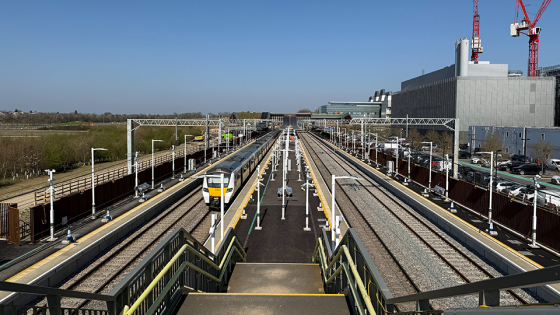
Passenger services at the new £250M Cambridge South station will start on 28 June, providing direct rail access to the Cambridge Biomedical Campus and linking into the existing West Anglia Main Line. Designed as a four-platform interchange between London–Cambridge–Ely services and local stopping trains, the station is planned as the first operational site under Great British Railways, integrating track, station and timetable management. For civil and rail engineers, the scheme sets a template for campus-adjacent infill stations with high passenger throughput and constrained urban footprints.
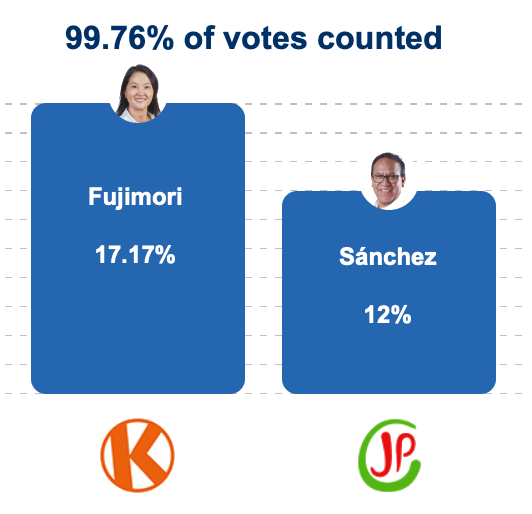
Peru’s 7 June presidential runoff between leftist Roberto Sánchez and conservative Keiko Fujimori is jolting markets and putting roughly $6 billion in annual mining investment at risk, with Peru’s sol and dollar bonds already underperforming and Barclays advising investors to go underweight. Sánchez is proposing higher mining taxes, constitutional reform, a phase-out of open-pit mining and potential use of international reserves for social spending, directly threatening large copper and gold operations run by Glencore, Anglo American, Freeport McMoRan, MMG and Fortescue’s newly acquired Cañariaco project. At the same time, illegal miners are now believed to produce more gold than formal operators such as Hochschild, Buenaventura and Newmont, raising operational and permitting uncertainty even if a business-friendly Congress tempers more radical policy shifts.
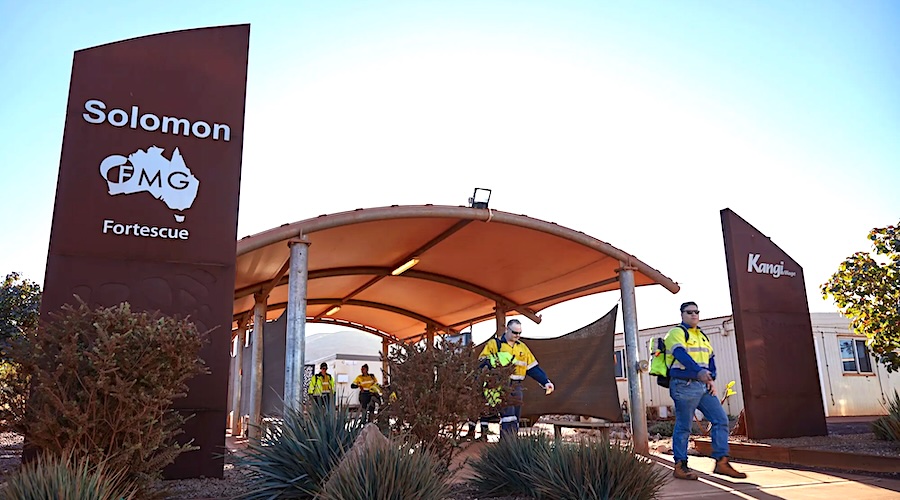
Fortescue has been ordered by the Federal Court of Australia to pay more than A$150 million (US$108 million) to the Yindjibarndi people for “significant damage” to cultural heritage sites caused during operations at its Solomon Hub iron ore mine in the Pilbara. The ruling, which also includes A$100,000 for economic loss, follows a native title dispute dating back to a 2003 claim and the Yindjibarndi’s 2017 grant of exclusive rights over a 2,700 sq km, iron ore-rich area. For miners, the case signals materially higher native title compensation exposure and ESG risk where projects pre-date or contest Indigenous land determinations.
Elevra Lithium has secured a A$441 million (US$318 million) funding package, including a fully underwritten A$275 million placement and up to C$145 million in convertible notes from the C$15 billion Canada Growth Fund, to expand its North American Lithium (NAL) mine in Quebec and advance the Moblan project to final investment decision. The three-stage NAL brownfield expansion, with capex of C$366 million, targets throughput increases lifting output to 338,000 t/y of spodumene concentrate and delivers a post-tax NPV of C$3.11 billion, 42% IRR and 25‑month payback. Proceeds will fund mill optimisation, flotation upgrades and crushing circuit enhancements, with Stage 1 starting mid‑2027 and Stage 3 construction due by mid‑2029.
Brazil’s antitrust authority Cade has opened a competition probe into USA Rare Earth’s proposed $2.8 billion acquisition of Serra Verde Group, operator of the Pela Ema rare earth mine and processing plant in Goiás, including a 15‑year US offtake agreement for neodymium, praseodymium, dysprosium and terbium. The review will determine whether the deal is a notifiable “concentration act” and could lead to approval, conditions or a full administrative case. Serra Verde, backed by a recent $565 million DFC funding package, expects Pela Ema to supply about half of ex‑China heavy rare earth output by 2027.
Copper futures in London jumped 2% on Tuesday, briefly breaching $14,000/t and moving back towards January’s $14,500/t record as Chinese inventories fall and state-owned traders signal strong decade-long demand. Satellite data from Earth-i show a sharp drop in global smelting activity in April and Sprott warns that disruptions to Middle Eastern sulphur supplies and fuel availability in Peru threaten output, with about 20% of mined copper dependent on sulphuric acid. Sprott projects data centres and energy-transition uses could take copper’s share of “strategic” demand to 45% by 2040, up from 32% in 2024.
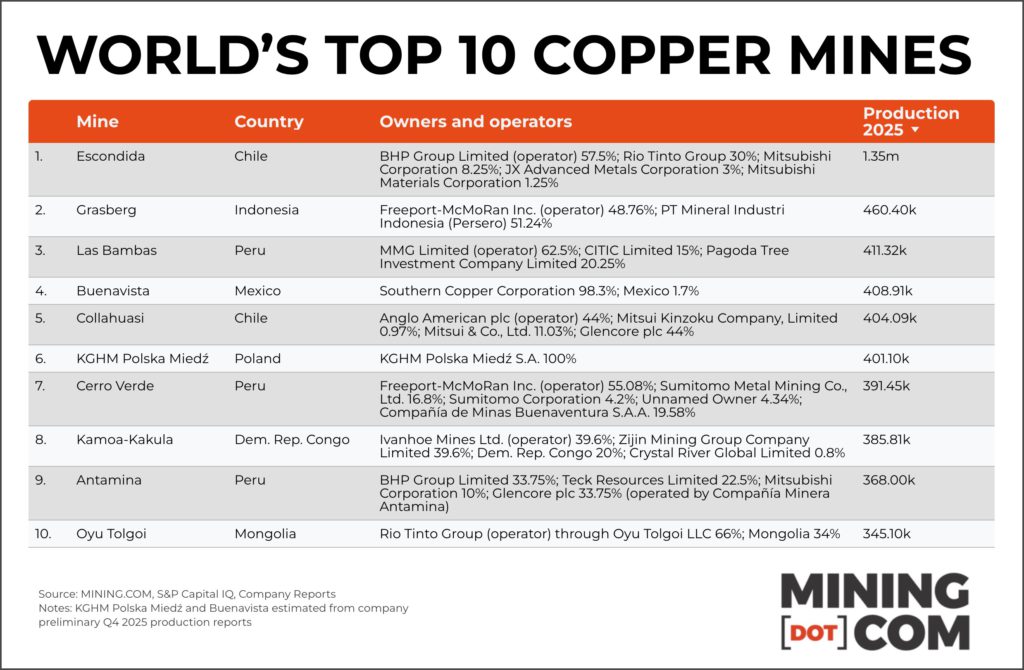
Copper prices, already up 40% in 2025 and hitting a record $14,500/t in January 2026, are being driven by AI-related demand, supply disruptions and looming cost pressures from energy and sulfuric acid shortages, with the ICSG now forecasting a 150,000 t deficit for 2026. The 10 largest copper mines produced 4.9 Mt in 2025, led by Escondida at 1,347.6 kt, while major assets such as Grasberg and Kamoa-Kakula face landslide, flooding and seismic-related constraints that could remove hundreds of thousands of tonnes from the market. For planners and project developers, the rankings emphasise concentration risk in a handful of long-lived operations and the growing influence of infrastructure bottlenecks, community blockades and state renegotiations on effective supply.
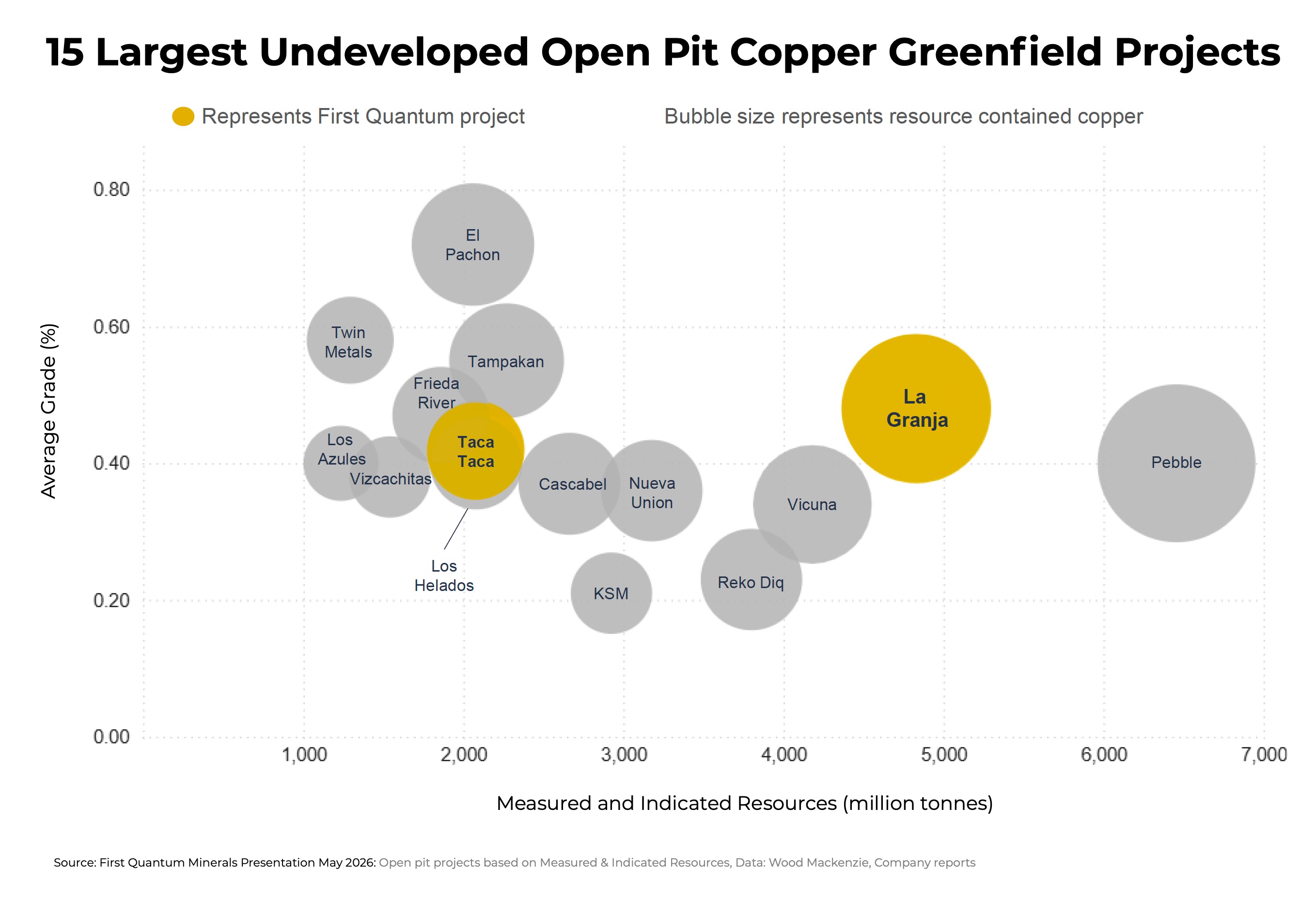
First Quantum Minerals’ updated NI 43-101 for the La Granja copper project in northern Peru outlines 4.8 billion tonnes of measured and indicated resources at 0.48% Cu (23.0 Mt contained), plus 5.2 billion tonnes inferred at 0.40% Cu (20.7 Mt), based on 832 diamond holes totalling 370,000 metres. The company plans pit-side comminution and slurry transport via a 7 km tunnel to a processing and tailings complex on a flatter Pacific coastal plain ~100 km away, using desalinated seawater as primary supply. Engineering focus centres on managing arsenic as discrete, “packageable” mineral phases to maintain saleable concentrate through a conventional flowsheet under Peru’s strict ESIA regime.
The US Department of Energy has awarded contracts to exchange 53.3 million barrels of crude from the Strategic Petroleum Reserve’s Bayou Choctaw, Bryan Mound, Big Hill and West Hackberry salt cavern sites, as part of a 172-million-barrel commitment under the IEA’s coordinated release. The SPR currently holds about 384–397 million barrels, with 35 million barrels already delivered to market and an additional 35 million barrels generated for the reserve at no taxpayer cost through earlier exchanges. Under the new awards, DOE secures a 28% return premium—15.1 million barrels—and allows participating companies to use a limited Jones Act waiver to accelerate coastal shipments.