Electric power pack drives 430t turbine: design and operations lens for port engineers
Reviewed by Tom Sullivan
First reported on The Construction Index
30 Second Briefing
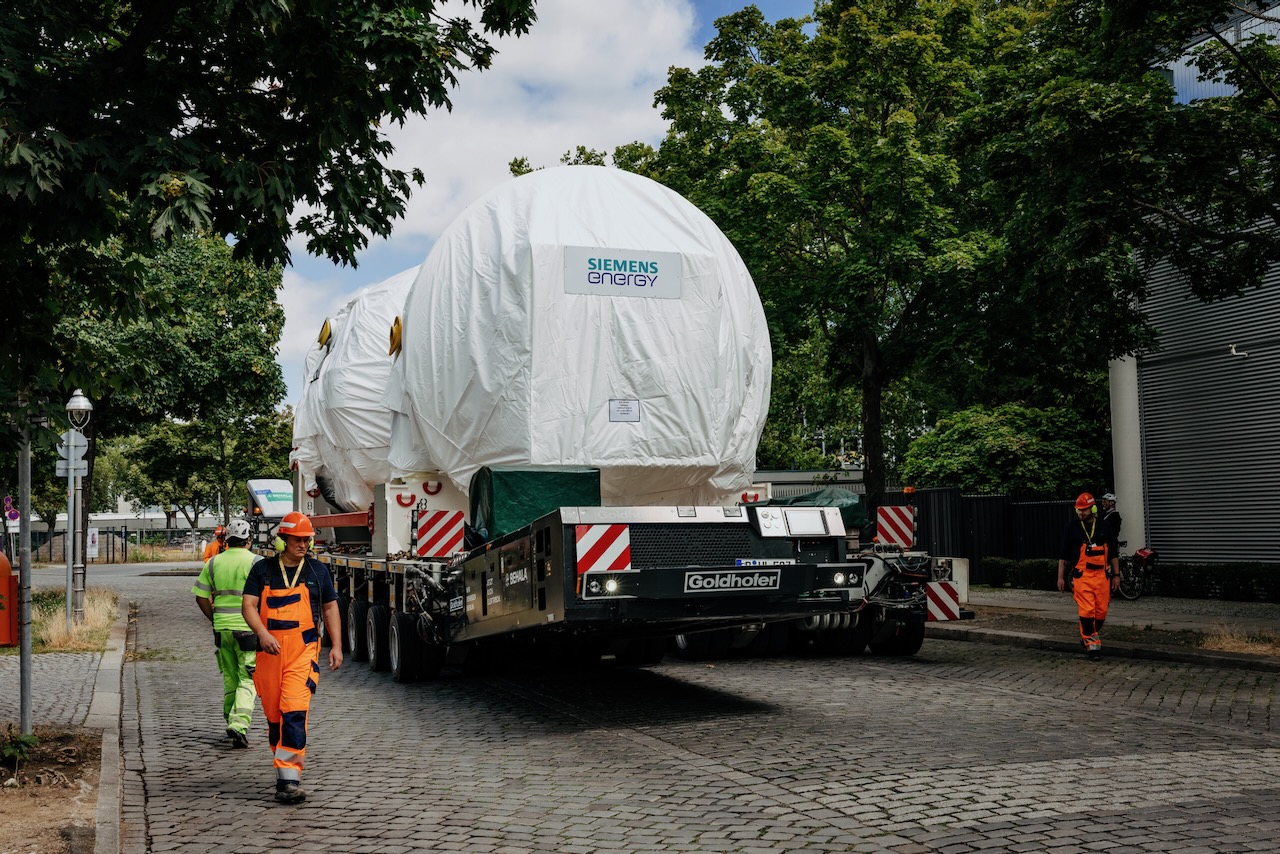
A Goldhofer fully electric E-PowerPack has moved a 430‑tonne Siemens Energy gas turbine at Berlin’s BEHALA RoRo terminal, marking a quiet, zero‑emissions first for heavy transport using this aviation-derived drive technology. The E-PowerPack powered modular trailers without diesel prime movers, eliminating local exhaust emissions inside the port area and reducing noise during night-time operations. For heavy haul and port engineers, the move provides an early full‑scale reference for battery-electric prime movers on multi-axle turbine transports in constrained terminal environments.
Technical Brief
- Aviation-derived electric drive components were adapted for continuous low-speed, high-torque heavy-haul duty cycles.
- Port engineers gained operational data on battery discharge, thermal behaviour and power demand under real heavy-load conditions.
- Experience from this move provides a reference case for electrifying SPMT fleets at other terminals.
Our Take
Siemens Energy appears repeatedly in our Infrastructure coverage, including UK grid and gas storage work, so using an electric Goldhofer power pack for a 430t turbine move at Berlin’s BEHALA RoRo terminal aligns with its push to decarbonise not just generation assets but also associated logistics.
In our database, Siemens Energy’s involvement in both the Aberdeenshire SSEN Transmission substation and the Marram Energy Storage Hub points to a strategy of covering the full power value chain; cleaner heavy transport of large turbines strengthens its position when bidding for grid and storage projects with strict embodied-carbon requirements.
For operators of ports and RoRo terminals similar to BEHALA in Berlin, demonstrating that a 430t-class component can be handled with an electric power pack is likely to become a reference case when justifying investments in low-emission heavy-haul equipment to regulators and municipal owners.
Prepared by collating external sources, AI-assisted tools, and Geomechanics.io’s proprietary mining database, then reviewed for technical accuracy & edited by our geotechnical team.
Related Articles


Related Industries & Products
Construction
Quality control software for construction companies with material testing, batch tracking, and compliance management.
CMRR-io
Streamline coal mine roof stability assessments with our cloud-based CMRR software featuring automated calculations, multi-scenario analysis, and collaborative workflows.
HYDROGEO-io
Comprehensive hydrogeological testing platform for managing, analysing, and reporting on packer tests, lugeon values, and hydraulic conductivity assessments.
GEODB-io
Centralised geotechnical data management solution for storing, accessing, and analysing all your site investigation and material testing data.