Barhale helps Anglian tackle Cypermethrin: process design notes for water engineers
Reviewed by Joe Ashwell
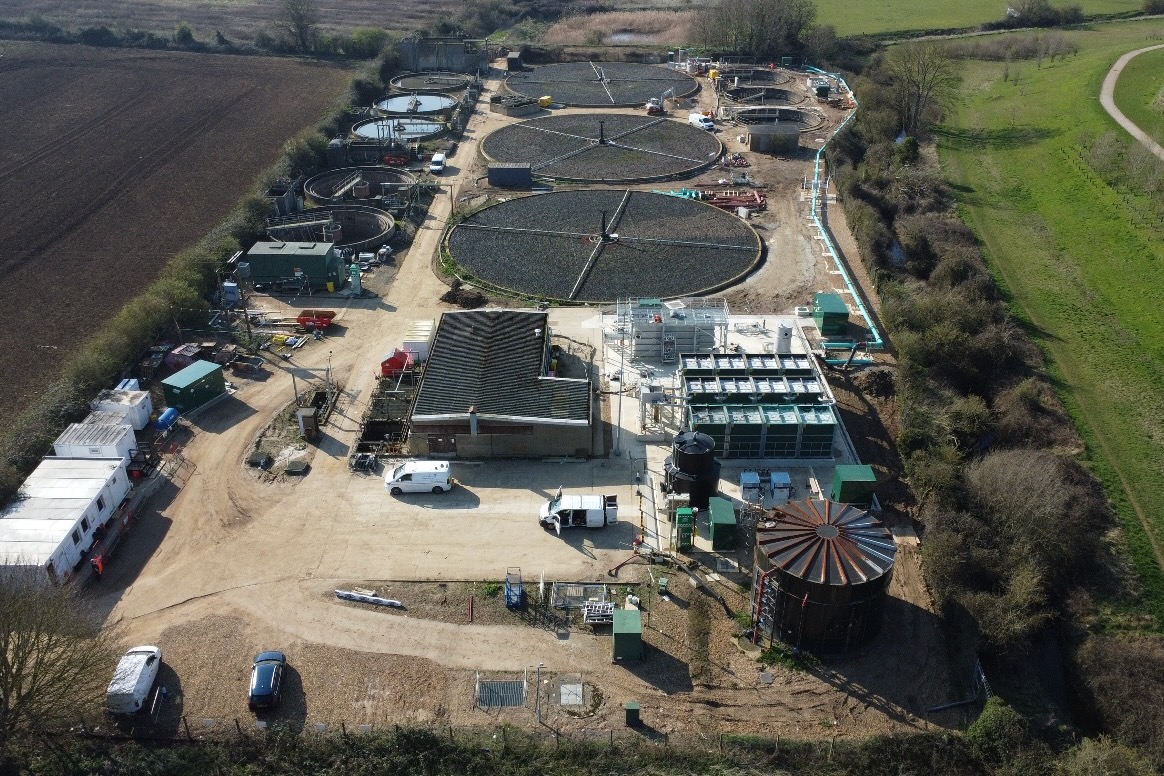
First reported on The Construction Index
30 Second Briefing
Barhale has delivered Anglian Water’s first tertiary treatment plant targeting the pesticide Cypermethrin at Raunds Water Recycling Centre near Wellingborough, as part of a £7.8M integrated upgrade. The process uses a purpose-designed cloth filter with ferric dosing, including a 30m³ storage tank and downstream dosing pumps, to strip Cypermethrin to very low concentrations. To meet the new 1.5mg/l ammonia consent, Barhale installed 12 modular nitrifying SAF units with dedicated blowers, a new MCC, an interstage pumping station, and new structural bases, pipework and maintenance access routes.
Technical Brief
- Cypermethrin removal was developed collaboratively with Anglian Water, the Environment Agency and the @one Alliance.
- Treatment design targets trace-level pesticide detections in local watercourses from agricultural, domestic and veterinary sources.
- Ferric dosing is configured upstream of the cloth filter to promote coagulation and pesticide adsorption.
- Structural bases, pipework and new maintenance access routes were built to integrate the plant across the existing Raunds site.
Our Take
Barhale’s work at Raunds Water Recycling Centre sits alongside recent contracts with United Utilities, Thames Water and Severn Trent Water in our database, signalling that it is becoming a go‑to Tier 2 contractor for UK water quality and stormwater compliance schemes rather than one‑off civils packages.
The relatively small 30m³ ferric dosing storage tank and modular 12‑unit SAF configuration suggest Anglian Water is favouring bolt‑on, scalable treatment upgrades at existing assets, which can be replicated across other WINEP‑driven sites without major greenfield construction.
Prepared by collating external sources, AI-assisted tools, and Geomechanics.io’s proprietary mining database, then reviewed for technical accuracy & edited by our geotechnical team.


