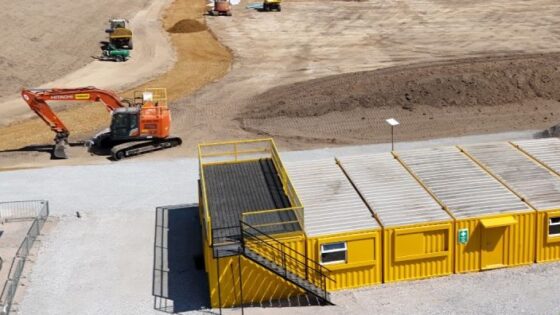
Construction has started on the Berkswell Battery Energy Storage System (BESS) in the West Midlands, with Farrans delivering the scheme for client BW ESS. The grid‑scale facility will use containerised lithium‑ion battery units and associated high‑voltage switchgear to provide rapid‑response storage and frequency support to the local transmission network. Key civil works will centre on heavy-duty foundations, cable routing and fire‑segregated compound layouts, with interfaces to National Grid connection assets driving programme and design constraints.
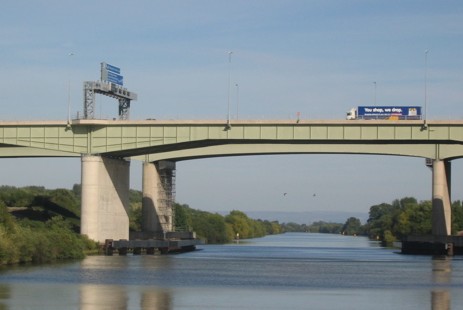
A £27M upgrade has begun on the Thelwall Viaduct, which carries the M6 over both the Manchester Ship Canal and the River Mersey and is one of the busiest strategic crossings in the North West. Works centre on replacement of ageing expansion joints and associated deck components to address long‑term movement, leakage and fatigue issues on the multi-span structure. Traffic management on this key motorway link will be critical, with phased lane closures likely to influence construction sequencing, joint installation methods and night-time working strategies.
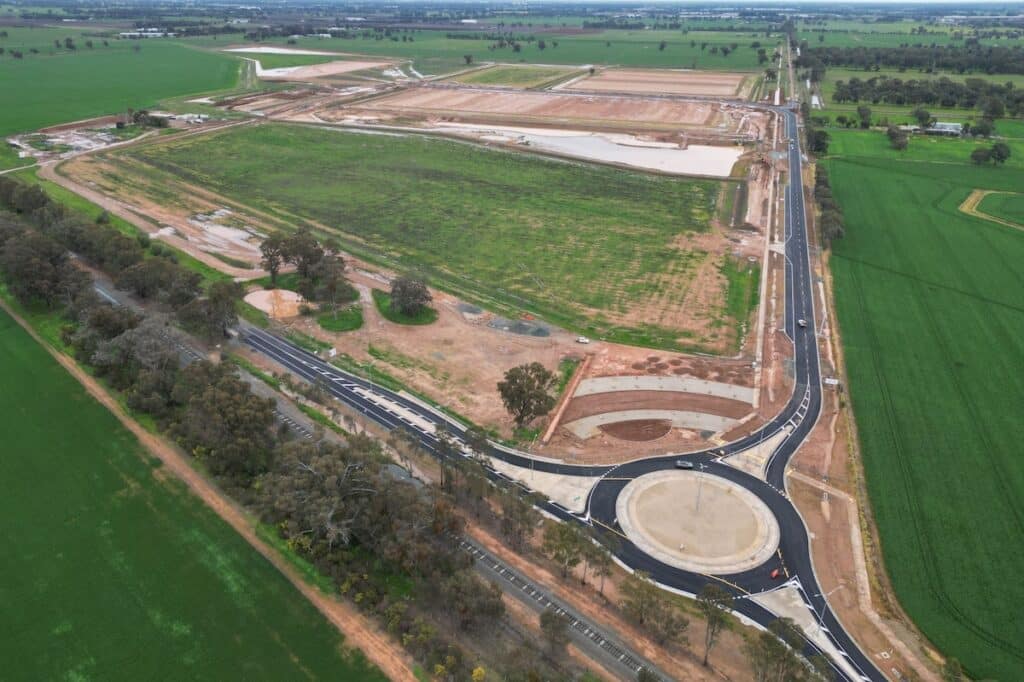
Completion of the $22.5 million Goulburn Valley Link Freight Precinct in Victoria delivers upgraded pavement and geometry on Simson Road and a new roundabout at the Toolamba–Simpson Road intersection to handle higher freight volumes. The works improve heavy vehicle access to regional producers and intermodal hubs, reducing conflict points on existing rural crossroads and shortening haul routes across the Goulburn Valley. For designers and contractors, the project signals continued demand for freight‑rated pavements, wide swept‑path roundabouts and intersection treatments tailored to B‑double and PBS combinations in regional networks.
Costain will recruit 50 apprentices in 2026, doubling last year’s intake, to resource a growing pipeline of long‑term infrastructure contracts in transport, water and energy. The expanded programme targets site engineers, civil technicians and project controls roles to support complex frameworks such as multi‑year highways upgrades and regulated water asset renewals. For contractors and consultants, this signals intensifying competition for early‑career talent on major UK infrastructure, with more delivery risk tied to in‑house training capacity and retention.
Passenger services between Lewes and Haywards Heath resumed on 1 September after Network Rail and contractors removed derailed carriages and renewed 500m of damaged track. The rapid reinstatement required full clearance of rolling stock, ballast and contaminated materials before installing new rail, sleepers and fixings to restore line geometry and signalling integrity. For civil and permanent-way engineers, the incident underlines the need for robust derailment response plans, modular track replacement capability and close coordination with operators to minimise corridor downtime.
Major UK civil engineering and construction contractors have reshuffled senior leadership teams as summer 2026 ends, signalling a renewed focus on pipeline delivery and risk management on large infrastructure programmes. Key appointments span project directors and technical leads for complex rail, highways and water frameworks, with several roles tied to NEC4-based alliancing and design–build contracts exceeding £500M in value. For geotechnical and structural specialists, the moves point to continued demand for leaders experienced in ground risk allocation, digital design coordination and whole-life asset performance.
Early works have begun on duplicating the Cairns Western Arterial Road between Lake Placid Road and the Captain Cook Highway in Queensland, a key north–south link for Cairns’ western suburbs. Current activities focus on relocating water and sewer mains between the Barron River and Caravonica State School, including trenching, underboring and minor earthworks to clear the future carriageway footprint. Utility shifts and early geotechnical earthworks will set corridor constraints for pavement design, drainage layouts and future bridge or culvert upgrades on this flood‑prone section.
Victoria is injecting an extra $352 million into road maintenance to double the number of potholes repaired across the state’s sealed network through late 2026 and January, with works focused on key arterials such as the Geelong Ring Road, Western Highway, Calder Highway and Princes Highway. The program will prioritise resealing and heavy patching on high‑volume freight and commuter corridors, where AfPA guidance suggests at least 7 per cent of sealed roads should be resealed annually to maintain pavement condition.
Cat® Customer Value Agreements (CVAs) give road and civil contractors structured support to keep graders, pavers and compactors running, with planned maintenance, genuine parts supply and condition monitoring bundled into a single ownership package. CVAs can be tailored by hours, component scope and service level, from self-service kits with remote dealer oversight through to fully dealer-managed maintenance and repairs. For fleets where unplanned downtime rapidly escalates project costs and penalties, the model offers predictable lifecycle costs and clearer scheduling of workshop and field-service interventions.
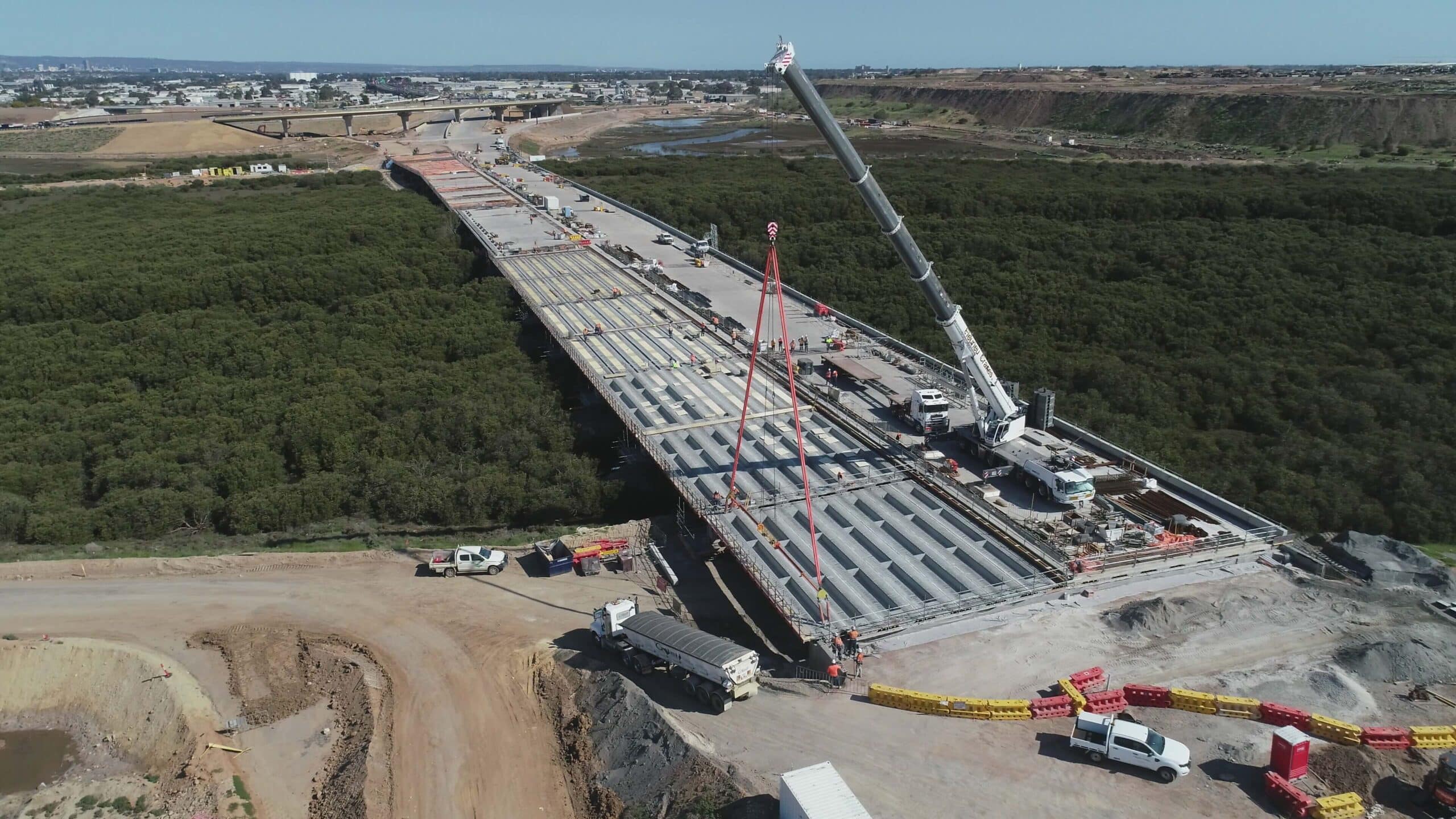
Bianco Precast, a National Precast association member, is supplying major elements for South Australia’s Torrens to Darlington project and other nationally significant road and bridge works, signalling growing precast capacity in the state. Backed by National Precast’s technical guidance and industry advocacy, the company has scaled into one of South Australia’s largest precast providers, delivering complex components under tight programme constraints. For civil contractors and designers, this points to stronger local supply options for large-volume precast bridge beams, barriers and structural elements on future infrastructure packages.
John F Hunt has completed demolition of the former 11-storey Tenter House and begun construction and piling for a new single-basement scheme at 45 Moorfields in the City of London for developer Freshwater, with Buro Four and Exigere on the project team. The works sit immediately adjacent to Moorgate Station and the Elizabeth line, in a transport hub handling over 50,000 passengers daily, tightening constraints on logistics, noise and vibration. Phase 1 piling and construction will run from March 2026 to January 2027, alongside phased public realm works including a new plaza and hard/soft landscaping for neighbouring owners Citypoint and Brookfield.
Wrexham University has appointed Wirral-headquartered Kimpton to maintain heating, air conditioning and ventilation systems across 20 buildings, including teaching and research blocks, sports and culture facilities, workshops, admin offices and the Erddig and John Neal student accommodation. The contracts, let through two competitive tenders, cover multiple dispersed sites at Northop, Plas Coch, Regent Street, St Asaph, Wrexham Village and Xplore Henbas Street. Kimpton, whose education clients already include Liverpool Hope University and the University of Chester, will work on live, occupied campuses to maintain efficient and reliable building services.
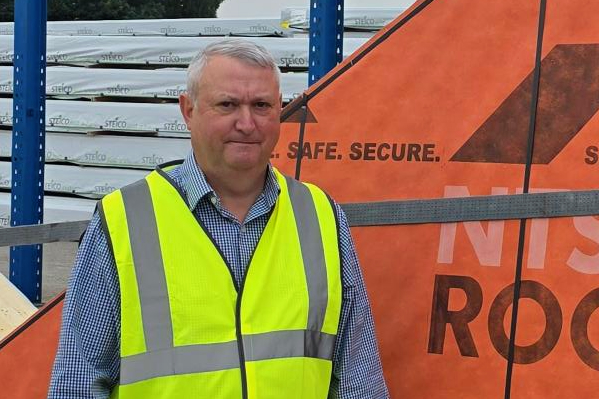
Premier Forest Products has promoted long-serving production manager Andrew Watters to production director at National Timber Systems, the timber engineering business it bought out of administration in December 2025. Watters, who led implementation of ISO 9001 and ISO 14001 factory production controls, will now oversee health and safety, production and operations across NTS sites in Newcastle, Catterick, Sheffield, Bristol and the timber engineering hub in Newport. The move signals a push for “right first time” manufacturing, tighter capacity management and stronger quality assurance for offsite timber components.
Rapid promotion at Cardiff-based Langstone Construction sees Ian Williams become construction director just five months after joining from Taylor Woodrow, BAM and Kier. Founder and MD Neil Philpott credits Williams’ management of multiple live schemes and client relationships across residential, education, health and commercial projects as key to the move. The 36-strong firm, operating from Cardiff Gate, is currently focused on housing association residential builds and care homes for private and local authority clients across South and West Wales and the South West of England.
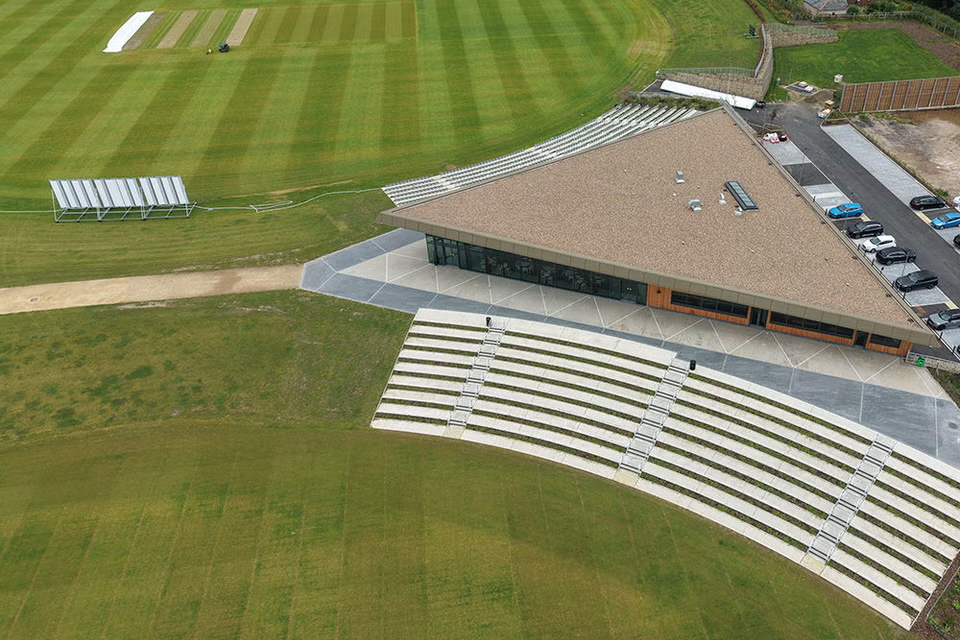
SikaShield reinforced bituminous membranes have been installed on Lancashire Cricket Club’s new AO Farington ground pavilion, whose triangular, cantilevered roof provides uninterrupted views over two full-size ovals and 36 pitches for up to 5,000 spectators. AMS Cladding used SikaRoof Primer-610 Spray with E74 PE SA 3 mm underlay, HB79 Tex 4 mm capsheet and E79 MG SA 4 mm in Safe2Torch zones to deliver flame-free waterproofing in a green belt setting. Thermal performance is boosted by Sikatherm EPS 200 031 RJ1 insulation, a SikaRoof EPS Filter Layer and a stone ballast finish.
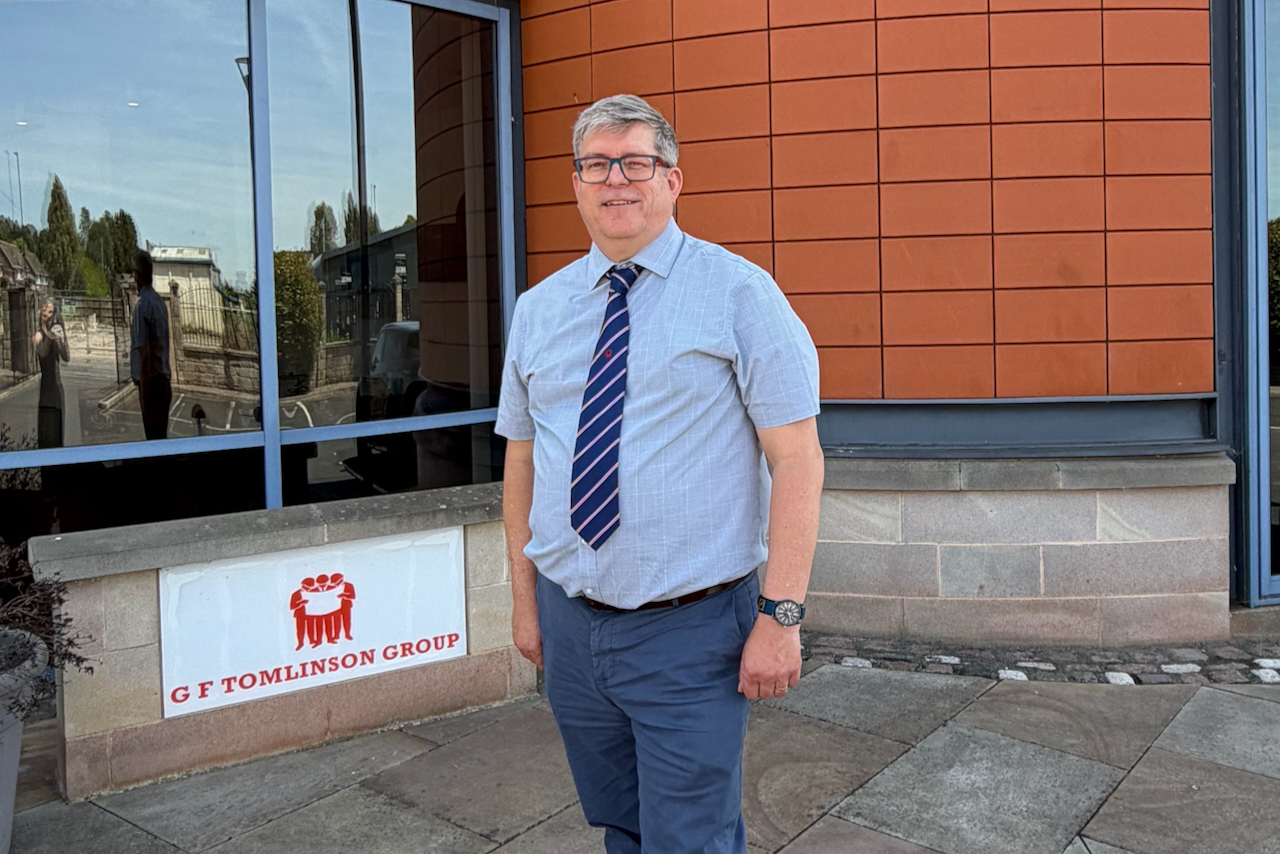
Midlands contractor G F Tomlinson has appointed Glenn Slater as business development manager to work alongside head of business development Les Needham on expanding its workload. The pair will target public sector frameworks, including regional construction alliances and local authority capital programmes, to secure longer-term pipelines. For consultants and subcontractors, the move signals potential growth in framework-led opportunities across education, health and civic projects in the Midlands.
Fiona Adamson has been appointed Secretary of Victoria’s Department of Transport and Planning, after serving as Deputy Secretary of Transport Services overseeing public transport, road infrastructure and network operations. Her portfolio has included management of multimodal network performance and customer experience frameworks across heavy rail, tram, bus and arterial roads. The appointment signals continuity for major Victorian programs such as level crossing removals, freeway upgrades and integrated land-use and transport planning that depend on coordinated asset management and long-term network capacity modelling.
A CPB Contractors–McConnell Dowell consortium has secured a $700 million design and construction contract to upgrade more than 29 kilometres of Perth’s Kwinana Freeway between Roe Highway and Safety Bay Road, a corridor carrying over 100,000 vehicles on a typical weekday. Works will include additional lanes, interchange modifications and ramp upgrades to increase capacity and reduce bottlenecks on this north–south freight and commuter spine. The project also preserves corridor width and geometry to interface with the planned Westport freight precinct and associated port access links.
The Northern Territory Government has let a $1.81 million contract to local firm Diggamen Civil Contracting for safety upgrades at the Stuart Highway–Bees Creek Road intersection, a key access point to the Freds Pass Recreational Reserve and nearby schools, daycare facilities and community centres. Works are expected to focus on improving traffic control and separation between high-speed Stuart Highway movements and local access traffic on Bees Creek Road. For civil contractors and designers, the project signals continued NT investment in intersection treatments on rural arterial corridors with complex community access demands.
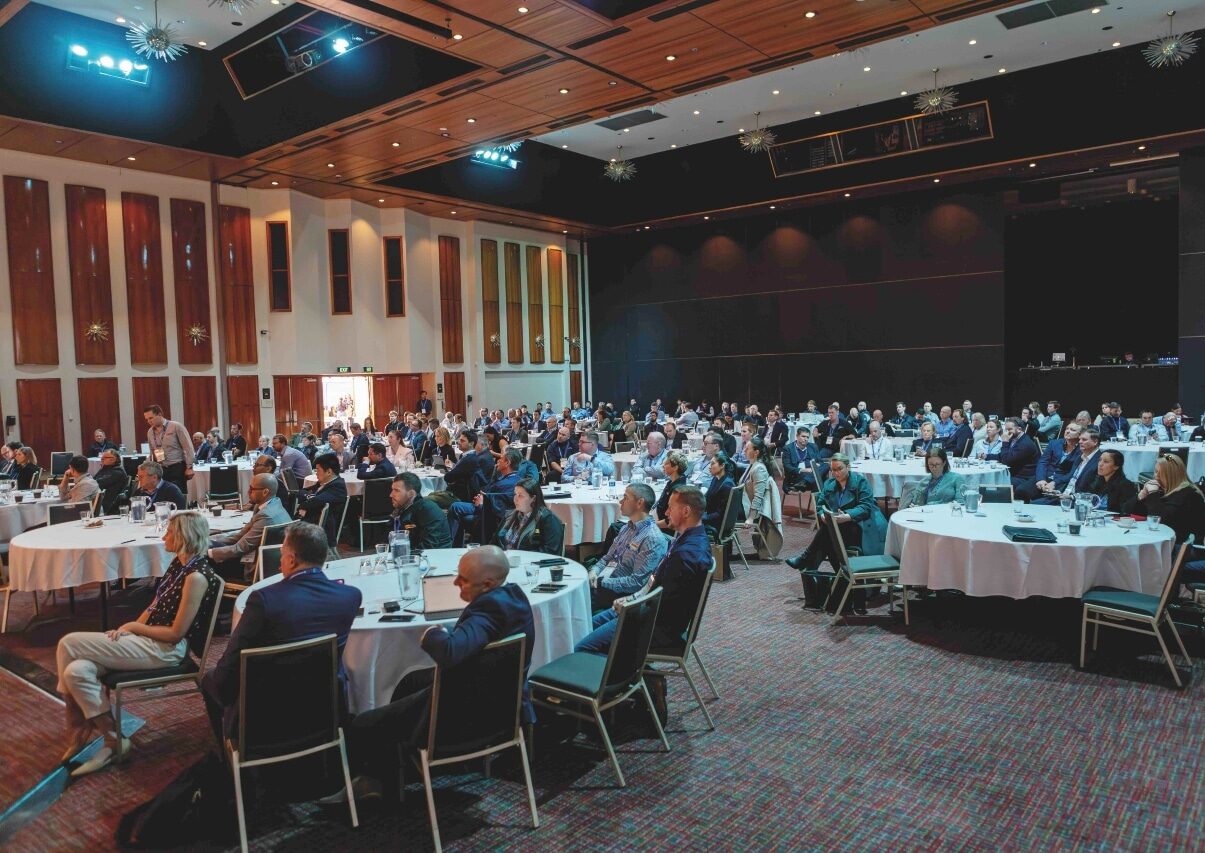
Expotrade is convening Tasmania’s Sixth Major Projects Conference as the State Government’s 10‑Year Infrastructure Pipeline has grown from $13 billion at inception to a substantially larger programme, signalling an intensified road, bridge and civil works workload. Senior government officials, contractors and consultants will dissect delivery risks around labour capacity, materials supply and procurement for multi‑year transport and energy corridors. For geotechnical and civil engineers, the event flags sustained demand for pavement rehabilitation, bridge strengthening and ground improvement design across a crowded project pipeline.
Early contractor involvement is being pushed by Balfour Beatty’s regional civils managing director as a key way for cash‑strapped UK local authorities to de‑risk highways, bridges and flood schemes before design freeze. By bringing Tier 1 contractors into option selection, ground investigation planning and buildability reviews, councils can refine earthworks strategies, utilities diversions and traffic management phasing while designs are still flexible. The approach aims to cut contingency, reduce change orders and avoid late-stage redesigns that typically drive programme overruns and claims.
The 14 August Greater Anglia derailment at Wickford, Essex occurred after the train driver reported a visible “kink” in the track, with on-board CCTV simultaneously capturing a clear lateral misalignment of the rail. The incident points to a localised geometry defect developing to the point of visible distortion between scheduled inspections, raising questions over the adequacy of current plain-line monitoring, patrol frequency and response times. For track engineers, the case will focus attention on integrating driver reports and CCTV evidence into real-time condition assessment and intervention protocols.
Delivery partnerships between local authorities, combined authorities and private infrastructure providers are being promoted as a way to deliver UK regional development in a context of entrenched spatial inequality and frequent institutional restructuring. Models such as joint delivery boards and programme-wide frameworks are being used to coordinate multi-year transport, housing and public realm schemes, often bundling dozens of sub-£50M projects into single, region-wide investment pipelines. For engineers, this shifts emphasis towards portfolio-level design standards, shared data environments and early contractor involvement to manage interfaces, risk allocation and long-term asset performance.
East West Rail has begun using thermal-imaging drones in pre-construction ecological surveys to speed up vegetation clearance while locating protected species before archaeological trenching. Working with contractor Kier, the programme replaces or reduces manual ground searches, allowing faster sign-off of clearance areas and more targeted exclusion zones around detected animals or nests. For civil and geotechnical teams, this can shorten enabling-works programmes and reduce last-minute design or access changes driven by ecological constraints.
Geomechanics, Streamlined.
© 2026 Geomechanics.io. All rights reserved.