University of Hertfordshire Grenfell ‘chimney effect’: façade fire lessons for engineers
Reviewed by Tom Sullivan
First reported on New Civil Engineer
30 Second Briefing
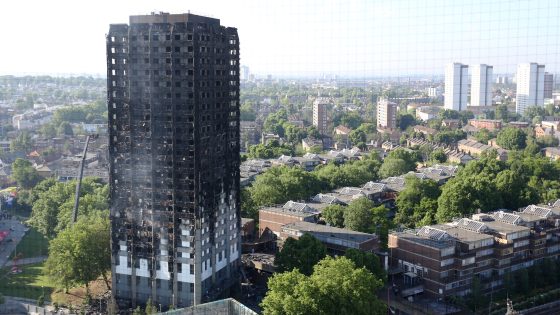
Researchers at the University of Hertfordshire are launching a detailed investigation into the façade “chimney effect” that allowed flames and smoke to race up Grenfell Tower’s cladding system in 2017. The work will focus on how ventilated cavity geometry, insulation and cladding panel configuration influenced vertical fire spread and smoke movement. Findings are expected to inform future façade fire engineering, including cavity barrier design, material selection and test methods for high-rise residential towers.
Technical Brief
- Work is framed around façade cavity “chimney effect” behaviour rather than internal compartment fire dynamics.
- Researchers are expected to combine post-incident forensic evidence with analytical and numerical fire modelling of façades.
- Experimental work is likely to involve scaled façade rigs to replicate vertical cavity flows and flame spread.
- Outputs are intended to support revisions to façade fire-testing protocols and performance-based design guidance.
- Findings are expected to inform placement and detailing of cavity barriers in high-rise residential refurbishments.
- Scope is limited to façade-driven external fire spread mechanisms, not whole-building evacuation or structural response.
Our Take
University of Hertfordshire appears in our database both for transport-oriented masterplanning work and for this Grenfell-related hazards research, signalling that its built environment group is influencing UK thinking on safety from early-stage planning through to fire performance of completed structures.
Because New Civil Engineer is also curating awards and early-career challenges in our coverage, its involvement here suggests that findings from the Hertfordshire study could quickly filter into best-practice guidance, CPD content and award criteria for UK structural and fire engineers.
Prepared by collating external sources, AI-assisted tools, and Geomechanics.io’s proprietary mining database, then reviewed for technical accuracy & edited by our geotechnical team.
Related Articles


Related Industries & Products
Construction
Quality control software for construction companies with material testing, batch tracking, and compliance management.
Mining
Geotechnical software solutions for mining operations including CMRR analysis, hydrogeological testing, and data management.
CMRR-io
Streamline coal mine roof stability assessments with our cloud-based CMRR software featuring automated calculations, multi-scenario analysis, and collaborative workflows.
HYDROGEO-io
Comprehensive hydrogeological testing platform for managing, analysing, and reporting on packer tests, lugeon values, and hydraulic conductivity assessments.
GEODB-io
Centralised geotechnical data management solution for storing, accessing, and analysing all your site investigation and material testing data.