Geomechanics.io

  • Free Tools
Sign UpLog In
Built byBoxcut Studio

Geomechanics.io

Geomechanics, Streamlined.

© 2026 Geomechanics.io. All rights reserved.

Geomechanics.io

CMRR-ioGEODB-ioHYDROGEO-ioQCDB-ioFree Tools & CalculatorsBlogLatest Industry News

Industries

MiningConstructionTunnelling

Company

Terms of UsePrivacy PolicyLinkedIn
    Research
    Safety
    Sustainability

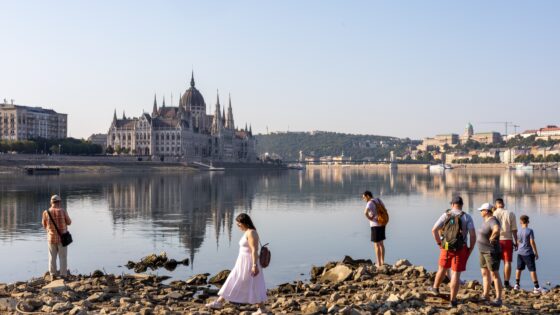
    European summer heatwave excess deaths: urban design lessons for engineers

    October 27, 2026|

    Reviewed by Tom Sullivan

    European summer heatwave excess deaths: urban design lessons for engineers

    First reported on New Civil Engineer

    30 Second Briefing

    Successive summer heatwaves caused more than 50,000 heat-related excess deaths across 854 European urban areas, according to joint modelling by Imperial College London and the London School of Hygiene & Tropical Medicine. The analysis links mortality spikes to prolonged high night-time temperatures and dense urban morphology, where limited green infrastructure and high building thermal mass trap heat. For civil and infrastructure engineers, the findings strengthen the case for city-scale cooling strategies such as reflective pavements, shaded public realms and revised design criteria for heatwave return periods.

    Technical Brief

    • Excess deaths were attributed specifically to heat-related causes, not all-cause seasonal mortality.
    • Findings support revising urban design criteria for heatwaves, including shading, ventilation corridors and surface albedo.
    • Results are most applicable to European cities with comparable climate, building stock and demographic profiles.
    • For infrastructure and construction operations, the work reinforces formal heat-stress risk assessments and workforce protection protocols.

    Our Take

    Imperial College London also features in our coverage of UK electricity distribution networks facing extreme weather stress, signalling that their heat-mortality work is likely to feed into infrastructure resilience planning rather than remaining a purely public-health issue.

    Within our 20 Hazards stories, most climate-related pieces focus on flood and storm risk; this Europe-wide heat fatality analysis broadens the risk profile civil operators must consider when designing ventilation, drainage, and materials performance for dense urban environments.

    Geotechnical Software for Modern Teams

    Centralise site data, logs, and lab results with GEODB-io, CMRR-io, and HYDROGEO-io.

    Cancel at any time.

    • Save and export unlimited calculations
    • Advanced data visualisation
    • Generate professional PDF reports
    • Cloud storage for all your projects

    Prepared by collating external sources, AI-assisted tools, and Geomechanics.io’s proprietary mining database, then reviewed for technical accuracy & edited by our geotechnical team.

    Related Articles
    South London partial building collapse: stability lessons for urban engineers
    Hazards
    5 days ago

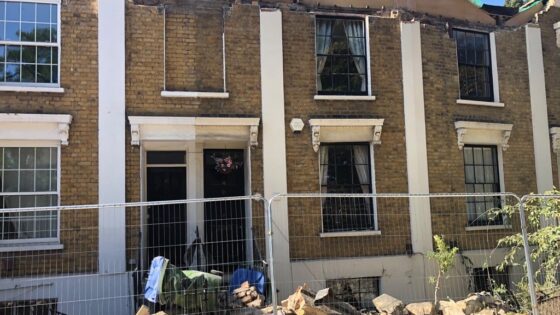
    South London partial building collapse: stability lessons for urban engineers

    Residents of 14 properties evacuated after the partial collapse of three terraced houses in south London have been allowed back home more than 11 weeks after the incident. Structural engineers have evidently deemed the remaining buildings stable enough for reoccupation following inspections and temporary works to secure the damaged terrace. The case underlines the time and access constraints that follow even localised collapse events, with extended exclusion zones needed while assessing party wall integrity, shared foundations and potential progressive failure in dense urban streets.

    Habas Demir Celik blast in Turkey: crane and furnace safety lessons for engineers
    Hazards
    6 days ago

    Habas Demir Celik blast in Turkey: crane and furnace safety lessons for engineers

    A blast at the Habas Demir Celik iron and steel plant in Aliaga, Izmir province, killed 16 workers when a ceiling crane snapped and fell into an arc furnace during molten steel casting around noon on 9 November. Ten people remain trapped under rubble, while 13 were injured and two are in serious condition, with casualties distributed across several regional hospitals. The Turkish government has opened an investigation, putting overhead crane integrity, furnace-area lifting operations and maintenance regimes under immediate scrutiny for heavy steel plants.

    Codelco Andina tailings spill: incident and water-risk lessons for engineers
    Hazards
    10 days ago

    Codelco Andina tailings spill: incident and water-risk lessons for engineers

    Codelco has halted processing at its Andina copper division after an obstruction in the tailings transport system near the Rápido RV4 sector caused a partial tailings release that may have entered the Blanco River within the Río Blanco canyon, upstream of the Aconcagua River basin. Emergency actions include shutting the concentrator, suspending tailings transport, diverting flows to the Piuquenitos reservoir, and continuous river sampling, while water utility Esval has closed its Aconcagua surface intake and switched to underground sources for Los Andes. The incident coincides with disclosure of 42,100 tonnes of previously inflated copper output and a 17,000‑tonne inventory reporting discrepancy, intensifying regulatory and community scrutiny of tailings and water-risk management at Andina.

    Related Industries & Products

    Construction

    Quality control software for construction companies with material testing, batch tracking, and compliance management.

    Mining

    Geotechnical software solutions for mining operations including CMRR analysis, hydrogeological testing, and data management.

    QCDB-io

    Comprehensive quality control database for manufacturing, tunnelling, and civil construction with UCS testing, PSD analysis, and grout mix design management.

    AllGeotechnicalInfrastructureHazardsEnvironmental