Teesside breakwater works: armour design lessons for coastal engineers
Reviewed by Tom Sullivan
First reported on New Civil Engineer
30 Second Briefing
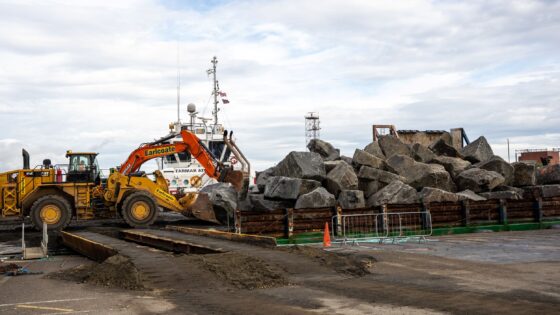
Around 55,000t of rock armour is being placed by PD Ports along the South Gare breakwater at Redcar to reinforce coastal protection for the River Tees against increasingly severe North Sea storm conditions. The works focus on strengthening the existing rubble-mound structure, which has experienced accelerated damage and overtopping, with rock sizes and gradings selected to resist higher wave energy and storm surges. For coastal and geotechnical engineers, the scheme signals a need to reassess armour stability and design return periods on older breakwaters under changing wave climates.
Technical Brief
- Works are being executed on an existing rubble-mound structure, implying staged placement and constrained marine access.
- Rock placement will need marine plant working in North Sea exposure conditions, driving strict marine safety procedures.
- Armour installation sequencing will be critical to avoid temporary instability and unsafe overtopping during construction.
- Inspection and maintenance regimes for the upgraded structure are likely to be revised to reflect storm intensification.
- Similar UK rubble-mound breakwaters from the same era may require reassessment of residual safety margins under new wave climates.
Our Take
Teesside coastal works at South Gare sit within the 24 Geotechnical stories in our database, where most UK shoreline pieces flag asset-life extension and insurance risk as key drivers rather than pure navigation performance.
For PD Ports, hardening the River Tees breakwater is strategically important because other UK port items in our coverage show that unplanned downtime from storm damage tends to cascade into rail and road logistics disruption inland.
New Civil Engineer’s parallel focus on BIM and asset-management ‘data handover gaps’ in its webinar coverage suggests that any South Gare intervention which properly structures inspection and maintenance data will likely be viewed as best practice rather than just a one-off repair job.
Prepared by collating external sources, AI-assisted tools, and Geomechanics.io’s proprietary mining database, then reviewed for technical accuracy & edited by our geotechnical team.
Related Articles

Related Industries & Products
Construction
Quality control software for construction companies with material testing, batch tracking, and compliance management.
Mining
Geotechnical software solutions for mining operations including CMRR analysis, hydrogeological testing, and data management.
QCDB-io
Comprehensive quality control database for manufacturing, tunnelling, and civil construction with UCS testing, PSD analysis, and grout mix design management.