Support fleets in mining electrification: design and power notes for planners
Reviewed by Tom Sullivan
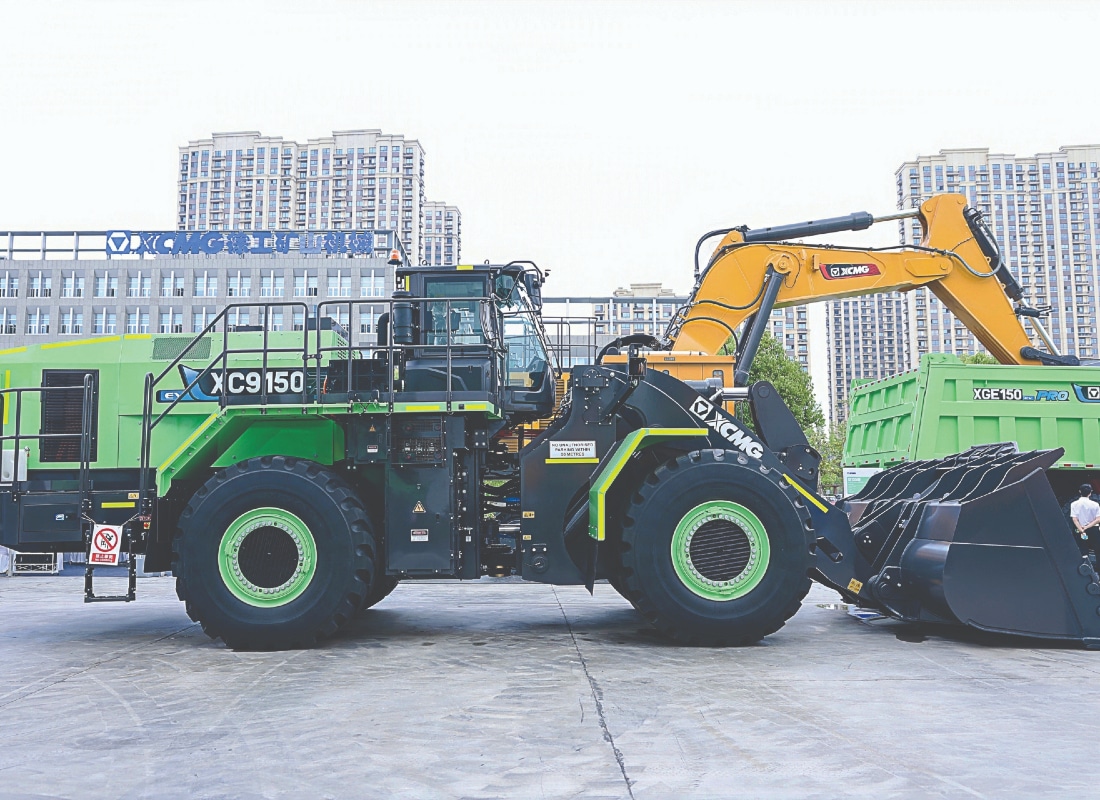
First reported on Australian Mining
30 Second Briefing
Battery-electric support fleets, including graders, water carts and service trucks, are emerging as a near-term decarbonisation lever for Australian mines, avoiding the payload and duty-cycle constraints that still limit 220–400 t battery-electric haul trucks. OEMs such as XCMG are field-testing high-voltage, fast-charge support equipment in demanding pit environments, targeting shift-length operation with opportunistic charging during breaks. For mine planners and maintenance teams, this shifts immediate focus to site-wide power distribution, charging bay layout and thermal management of batteries rather than wholesale replacement of primary production fleets.
Technical Brief
- Charging hardware is designed for pit-edge or workshop installation, minimising cable runs into active faces.
- OEM data logging focuses on battery temperature, depth-of-discharge and charge-rate impacts on pack life.
- Thermal management systems are being validated under high ambient temperatures typical of inland Australian mines.
- Integration work includes interfacing electric auxiliaries with existing mine dispatch and maintenance management systems.
- For other sites, early adopters provide real-world duty-cycle and reliability benchmarks beyond OEM simulations.
Our Take
XCMG’s push into electric support fleets in Australia sits alongside its recent ultra-class equipment launches like the XES55 rope shovel, signalling that the OEM is trying to offer a full pit-wide electrified ecosystem rather than just isolated machines.
The ongoing battery-electric prototype testing with Fortescue, including large loaders and dozers, suggests that lessons from heavy production equipment are likely feeding back into the design of smaller support units that need fast charging and high availability on Australian sites.
Within our 1260 Mining stories, XCMG appears more frequently in relation to decarbonisation projects than many other Chinese OEMs, which may give it an early advantage with Australian miners facing increasingly strict Scope 1 emissions expectations for ancillary fleets.
Prepared by collating external sources, AI-assisted tools, and Geomechanics.io’s proprietary mining database, then reviewed for technical accuracy & edited by our geotechnical team.
Related Articles


Related Industries & Products
Mining
Geotechnical software solutions for mining operations including CMRR analysis, hydrogeological testing, and data management.
CMRR-io
Streamline coal mine roof stability assessments with our cloud-based CMRR software featuring automated calculations, multi-scenario analysis, and collaborative workflows.
HYDROGEO-io
Comprehensive hydrogeological testing platform for managing, analysing, and reporting on packer tests, lugeon values, and hydraulic conductivity assessments.
GEODB-io
Centralised geotechnical data management solution for storing, accessing, and analysing all your site investigation and material testing data.