South32’s Hermosa Arizona project: FAST‑41 permit and design notes for mine planners
Reviewed by Joe Ashwell
First reported on MINING.com
30 Second Briefing
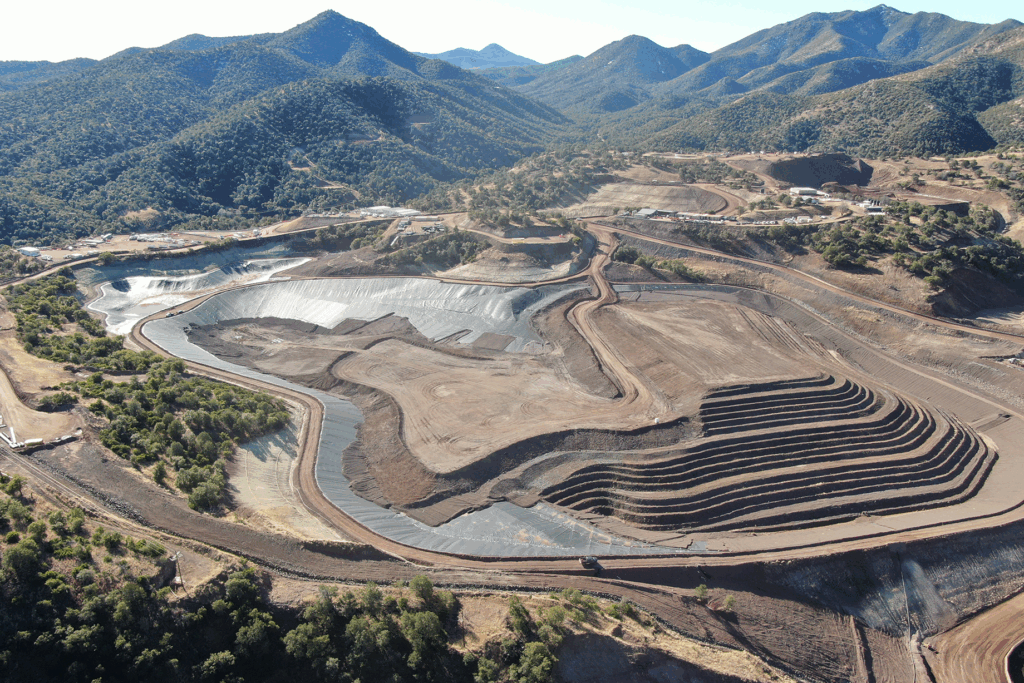
South32’s Hermosa zinc-silver project in southern Arizona has become the first US mine to complete the FAST‑41 permitting process, securing a federal record of decision in just over two years to authorise a high‑voltage transmission line, second access road, dry‑stack tailings facility and water discharge points across public land. The underground operation, designed for about 70 years of production from zinc, battery‑grade manganese and the Peak copper discovery, will disturb roughly 750 acres and target water use of ~0.5 gallons per pound of metal versus 7–30 gallons at many historical base metal mines. Construction costs have blown out beyond US$2 billion as installed steel prices rise to 2.5 times original estimates, but South32 is pushing ahead with a fully battery‑electric underground fleet, a remote operating centre in Nogales, and a plan to source at least 80% of its 800–900 roles locally, with first production aimed for early 2028.
Technical Brief
- FAST-41 assigned a dedicated US Forest Service project manager to coordinate agencies and enforce timelines.
- Federal record of decision covers HV transmission line, second access road, dry-stack TSF and discharge points on public land.
- Arizona state permits allowed private-land construction to reach roughly 50% completion before federal approvals were finalised.
- Hermosa’s manganese deposit is described as capable of meeting total US battery-grade manganese demand.
- About 400 of the 750 disturbed acres over life-of-mine are already impacted by historical workings.
- Installed steel costs have risen to ~2.5× original estimates; piping and concrete have more than doubled.
- Cost escalation is attributed to inflation, global conflicts, tariffs and competition from Arizona data centre and semiconductor builds.
- Both production shafts are planned to reach final depth by year-end, with underground mining to start late next year.
- Remote operating centre in Nogales will run automated, semi-autonomous and remotely controlled underground processes.
Our Take
Hermosa’s zinc and manganese critical-minerals profile lines up with South32’s broader pivot away from aluminium towards base metals, as noted in our coverage of its proposed aluminium divestment and portfolio shift, signalling the project is central rather than peripheral to its long-term strategy.
With Hermosa’s construction spend above US$2 billion and piping/concrete costs at least doubling versus early estimates, South32’s ability to keep moving ahead contrasts with several copper and zinc projects in our database that have stalled under similar cost inflation, suggesting a relatively robust balance sheet and board appetite for US exposure.
The 70‑year potential life at Hermosa in Arizona positions it as one of the longer-lived base‑metal assets in our recent US coverage, which is strategically significant given the forecast 4 Mt zinc supply–demand gap that would otherwise leave smelters and galvanisers more dependent on higher-risk jurisdictions.
Prepared by collating external sources, AI-assisted tools, and Geomechanics.io’s proprietary mining database, then reviewed for technical accuracy & edited by our geotechnical team.
Related Articles


Related Industries & Products
Mining
Geotechnical software solutions for mining operations including CMRR analysis, hydrogeological testing, and data management.
Construction
Quality control software for construction companies with material testing, batch tracking, and compliance management.
CMRR-io
Streamline coal mine roof stability assessments with our cloud-based CMRR software featuring automated calculations, multi-scenario analysis, and collaborative workflows.
HYDROGEO-io
Comprehensive hydrogeological testing platform for managing, analysing, and reporting on packer tests, lugeon values, and hydraulic conductivity assessments.
GEODB-io
Centralised geotechnical data management solution for storing, accessing, and analysing all your site investigation and material testing data.