Geomechanics.io

  • Free Tools
Sign UpLog In

Geomechanics.io

Geomechanics, Streamlined.

© 2026 Geomechanics.io. All rights reserved.

Geomechanics.io

CMRR-ioGEODB-ioHYDROGEO-ioQCDB-ioFree Tools & CalculatorsBlogLatest Industry News

Industries

MiningConstructionTunnelling

Company

Terms of UsePrivacy PolicyLinkedIn
    Projects
    Research

    RS2 and CVBM spalling modelling: design takeaways for deep tunnel engineers

    February 27, 2026|

    Reviewed by Joe Ashwell

    RS2 and CVBM spalling modelling: design takeaways for deep tunnel engineers

    First reported on Geoengineer.org – News

    30 Second Briefing

    Numerical modelling of deep underground excavations using RS2 and the Confinement-Dependent Visco-Plastic Model (CVBM) is used to capture spalling in jointed rock masses where confinement drops and tangential stresses concentrate around excavation boundaries. The approach contrasts brittle spalling in massive, low-porosity rock with more ductile behaviour in highly jointed rock, explicitly representing joint orientation, spacing, and strength. For design, this enables more realistic prediction of depth of failure, damage zones, and support demand around tunnels and caverns at high stress ratios.

    Technical Brief

    • RS2 finite-element models couple CVBM with explicit joint elements to simulate stress–damage interaction.
    • Calibration uses laboratory triaxial tests and in situ stress measurements from deep underground case studies.
    • Joint networks are parameterised by measured spacing, persistence and orientation sets rather than homogenised anisotropy.
    • Time-dependent visco-plastic terms in CVBM capture delayed damage growth under sustained high tangential stress.
    • Mesh refinement around excavation perimeters is required to resolve thin spalling slabs and notch geometries.
    • Model outputs include evolving yielded zones, plastic strain localisation and predicted support load increments.
    • Application to design focuses on optimising excavation sequencing and support installation timing in high-stress drifts.
    • Scope is limited to hard, low-porosity rock masses; highly weathered or porous rocks are not addressed.

    Geotechnical Software for Modern Teams

    Centralise site data, logs, and lab results with GEODB-io, CMRR-io, and HYDROGEO-io.

    No credit card required.

    • Save and export unlimited calculations
    • Advanced data visualisation
    • Generate professional PDF reports
    • Cloud storage for all your projects

    Prepared by collating external sources, AI-assisted tools, and Geomechanics.io’s proprietary mining database, then reviewed for technical accuracy & edited by our geotechnical team.

    Related Articles

    Rock & Alluvium’s 40 m CFA piles at Bow Green: design notes for London ground engineers
    Geotechnical
    1 day ago

    Rock & Alluvium’s 40 m CFA piles at Bow Green: design notes for London ground engineers

    Rock & Alluvium, part of Van Elle, has installed its deepest continuous flight auger piles to date, reaching 40m, for the Bow Green development in East London. The record-depth CFA piles indicate challenging ground conditions and high load or settlement performance requirements typical of dense urban sites near the Thames. Contractors and designers may need to consider comparable pile lengths, rig capabilities and spoil management strategies for future high-rise or mixed-use schemes in similar London alluvial and made-ground profiles.

    Helical piles FAQ: design, torque capacity and corrosion notes for engineers
    Geotechnical
    3 days ago

    Helical piles FAQ: design, torque capacity and corrosion notes for engineers

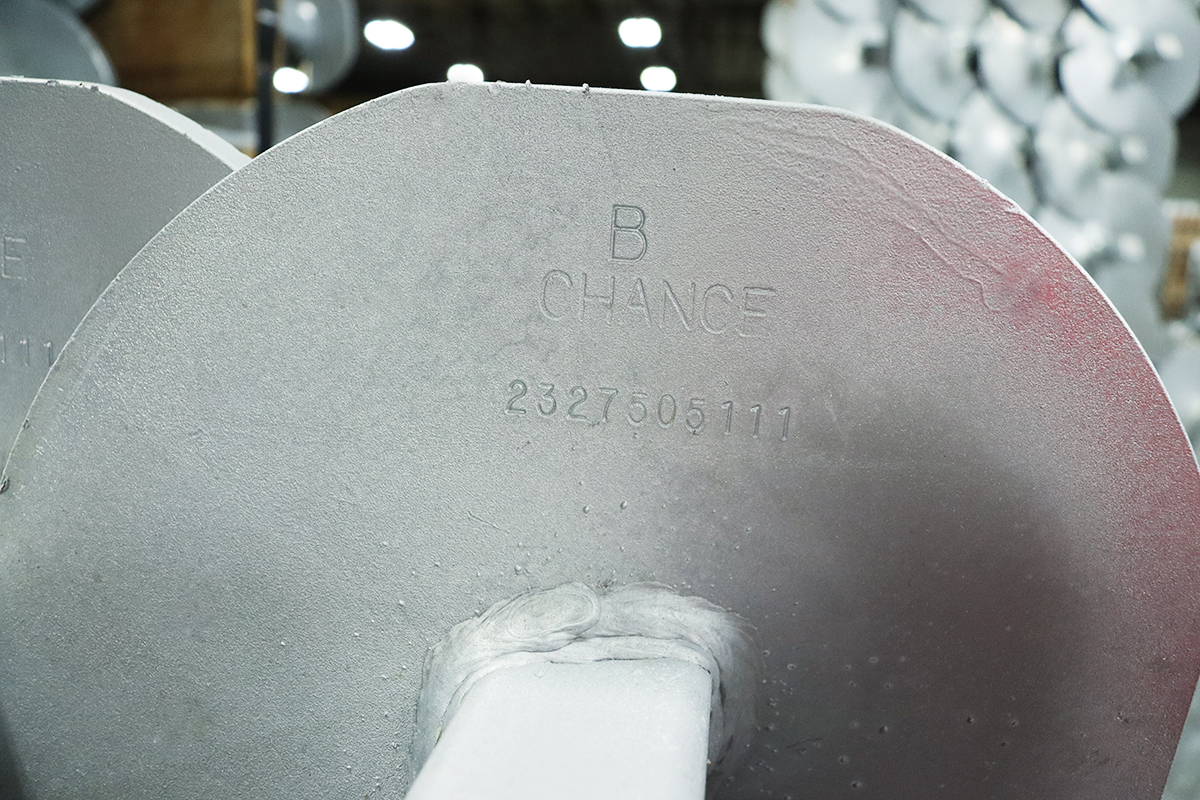
    Helical piles are presented as displacement deep foundations that can be installed with small hydraulic drive heads on mini-excavators or skid steers, generating minimal spoil and vibration compared with driven piles. The FAQ addresses load capacity verification via torque correlation (e.g. kN-m per kN of capacity), corrosion protection options such as hot-dip galvanising and increased sacrificial thickness, and suitability in soft clays, fills, and below groundwater. Design is framed around ICC-ES AC358, with emphasis on tension, compression, and lateral performance for underpinning, boardwalks, and utility structures.

    Settlement prediction in layered soils with Settle3, RS2, RS3: design notes for geotech...
    Geotechnical
    4 days ago

    Settlement prediction in layered soils with Settle3, RS2, RS3: design notes for geotech...

    Settlement prediction in layered soils is shown to depend strongly on how vertical stress increments are computed, comparing classical Boussinesq-based methods with numerical analyses in Settle3, RS2, and RS3. The piece contrasts 1D influence-factor approaches against 2D/3D finite element and finite difference models that capture stiffness contrasts, non-linear behaviour, and complex load geometries. For practitioners, it signals when simple elastic solutions become overly conservative and when full numerical stress redistribution is needed to refine serviceability settlement estimates.

    Related Industries & Products

    Mining

    Geotechnical software solutions for mining operations including CMRR analysis, hydrogeological testing, and data management.

    Tunnelling

    Specialised solutions for tunnelling projects including grout mix design, hydrogeological analysis, and quality control.

    CMRR-io

    Streamline coal mine roof stability assessments with our cloud-based CMRR software featuring automated calculations, multi-scenario analysis, and collaborative workflows.

    HYDROGEO-io

    Comprehensive hydrogeological testing platform for managing, analysing, and reporting on packer tests, lugeon values, and hydraulic conductivity assessments.

    GEODB-io

    Centralised geotechnical data management solution for storing, accessing, and analysing all your site investigation and material testing data.

    AllGeotechnicalInfrastructureHazardsEnvironmental