Geomechanics.io

  • Free Tools
Sign UpLog In

Geomechanics.io

Geomechanics, Streamlined.

© 2026 Geomechanics.io. All rights reserved.

Geomechanics.io

CMRR-ioGEODB-ioHYDROGEO-ioQCDB-ioFree Tools & CalculatorsBlogLatest Industry News

Industries

MiningConstructionTunnelling

Company

Terms of UsePrivacy PolicyLinkedIn
    Product
    Projects
    Sustainability

    OS Enhanced Land Cover for BNG: key mapping takeaways for project teams

    April 22, 2026|

    Reviewed by Tom Sullivan

    OS Enhanced Land Cover for BNG: key mapping takeaways for project teams

    First reported on The Construction Index

    30 Second Briefing

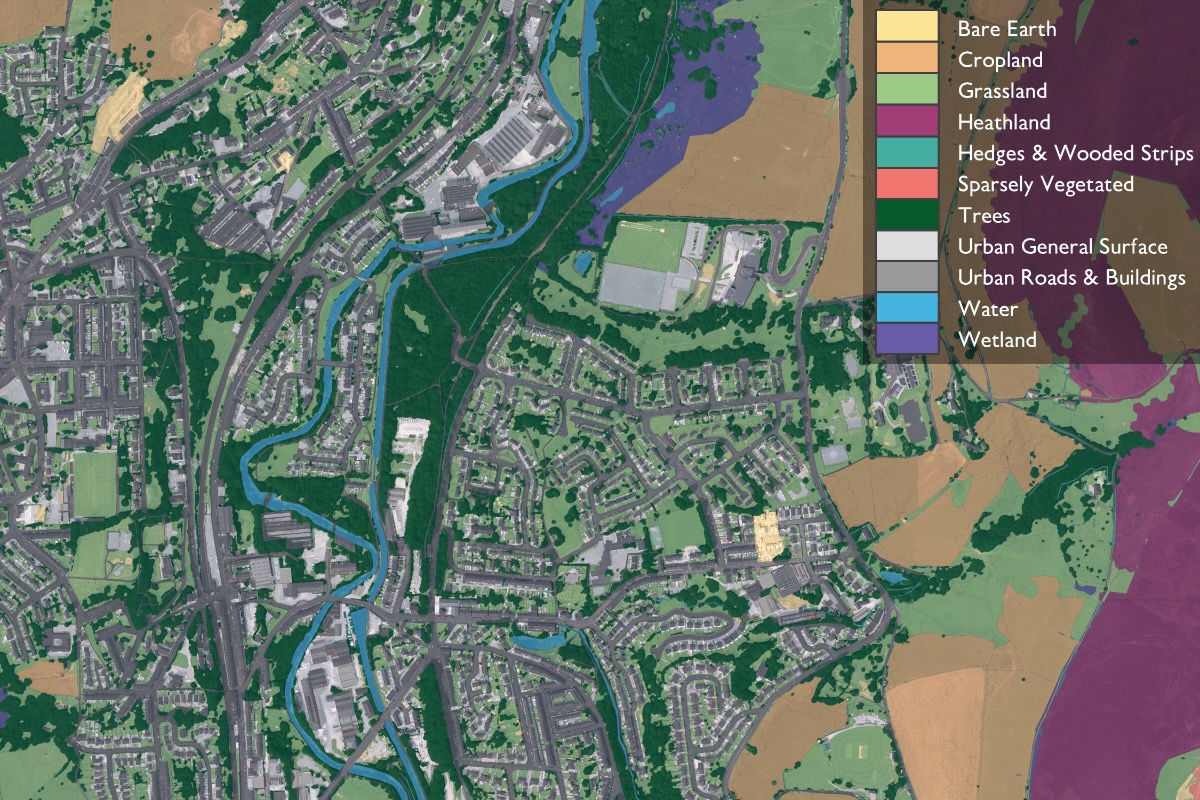
    Ordnance Survey has launched OS Enhanced Land Cover (ELC) Beta, a national habitat-mapping dataset that fuses OS National Geographic Database topography, OS aerial imagery, OS Terrain 5 and third-party sources including Natural England’s Living England, the Rural Payments Agency’s Crop Map of England and UKHab classifications to support 10% Biodiversity Net Gain (BNG) assessments. The tool enables desktop and field workflows for ecologists and developers, with Wessex Water using it via Linckia’s ESRI-based Habitat Fabric platform to assess hundreds of sites in a single spatial view. Linckia reports a 40% cut in data processing costs versus previous methods, rising to 90% compared with processing raw imagery, with OS claiming time savings of days to weeks per development across 1.5 million homes in the pipeline.

    Technical Brief

    • OS Enhanced Land Cover (ELC) Beta is explicitly aligned to the UKHab habitat classification standard.
    • UKHab alignment means outputs directly feed the statutory biodiversity metric required under Defra’s BNG legislation.
    • ELC aggregates OS National Geographic Database topography, OS aerial imagery and OS Terrain 5 into one habitat layer.
    • Third‑party inputs include Natural England’s Living England and the Rural Payments Agency’s Crop Map of England.
    • Wessex Water applies ELC via Linckia’s Habitat Fabric to inform 30‑year biodiversity uplift projections across its estate.
    • Linckia delivers ELC through an ESRI‑based BNG application, adding ecology rulesets on top of OS basemaps.
    • Reported cost savings are 40% versus earlier processed‑data workflows, and up to 90% versus raw imagery processing.
    • OS positions ELC as a way to relieve ecologist capacity constraints created by government home‑building targets plus BNG law.

    Our Take

    This is one of only a handful of Software pieces in our coverage where Ordnance Survey tools are being used directly to operationalise statutory environmental targets in England, complementing earlier OS work on climate-driven flood risk mapping for strategic transport corridors.

    The 10% biodiversity uplift target over a 30‑year projection period, combined with reported 40–90% reductions in data processing costs, signals that local authorities and utilities in the UK are likely to treat OS-aligned BNG datasets as a de facto standard for costed biodiversity accounting in housing pipelines of over a million units.

    Given Defra, Natural England and the Rural Payments Agency are all named, this OS BNG mapping product effectively sits at the intersection of regulatory compliance and geospatial software, suggesting that future Software-category tools in the UK will need to interoperate with these datasets to be credible for BNG reporting on construction projects.

    Geotechnical Software for Modern Teams

    Centralise site data, logs, and lab results with GEODB-io, CMRR-io, and HYDROGEO-io.

    No credit card required.

    • Save and export unlimited calculations
    • Advanced data visualisation
    • Generate professional PDF reports
    • Cloud storage for all your projects

    Prepared by collating external sources, AI-assisted tools, and Geomechanics.io’s proprietary mining database, then reviewed for technical accuracy & edited by our geotechnical team.


    Related Articles

    Prolec joins Trimble ecosystem: motion‑inhibit safety explained for UK project teams
    Software
    about 16 hours ago

    Prolec joins Trimble ecosystem: motion‑inhibit safety explained for UK project teams

    Prolec’s SiteGuard Pro virtual barrier system is now integrated into Trimble Earthworks, combining a height and slew limiter with automatic motion‑inhibit to stop excavators when 3D site‑referenced ceilings, walls, floors or surfaces are at risk of being breached. Avoidance zones can be defined in Trimble Business Center and enforced directly from the Earthworks cab display, preventing boom, stick, bucket and counterweight from entering restricted envelopes during normal excavation workflows. The system targets high‑risk environments such as nuclear sites, work near overhead cables and high‑value infrastructure, enabling contractors to meet motion‑inhibit tender requirements in the UK.

    Autodesk on the real AI opportunity: making scarce transport engineers go further
    Software
    1 day ago

    Autodesk on the real AI opportunity: making scarce transport engineers go further

    Australia’s transport infrastructure sector is being pushed to deliver more road and rail projects, faster, despite chronic shortages of experienced designers, modellers and project managers. Autodesk argues the practical AI opportunity is using tools such as automated clash detection, generative alignment options and machine‑assisted quantity take‑offs to extend the capacity of scarce senior engineers rather than replace them. For geotechnical and civil teams, this points to AI handling repetitive corridor design, drainage iteration and documentation, freeing specialists to focus on constructability, risk and stakeholder constraints.

    AI adoption in construction: Rics privacy and security findings for project teams
    Software
    9 days ago

    AI adoption in construction: Rics privacy and security findings for project teams

    Rising concern among construction professionals over data privacy and cyber security is slowing adoption of artificial intelligence tools, according to a new Royal Institution of Chartered Surveyors (Rics) report. Respondents cited risks around sharing commercially sensitive project data from BIM models and cost plans with cloud-based AI platforms, and uncertainty over where training data is stored and processed. The findings signal that AI deployment on live projects, including for quantity take-off automation and programme optimisation, may stall without clearer contractual, regulatory and data-governance frameworks.

    Related Industries & Products

    Construction

    Quality control software for construction companies with material testing, batch tracking, and compliance management.

    QCDB-io

    Comprehensive quality control database for manufacturing, tunnelling, and civil construction with UCS testing, PSD analysis, and grout mix design management.

    AllGeotechnicalInfrastructureHazardsEnvironmental