Geomechanics.io

  • Free Tools
Sign UpLog In

Geomechanics.io

Geomechanics, Streamlined.

© 2026 Geomechanics.io. All rights reserved.

Geomechanics.io

CMRR-ioGEODB-ioHYDROGEO-ioQCDB-ioFree Tools & CalculatorsBlogLatest Industry News

Industries

MiningConstructionTunnelling

Company

Terms of UsePrivacy PolicyLinkedIn
    Research
    Safety
    Sustainability

    Ordnance Survey flood risk mapping: resilience takeaways for UK transport engineers

    March 16, 2026|

    Reviewed by Tom Sullivan

    Ordnance Survey flood risk mapping: resilience takeaways for UK transport engineers

    First reported on New Civil Engineer

    30 Second Briefing

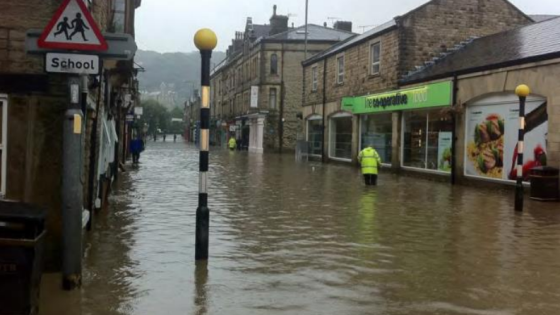
    New analysis by Ordnance Survey maps how climate-driven flood risk intersects with England’s strategic roads and railways, calling for a “clear, forward-looking understanding” of exposure. Using its national topographic database and elevation models, OS identifies low-lying corridors, embankments and cuttings where overtopping, scour and trackbed saturation could disrupt key routes. The work signals a need to integrate updated flood extents into asset management, drainage design and resilience upgrades for highways structures and rail earthworks.

    Technical Brief

    • Similar geospatial screening could be extended to depots, stations and maintenance compounds sharing the same corridors.

    Our Take

    With 34 Hazards stories in our database, the United Kingdom features heavily in flood and climate‑exposure pieces, so Ordnance Survey’s call for forward‑looking risk assessment is likely to feed directly into how UK asset owners benchmark roads and railways against other climate‑sensitive infrastructure.

    New Civil Engineer also appears in coverage of National Highways’ £11bn Lower Thames Crossing sustainability framework, suggesting that OS’s flood‑risk work could be picked up in similar whole‑life resilience and carbon baselining approaches for major English road schemes.

    Many of the 803 tag‑matched Research/Safety/Sustainability items now involve geospatial data and, increasingly, AI, so OS’s analysis is well‑placed to be integrated with predictive tools for route planning and maintenance prioritisation across England’s transport network.

    Geotechnical Software for Modern Teams

    Centralise site data, logs, and lab results with GEODB-io, CMRR-io, and HYDROGEO-io.

    No credit card required.

    • Save and export unlimited calculations
    • Advanced data visualisation
    • Generate professional PDF reports
    • Cloud storage for all your projects

    Prepared by collating external sources, AI-assisted tools, and Geomechanics.io’s proprietary mining database, then reviewed for technical accuracy & edited by our geotechnical team.

    Related Articles

    Melbourne sinkhole investigations: geotechnical lessons for tunnel project teams
    Hazards
    in about 2 months

    Melbourne sinkhole investigations: geotechnical lessons for tunnel project teams

    A sinkhole roughly 8–10 m wide and several metres deep has opened on the AJ Burkitt Reserve sporting oval in Heidelberg, directly adjacent to the North East Link tunnel alignment in Melbourne’s northeast. Victorian Infrastructure Delivery Authority has confirmed the “surface hole” is in the vicinity of active tunnelling operations, leading to a work pause while engineers and emergency crews carry out geotechnical investigations and monitoring. No injuries or structural damage have been reported, but the area remains fully cordoned off pending cause determination and stability assessment.

    Flooding mindset and financial change: asset management lessons for engineers
    Hazards
    3 days ago

    Flooding mindset and financial change: asset management lessons for engineers

    Flood and coastal defence assets are facing mounting maintenance backlogs as ageing embankments, culverts and sea walls are exposed to more frequent, higher-intensity storm events. Experts warn that current operational budgets and short funding cycles prevent timely renewal of critical structures such as tidal barriers, pumping stations and flap valves, increasing failure risk under extreme water levels. They call for a shift from reactive patch repairs to long-term, whole-life asset management with multi-year funding settlements to support planned inspections, resilience upgrades and adaptive design.

    Iran CO2 plant reopening: nuclear safety and supply-chain lessons for engineers
    Hazards
    4 days ago

    Iran CO2 plant reopening: nuclear safety and supply-chain lessons for engineers

    A disused UK carbon dioxide production plant has been recommissioned by the government to address a CO2 shortage triggered by the Iran conflict, with officials calling the gas “vital” for safe nuclear power station operation. CO2 is required for reactor systems such as coolant circuits, pressurisation and fire suppression, making supply-chain resilience a direct nuclear safety and availability issue. Engineers should expect renewed scrutiny of single-point vulnerabilities in industrial gas logistics and potential retrofits to diversify on-site CO2 storage and backup supply routes.

    Related Industries & Products

    Construction

    Quality control software for construction companies with material testing, batch tracking, and compliance management.

    CMRR-io

    Streamline coal mine roof stability assessments with our cloud-based CMRR software featuring automated calculations, multi-scenario analysis, and collaborative workflows.

    HYDROGEO-io

    Comprehensive hydrogeological testing platform for managing, analysing, and reporting on packer tests, lugeon values, and hydraulic conductivity assessments.

    GEODB-io

    Centralised geotechnical data management solution for storing, accessing, and analysing all your site investigation and material testing data.

    AllGeotechnicalInfrastructureHazardsEnvironmental