Geomechanics.io

  • Free Tools
Sign UpLog In

    Geomechanics.io

    Geomechanics, Streamlined.

    © 2026 Geomechanics.io. All rights reserved.

    Geomechanics.io

    CMRR-ioGEODB-ioHYDROGEO-ioQCDB-ioFree Tools & CalculatorsBlogLatest Industry News

    Industries

    MiningConstructionTunnelling

    Company

    Terms of UsePrivacy PolicyLinkedIn
    Projects
    Product

    Neo Performance Estonia heavy rare earths: supply chain notes for engineers

    April 11, 2026|

    Reviewed by Joe Ashwell

    Neo Performance Estonia heavy rare earths: supply chain notes for engineers

    First reported on MINING.com

    30 Second Briefing

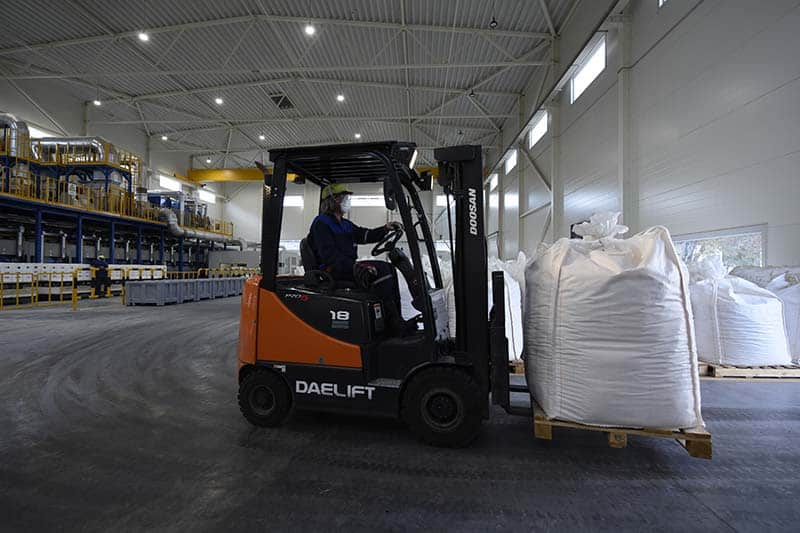
    Neo Performance Materials has produced its first separated terbium and dysprosium oxides from mixed rare earth carbonate at the newly commissioned solvent extraction line at its Silmet plant in Estonia, now running at nameplate capacity. The heavy rare earth output is designed to feed Neo’s sintered magnet plant in Narva, which opened in September as Europe’s first mass-production facility with an initial capacity of 2,000 tonnes per year. Neo is now concentrating on stabilising product purity before ramping to routine production, while maintaining full traceability across its European light and heavy rare earth value chain.

    Technical Brief

    • Solvent extraction line at Silmet is configured for small-scale operation but currently runs at nameplate.
    • Feedstock is mixed rare earth carbonate, implying upstream concentration and carbonate precipitation prior to separation.
    • Output products are separated terbium and dysprosium oxides, suitable for direct magnet alloy feed.
    • Heavy rare earth separation at Silmet is explicitly integrated with Neo’s Narva sintered magnet plant in Estonia.
    • Neo’s value chain now covers both light and heavy rare earth processing, plus finishing into engineered applications.
    • Current operational focus is process control to stabilise oxide purity before moving to routine production throughput.

    Our Take

    Neo Performance Materials shows up in our critical minerals funding coverage via Ottawa’s support package for 30 projects, signalling that the new heavy rare earth output at Silmet is likely to sit within a broader Canada–EU supply chain strategy rather than as a standalone plant upgrade.

    With heavy rare earth elements like terbium and dysprosium tagged in only a small subset of the 118 keyword-matched pieces in our database, Silmet’s production move positions Neo as one of the few non-Chinese, industrial-scale suppliers regularly appearing in recent Materials coverage.

    Locating heavy rare earth production in Estonia and magnet manufacturing in Narva gives Neo a rare EU-based footprint at a time when most critical minerals funding in our database is still concentrated in Canada and the United States, which may give it leverage in future EU offtake or support schemes.

    Geotechnical Software for Modern Teams

    Centralise site data, logs, and lab results with GEODB-io, CMRR-io, and HYDROGEO-io.

    No credit card required.

    • Save and export unlimited calculations
    • Advanced data visualisation
    • Generate professional PDF reports
    • Cloud storage for all your projects

    Prepared by collating external sources, AI-assisted tools, and Geomechanics.io’s proprietary mining database, then reviewed for technical accuracy & edited by our geotechnical team.

    Related Articles
    Voya Energy’s $35M aluminium fuel system: design and scale notes for engineers
    Materials
    about 12 hours ago

    Voya Energy’s $35M aluminium fuel system: design and scale notes for engineers

    Clean tech startup Voya Energy has secured US$35 million, led by Energy Impact Partners with backing from John Doerr and others, to commercialise aluminium-based metal fuel generators for large off-grid users such as data centres and industrial plants. The system uses low‑grade scrap aluminium pellets in a proprietary metal‑air cell with custom electrolyte, producing electricity electrochemically with no on-site combustion or air emissions and operating independently of the grid. Current designs target up to 2 MW per 20‑foot containerised generator with a separate 10‑foot fuel module holding about 100 MWh, scaling to roughly 100 MW and 10 GWh per acre.

    Interface 5600 2-Axis Axial Torsion Load Cell: test rig gains for engineers
    Materials
    3 days ago

    Interface 5600 2-Axis Axial Torsion Load Cell: test rig gains for engineers

    The Interface 5600 2-Axis Axial Torsion Load Cell combines compressive force and torsional moment measurement in a single flange-mount transducer, capturing both at the same point for demanding test and measurement rigs. Its compact, multi-axis design reduces fixture complexity compared with separate axial and torque sensors, freeing space around test specimens and simplifying alignment. For mining equipment OEMs and materials labs, the unit supports more accurate characterisation of drill strings, couplings and rotating components under combined loading.

    Siniat plasterboard carbon cuts: EPD data and design implications for engineers
    Materials
    6 days ago

    Siniat plasterboard carbon cuts: EPD data and design implications for engineers

    Drywall manufacturer Siniat has achieved a 5% reduction in carbon intensity across its plasterboard products following a £170m upgrade of its Bristol HQ production line (opened March 2025) and improvements at its Ferrybridge plant, enabling retirement of older, less energy‑efficient equipment. The programme forms part of parent company Etex’s target to cut Scope 1 and 2 emissions by 35% using higher recycled content, lower energy intensity per tonne and a zero‑waste‑to‑landfill approach. Verified Environmental Product Declarations now cover over 86% of Siniat products, giving designers and contractors project‑level carbon data aligned with UK Net Zero Carbon Building Standard reporting.

    Related Industries & Products

    Mining

    Geotechnical software solutions for mining operations including CMRR analysis, hydrogeological testing, and data management.

    Construction

    Quality control software for construction companies with material testing, batch tracking, and compliance management.

    QCDB-io

    Comprehensive quality control database for manufacturing, tunnelling, and civil construction with UCS testing, PSD analysis, and grout mix design management.

    AllGeotechnicalInfrastructureHazardsEnvironmental