Mining’s AI future and human expertise: integration lessons for site engineers
Reviewed by Tom Sullivan
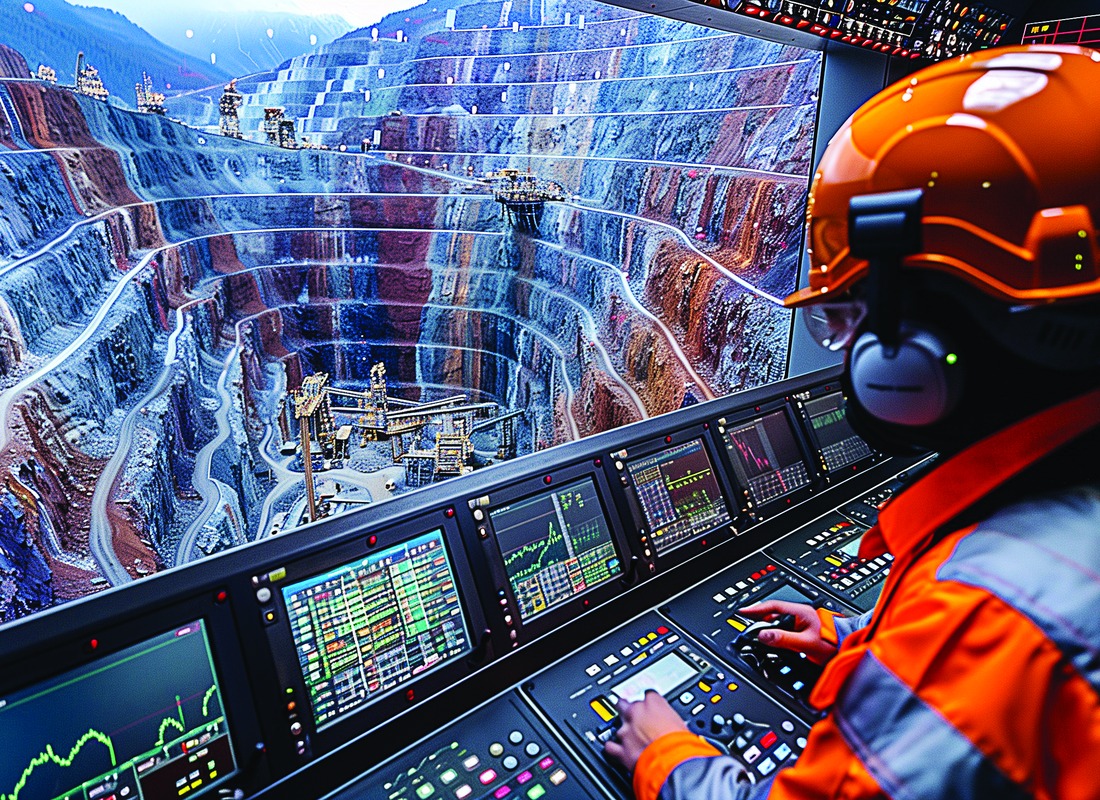
First reported on Australian Mining
30 Second Briefing
Artificial intelligence is being rolled out across mines for tasks such as mill optimisation, predictive maintenance and fleet dispatch, but its success still hinges on experienced operators, metallurgists and geotechs defining constraints and validating outputs. Vendors are pairing machine-learning models with domain-specific tools – for example, digital twins of crushers and grinding circuits, or AI-assisted short-interval control in fleet management systems – to capture tacit knowledge from senior crews. The message for sites is to treat AI as an augmentation layer on existing control, planning and reconciliation workflows, not a plug‑and‑play replacement for human judgement.
Technical Brief
- Vendors are embedding AI into existing DCS/SCADA layers rather than bypassing hard‑wired safety interlocks.
- Many deployments use constrained optimisation models with explicit throughput, vibration, temperature and power‑draw limits.
- Digital twins of comminution circuits are calibrated using historical plant downtime, overload and liner‑wear event data.
- Fleet AI tools ingest operator pre‑start checklists and near‑miss reports to refine hazard‑avoidance rules.
- Human‑in‑the‑loop workflows keep final set‑point changes subject to supervisor approval within control room procedures.
- OEMs are encoding OEM maintenance manuals and fault trees so AI recommendations align with existing safe‑work instructions.
- Sites are updating change‑management and competency standards so AI model updates trigger formal risk assessments.
- For other mines, key implication is integrating AI into existing critical control management, not creating parallel systems.
Our Take
Australian Mining also anchors coverage of traditional risk levers such as heavy-haul rail (e.g. the Martinus item on iron ore and coal logistics), so AI-focused safety tools will likely be evaluated against proven gains from infrastructure and procedural controls rather than as stand-alone solutions.
The prominence of AI in an Australia-focused outlet that also reports on regulatory and trade shifts (such as the US tariff piece on bulk commodities) signals that miners may increasingly treat AI capability as part of national competitiveness in exporting jurisdictions, not just as a site-level optimisation tool.
Prepared by collating external sources, AI-assisted tools, and Geomechanics.io’s proprietary mining database, then reviewed for technical accuracy & edited by our geotechnical team.
Related Articles


Related Industries & Products
Mining
Geotechnical software solutions for mining operations including CMRR analysis, hydrogeological testing, and data management.
Construction
Quality control software for construction companies with material testing, batch tracking, and compliance management.
CMRR-io
Streamline coal mine roof stability assessments with our cloud-based CMRR software featuring automated calculations, multi-scenario analysis, and collaborative workflows.
HYDROGEO-io
Comprehensive hydrogeological testing platform for managing, analysing, and reporting on packer tests, lugeon values, and hydraulic conductivity assessments.
GEODB-io
Centralised geotechnical data management solution for storing, accessing, and analysing all your site investigation and material testing data.