Geomechanics.io

  • Free Tools
Sign UpLog In
Built byBoxcut Studio

Geomechanics.io

Geomechanics, Streamlined.

© 2026 Geomechanics.io. All rights reserved.

Geomechanics.io

CMRR-ioGEODB-ioHYDROGEO-ioQCDB-ioFree Tools & CalculatorsBlogLatest Industry News

Industries

MiningConstructionTunnelling

Company

Terms of UsePrivacy PolicyLinkedIn
    Projects
    Safety

    Mineração Morro do Ipê tailings dam sirens: integration lessons for risk engineers

    January 6, 2026|

    Reviewed by Tom Sullivan

    Mineração Morro do Ipê tailings dam sirens: integration lessons for risk engineers

    First reported on International Mining – News

    30 Second Briefing

    Mineração Morro do Ipê (MMI) has installed 19 HÖRMANN Warnsysteme electronic sirens as an automated warning system for communities in the tailings dam impact zone. The sirens are linked to dam monitoring sensors and are configured to trigger automatically in the event of a breach, removing reliance on manual activation during fast‑developing failures. For geotechnical and emergency planners, the project illustrates integration of real‑time instrumentation with public alerting infrastructure as part of Brazilian post‑Brumadinho tailings risk management practice.

    Technical Brief

    • System design is tailored to tailings-dam emergency scenarios, prioritising rapid acoustic coverage of downstream communities.
    • Electronic sirens allow pre-programmed alarm tones and voice messages aligned with local civil-defence protocols.
    • Integration with dam instrumentation reduces dependence on human decision-making during night-time or low-occupancy periods.
    • Siren network configuration implies redundancy; failure of a single unit does not disable area-wide alerting.
    • Use of a European OEM introduces defined maintenance, testing and lifecycle support regimes for critical warning assets.

    Our Take

    Within the 24 Hazards stories in our database, very few deal with hard-wired warning infrastructure at tailings dams, so Mineração Morro do Ipê’s deployment of 19 HÖRMANN Warnsysteme sirens stands out against a field still dominated by policy and post-failure investigations.

    Most Safety‑tagged pieces in our coverage focus on monitoring and AI‑enabled prediction, so MMI’s emphasis on high-reliability acoustic alerting suggests operators are layering physical warning systems on top of digital sensing rather than relying on software alone.

    For iron ore operators tracked in our database, especially in Brazil, investment in siren networks like this is increasingly seen as a prerequisite for maintaining social licence and insurability after high‑profile tailings failures, rather than an optional add‑on to dam monitoring programmes.

    Geotechnical Software for Modern Teams

    Centralise site data, logs, and lab results with GEODB-io, CMRR-io, and HYDROGEO-io.

    No credit card required.

    • Save and export unlimited calculations
    • Advanced data visualisation
    • Generate professional PDF reports
    • Cloud storage for all your projects

    Prepared by collating external sources, AI-assisted tools, and Geomechanics.io’s proprietary mining database, then reviewed for technical accuracy & edited by our geotechnical team.

    Related Articles
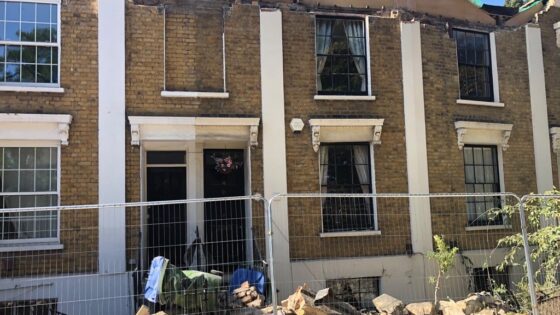
    South London partial building collapse: stability lessons for urban engineers
    Hazards
    1 day ago

    South London partial building collapse: stability lessons for urban engineers

    Residents of 14 properties evacuated after the partial collapse of three terraced houses in south London have been allowed back home more than 11 weeks after the incident. Structural engineers have evidently deemed the remaining buildings stable enough for reoccupation following inspections and temporary works to secure the damaged terrace. The case underlines the time and access constraints that follow even localised collapse events, with extended exclusion zones needed while assessing party wall integrity, shared foundations and potential progressive failure in dense urban streets.

    Habas Demir Celik blast in Turkey: crane and furnace safety lessons for engineers
    Hazards
    2 days ago

    Habas Demir Celik blast in Turkey: crane and furnace safety lessons for engineers

    A blast at the Habas Demir Celik iron and steel plant in Aliaga, Izmir province, killed 16 workers when a ceiling crane snapped and fell into an arc furnace during molten steel casting around noon on 9 November. Ten people remain trapped under rubble, while 13 were injured and two are in serious condition, with casualties distributed across several regional hospitals. The Turkish government has opened an investigation, putting overhead crane integrity, furnace-area lifting operations and maintenance regimes under immediate scrutiny for heavy steel plants.

    Codelco Andina tailings spill: incident and water-risk lessons for engineers
    Hazards
    6 days ago

    Codelco Andina tailings spill: incident and water-risk lessons for engineers

    Codelco has halted processing at its Andina copper division after an obstruction in the tailings transport system near the Rápido RV4 sector caused a partial tailings release that may have entered the Blanco River within the Río Blanco canyon, upstream of the Aconcagua River basin. Emergency actions include shutting the concentrator, suspending tailings transport, diverting flows to the Piuquenitos reservoir, and continuous river sampling, while water utility Esval has closed its Aconcagua surface intake and switched to underground sources for Los Andes. The incident coincides with disclosure of 42,100 tonnes of previously inflated copper output and a 17,000‑tonne inventory reporting discrepancy, intensifying regulatory and community scrutiny of tailings and water-risk management at Andina.

    Related Industries & Products

    Mining

    Geotechnical software solutions for mining operations including CMRR analysis, hydrogeological testing, and data management.

    Construction

    Quality control software for construction companies with material testing, batch tracking, and compliance management.

    CMRR-io

    Streamline coal mine roof stability assessments with our cloud-based CMRR software featuring automated calculations, multi-scenario analysis, and collaborative workflows.

    HYDROGEO-io

    Comprehensive hydrogeological testing platform for managing, analysing, and reporting on packer tests, lugeon values, and hydraulic conductivity assessments.

    GEODB-io

    Centralised geotechnical data management solution for storing, accessing, and analysing all your site investigation and material testing data.

    AllGeotechnicalInfrastructureHazardsEnvironmental