MAX Power’s Lawson hydrogen project expansion: scale and infrastructure lens for engineers
Reviewed by Joe Ashwell
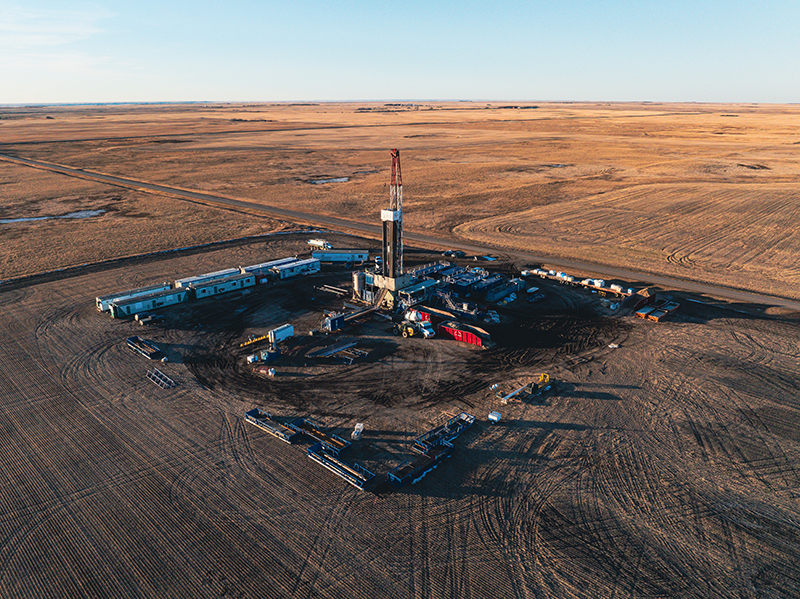
First reported on MINING.com
30 Second Briefing
MAX Power Mining has secured an additional 155,125 acres (628 sq. km) of permits contiguous with its 1,224 sq. km Lawson natural hydrogen project in south-central Saskatchewan, creating the newly named Aurora project on a basement-controlled structural play along the Paleoproterozoic–Archean contact of the Sask Craton. The company has now accumulated 660,263 acres (2,672 sq. km) of provincial permits across the Genesis Trend while running a multi-well commercial validation drill programme at Lawson targeting large-scale natural hydrogen. An MOU with the City of Moose Jaw links potential hydrogen development to a nearby heavy industrial and major data centre corridor, signalling early focus on local offtake and infrastructure integration.
Technical Brief
- Newly named Aurora project is described as a basement-controlled structural play adjacent to Lawson.
- Aurora is interpreted to be hosted in a large alkaline igneous complex similar to Lawson’s setting.
- Geological model requires suitable source rocks, migration pathways, reservoirs, structural traps and seals for hydrogen.
- MAX Power’s permits are provincial government–issued across south-central Saskatchewan, not just the Lawson area.
- Permit expansion is based on in-house analysis of proprietary geological and geophysical datasets across the Genesis Trend.
- CEO frames development strategy as “months to molecules”, implying compressed exploration-to-commercialisation timelines.
- MOU with the City of Moose Jaw targets integration with a heavy industrial and major data centre corridor.
Our Take
The expansion of MAX Power’s landholding around the Lawson discovery comes after the C$25 million Eric Sprott placement in May 2026, signalling that recent capital raised is being rapidly converted into ground consolidation rather than just drilling metres.
With 628 km² of contiguous permits at both Lawson and the Aurora project along the Genesis Trend in south‑central Saskatchewan, MAX Power is effectively trying to secure a district‑scale natural hydrogen position before competitors can lock up adjacent structural targets.
Prepared by collating external sources, AI-assisted tools, and Geomechanics.io’s proprietary mining database, then reviewed for technical accuracy & edited by our geotechnical team.
Related Articles


Related Industries & Products
Mining
Geotechnical software solutions for mining operations including CMRR analysis, hydrogeological testing, and data management.
Construction
Quality control software for construction companies with material testing, batch tracking, and compliance management.
CMRR-io
Streamline coal mine roof stability assessments with our cloud-based CMRR software featuring automated calculations, multi-scenario analysis, and collaborative workflows.
HYDROGEO-io
Comprehensive hydrogeological testing platform for managing, analysing, and reporting on packer tests, lugeon values, and hydraulic conductivity assessments.
GEODB-io
Centralised geotechnical data management solution for storing, accessing, and analysing all your site investigation and material testing data.