Geomechanics.io

  • Free Tools
Sign UpLog In
Built byBoxcut Studio

Geomechanics.io

Geomechanics, Streamlined.

© 2026 Geomechanics.io. All rights reserved.

Geomechanics.io

CMRR-ioGEODB-ioHYDROGEO-ioQCDB-ioFree Tools & CalculatorsBlogLatest Industry News

Industries

MiningConstructionTunnelling

Company

Terms of UsePrivacy PolicyLinkedIn
    Projects
    Safety

    Lichfield & Hatherton canal jacked culverts: design and settlement control for engineers

    October 23, 2026|

    Reviewed by Joe Ashwell

    Lichfield & Hatherton canal jacked culverts: design and settlement control for engineers

    First reported on New Civil Engineer

    30 Second Briefing

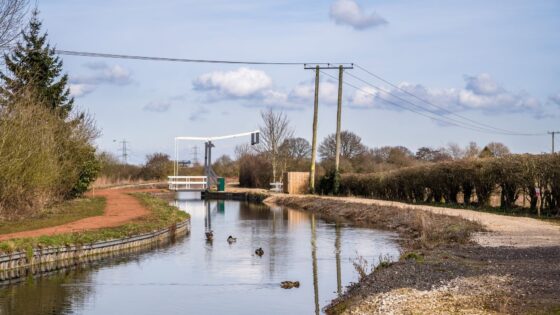
    Restoration of the Lichfield and Hatherton canals will require jacked culverts to be installed beneath the A38 and an active railway, reinstating historic waterway alignments severed by past road and rail schemes. Engineers must design low-cover, large-diameter culvert barrels capable of carrying canal navigation loads while maintaining motorway and rail traffic, likely using long-distance pipe jacking from constrained launch shafts. The works will demand careful settlement control, continuous monitoring of track and pavement, and robust groundwater management to protect both existing infrastructure and canal water levels.

    Technical Brief

    • Similar UK canal reinstatements under live infrastructure increasingly adopt jacked solutions to avoid open‑cut risks and long diversions.

    Our Take

    Other New Civil Engineer coverage in our database, such as the webinar on BIM and asset data handover, suggests that jacked culvert works beneath the A38 and a railway will likely face scrutiny on how construction and as-built data are managed for long-term asset stewardship.

    Geotechnical Software for Modern Teams

    Centralise site data, logs, and lab results with GEODB-io, CMRR-io, and HYDROGEO-io.

    No credit card required.

    • Save and export unlimited calculations
    • Advanced data visualisation
    • Generate professional PDF reports
    • Cloud storage for all your projects

    Prepared by collating external sources, AI-assisted tools, and Geomechanics.io’s proprietary mining database, then reviewed for technical accuracy & edited by our geotechnical team.


    Related Articles

    BGS remap of UK Continental Shelf: ground model gains for offshore designers
    Geotechnical
    about 14 hours ago

    BGS remap of UK Continental Shelf: ground model gains for offshore designers

    BGS will lead a three-year programme to remap seabed geology across the UK Continental Shelf, generating new high-resolution datasets and interpretative reports for offshore energy and infrastructure projects. The work will refine stratigraphy, sediment thickness and seabed geomorphology, improving ground model confidence for fixed and floating wind foundations, subsea cables and pipelines. Developers and designers will gain more consistent geotechnical baseline information for site selection, routeing and preliminary design, potentially reducing investigation redundancy and contingency allowances.

    ORE Catapult floating wind framework: design and cost notes for offshore engineers
    Geotechnical
    10 days ago

    ORE Catapult floating wind framework: design and cost notes for offshore engineers

    ORE Catapult has issued an updated cost-reduction framework for floating offshore wind, targeting lower levelised cost of energy by standardising substructure design, mooring systems and dynamic cable configurations. The framework focuses on optimising fabrication and assembly in ports, modularising concrete and steel floaters, and rationalising installation strategies for deep-water sites beyond typical fixed-bottom depths. Developers and designers gain a structured route to compare platform concepts, refine geotechnical and anchoring solutions, and de-risk large-scale deployment in harsher metocean conditions.

    Mainmark Godstone sinkhole repairs: resin injection lessons for ground engineers
    Geotechnical
    14 days ago

    Mainmark Godstone sinkhole repairs: resin injection lessons for ground engineers

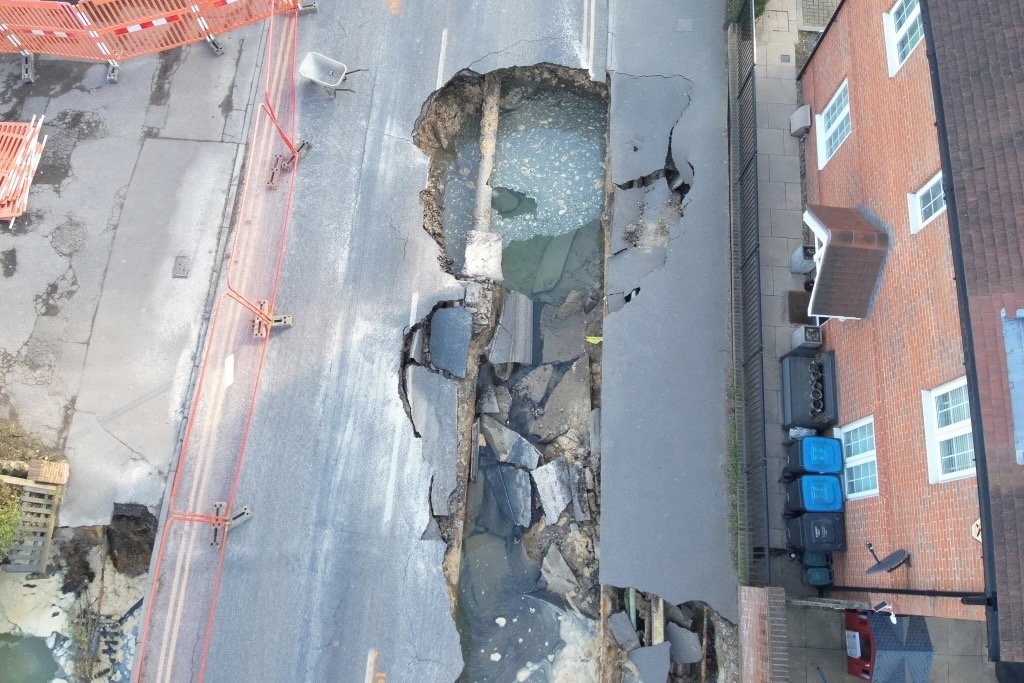
    Mainmark has completed a three‑week ground improvement programme in Godstone, Surrey, following an 18‑month repair effort after a 20m long, 5m wide, 5m deep sinkhole on the High Street exposed historic sand mine workings about 8m below ground. Working within a multidisciplinary team for Surrey County Council, Mainmark installed roughly 600 resin injection points across High Street and Salisbury Road, targeting depths of 1–4m to strengthen weak and disturbed ground. The works aimed to cut off potential void migration pathways above the remediated mine network before full road reconstruction.

    Related Industries & Products

    Construction

    Quality control software for construction companies with material testing, batch tracking, and compliance management.

    QCDB-io

    Comprehensive quality control database for manufacturing, tunnelling, and civil construction with UCS testing, PSD analysis, and grout mix design management.

    AllGeotechnicalInfrastructureHazardsEnvironmental