Geomechanics.io

  • Free Tools
Sign UpLog In

    Geomechanics.io

    Geomechanics, Streamlined.

    © 2026 Geomechanics.io. All rights reserved.

    Geomechanics.io

    CMRR-ioGEODB-ioHYDROGEO-ioQCDB-ioFree Tools & CalculatorsBlogLatest Industry News

    Industries

    MiningConstructionTunnelling

    Company

    Terms of UsePrivacy PolicyLinkedIn
    Projects
    Safety

    Keller’s South Florida high-rise work: deep foundation lessons for engineers

    May 26, 2026|

    Reviewed by Tom Sullivan

    Keller’s South Florida high-rise work: deep foundation lessons for engineers

    First reported on Geoengineer.org – News

    30 Second Briefing

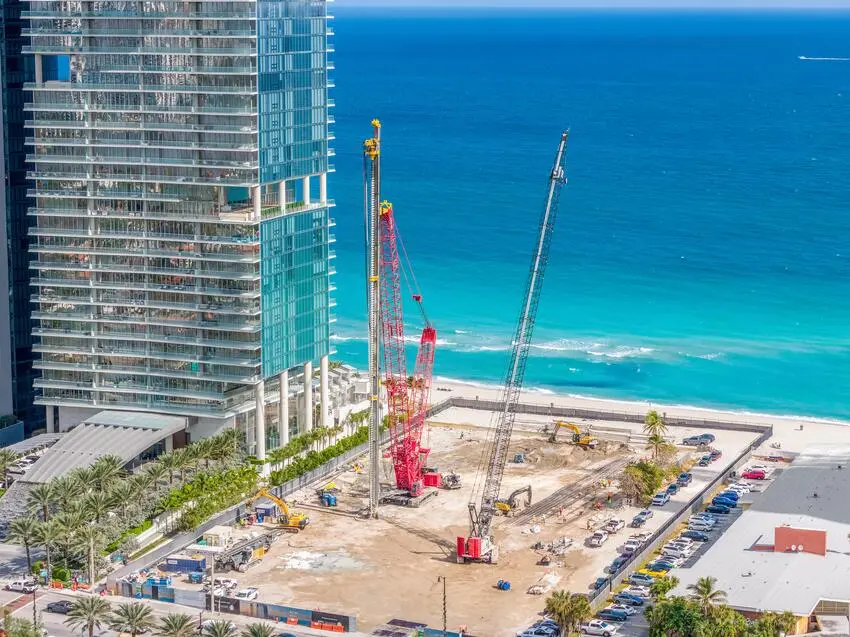
    Recent high-rise construction in South Florida is driving demand for deep foundations in karstic limestone, with Keller using large-diameter drilled shafts and augered cast-in-place piles to control settlement in weak, highly variable strata. The DFI Deep Foundations Magazine feature by Michael Meneses, Will Burgos, and James Hussin details case histories where groundwater levels near sea level, aggressive chloride environments, and strict lateral deflection limits governed design. For practitioners, the projects emphasise rigorous geotechnical characterisation, corrosion protection strategies, and construction QA/QC to manage risk in coastal high-rise work.

    Technical Brief

    • Safety-critical design checks addressed potential voided zones and solution cavities typical of South Florida karst.
    • Construction sequencing limited simultaneous adjacent shaft drilling to control ground movements around occupied or sensitive structures.
    • Full-time on-site QA/QC monitored slurry properties, shaft cleanliness and concrete volume reconciliation for every element.
    • Cross-hole sonic logging and low-strain integrity testing were routinely specified to verify shaft continuity and defect-free construction.
    • Corrosion protection design considered long-term durability of reinforcement in chloride-laden groundwater, including cover, bar coatings and concrete mix performance.
    • Strict site safety plans managed crane operations, spoil handling and working platforms on constrained urban parcels.

    Our Take

    Keller’s South Florida high‑rise work sits alongside recent North American projects in Alameda and Hamilton in our database, underscoring how the contractor is increasingly showcased for complex ground improvement and foundation redesign in challenging urban settings.

    With Keller’s North American leadership reshuffle reported in April 2026, this kind of high‑profile South Florida coverage will likely be used internally as a reference portfolio for the new US Foundations management team when positioning the business for coastal high‑rise and resilience‑driven work.

    Deep Foundations Institute recognition of long‑term Keller practitioners, such as the Wallace Hayward Baker Award noted in January 2026, signals that DFI and its magazine are a key platform for the company to frame its South Florida high‑rise experience as part of a broader safety and technical thought‑leadership push.

    Geotechnical Software for Modern Teams

    Centralise site data, logs, and lab results with GEODB-io, CMRR-io, and HYDROGEO-io.

    No credit card required.

    • Save and export unlimited calculations
    • Advanced data visualisation
    • Generate professional PDF reports
    • Cloud storage for all your projects

    Prepared by collating external sources, AI-assisted tools, and Geomechanics.io’s proprietary mining database, then reviewed for technical accuracy & edited by our geotechnical team.

    Related Articles
    TAS stadium works: Macquarie Point contract and ground risks for engineers
    Geotechnical
    about 13 hours ago

    TAS stadium works: Macquarie Point contract and ground risks for engineers

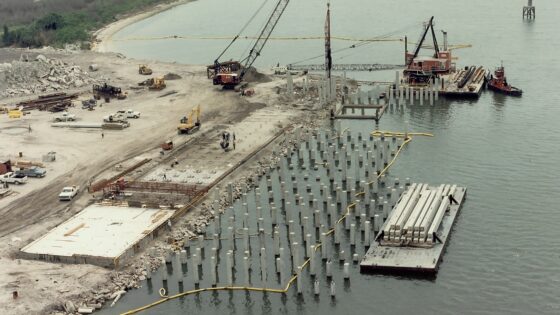
    Tasmania’s Government has let a contract to dismantle and compact the early‑20th‑century Goods Shed at Macquarie Point to clear the site for a $1.13 billion multi‑purpose stadium in Hobart. The former rail and port freight hub will be packed down to formation level, providing a prepared platform for the stadium’s deep foundations, services corridors and future transport interfaces. Geotechnical teams will need to manage demolition spoil, variable fill and potential contamination typical of historic industrial waterfronts before main works can proceed.

    Keller North America engineer programme: design–build skills lens for geotechnical teams
    Geotechnical
    about 17 hours ago

    Keller North America engineer programme: design–build skills lens for geotechnical teams

    Keller North America has expanded its field engineer / project engineer development programme after a successful pilot, formalising a structured path from site-based roles into project management and technical leadership. The scheme combines intensive on-the-job training on ground improvement and deep foundation projects with rotations through estimating, design, and operations, exposing graduates to tools such as geotechnical instrumentation, grout mix design, and pile load testing. For contractors and clients, the move signals a pipeline of early-career engineers with stronger design–build integration skills and site-ready competence.

    BGS UK ground investigation data service: design and risk notes for engineers
    Geotechnical
    4 days ago

    BGS UK ground investigation data service: design and risk notes for engineers

    The British Geological Survey is advancing a national geotechnical data service to collate UK ground investigation records into a single, standardised digital platform for project teams. By aggregating borehole logs, in situ test results and laboratory data from multiple legacy sources, the system aims to give designers earlier visibility of variable strata, groundwater conditions and historical contamination. For geotechnical and civil engineers, this could reduce duplicate site investigations, refine ground models at concept stage and improve risk pricing for foundations, earthworks and underground structures.

    Related Industries & Products

    Construction

    Quality control software for construction companies with material testing, batch tracking, and compliance management.

    Mining

    Geotechnical software solutions for mining operations including CMRR analysis, hydrogeological testing, and data management.

    QCDB-io

    Comprehensive quality control database for manufacturing, tunnelling, and civil construction with UCS testing, PSD analysis, and grout mix design management.

    AllGeotechnicalInfrastructureHazardsEnvironmental