Jacobs’ Oldbury environmental baselining: implications for nuclear site design
Reviewed by Joe Ashwell
First reported on New Civil Engineer
30 Second Briefing
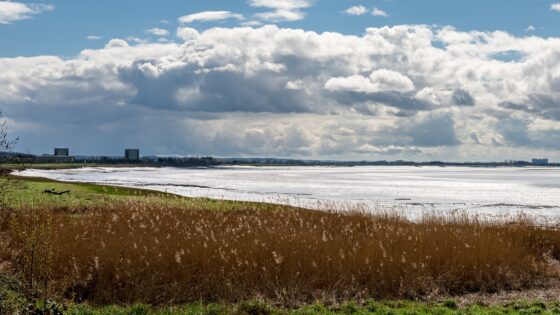
Jacobs has been appointed by Great British Energy – Nuclear to deliver environmental consultancy and baselining at the Oldbury site in Gloucestershire, earmarked as a potential location for a new nuclear power station. The work will characterise existing ground, groundwater, ecological and radiological conditions to support future nuclear site licensing, environmental permits and design optioneering. Early baselining data will be critical for later geotechnical investigations, foundation design, flood and coastal risk assessments, and long-term monitoring strategies if the project proceeds.
Technical Brief
- Oldbury is a brownfield nuclear site, so baselining must separate legacy contamination from new-build impacts.
- Proximity to the Severn Estuary implies coastal, tidal and floodplain interactions will strongly condition ground and groundwater characterisation.
- Historical Magnox operations at Oldbury introduce radiological baseline complexity, including potential subsurface activation and legacy waste pathways.
- Existing nuclear-licensed land parcels and surrounding non-licensed areas will likely require differentiated survey, access and permitting regimes.
- Integration of ecological and radiological baselines at one estuarine site will drive multi-disciplinary survey logistics and data management.
Our Take
Jacobs’ role at the Oldbury site comes on top of several UK infrastructure wins in our database, including Birmingham City Council’s £200M transportation framework, signalling that local authorities and central government bodies are increasingly relying on the same tier-one consultants for both decarbonisation and major civils work in the United Kingdom.
Great British Energy – Nuclear’s involvement at Oldbury sits alongside its separate engagement with Rolls-Royce SMR on the Small Modular Reactor Technical Partner contract, suggesting that GBE‑N is actively building a pipeline that mixes conventional nuclear site options with SMR-focused technology assessments.
Prepared by collating external sources, AI-assisted tools, and Geomechanics.io’s proprietary mining database, then reviewed for technical accuracy & edited by our geotechnical team.