Implats Rustenburg shutdown: safety reset and production risk notes for mine teams
Reviewed by Joe Ashwell
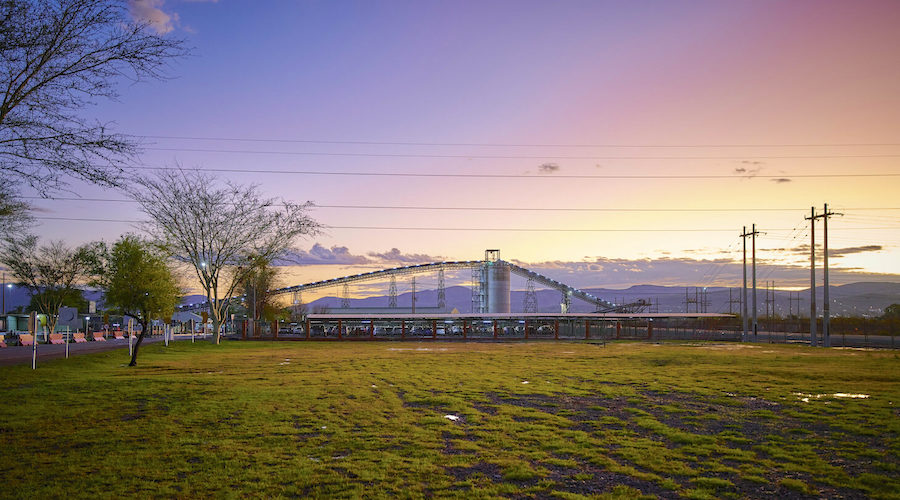
First reported on MINING.com
30 Second Briefing
Impala Platinum has halted mining for four days at its Rustenburg PGM complex, 120 km north-west of Johannesburg, after six worker fatalities, including two underground locomotive deaths in July, triggered a full safety reset. The 51,500-employee operation, which delivers almost half of Implats’ total output, will use the shutdown for workplace inspections, targeted training, a mass engagement session and an independent audit of safety systems. Production impact will only be quantified after restart, adding operational risk at one of South Africa’s deep-level, high-cost platinum hubs.
Technical Brief
- Four fatalities occurred in Implats’ financial year to 30 June, followed by two locomotive-related deaths in July.
- Both July deaths involved underground locomotives, indicating rail-bound haulage and traffic management as a critical risk focus.
- Rustenburg’s 51,500-strong workforce implies large-scale re-induction, toolbox talks and verification of competence during the reset.
- Independent specialists will audit existing safety systems and produce formal recommendations, adding external assurance to internal controls.
- Mass employee engagement sessions suggest structured communication on hazard reporting, stop-work authority and behavioural expectations.
- Workplace inspections during the stand-down will likely target ground control, ventilation, rail track condition and rolling-stock maintenance.
- As one of South Africa’s deep-level, high-cost PGM hubs, Rustenburg faces compounded risks from depth, ageing infrastructure and constrained layouts.
- For other deep-level operators, the event reinforces the need for focused controls on trackless and track-bound equipment interactions underground.
Our Take
With the Rustenburg complex contributing about half of Implats’ output, even a four‑day halt is likely to tighten near‑term supply of platinum and palladium, which in our database is already dominated by South African deep‑level operations with limited short‑term flexibility.
The combination of multiple recent fatalities and a high‑dependency asset in Rustenburg increases the likelihood of stricter regulator‑mandated controls across South African PGM mines, which could raise operating costs but also push operators such as Sibanye‑Stillwater and Vale to accelerate automation and remote operations in similar underground environments.
Prepared by collating external sources, AI-assisted tools, and Geomechanics.io’s proprietary mining database, then reviewed for technical accuracy & edited by our geotechnical team.
Related Articles



Related Industries & Products
Mining
Geotechnical software solutions for mining operations including CMRR analysis, hydrogeological testing, and data management.
Construction
Quality control software for construction companies with material testing, batch tracking, and compliance management.
CMRR-io
Streamline coal mine roof stability assessments with our cloud-based CMRR software featuring automated calculations, multi-scenario analysis, and collaborative workflows.
HYDROGEO-io
Comprehensive hydrogeological testing platform for managing, analysing, and reporting on packer tests, lugeon values, and hydraulic conductivity assessments.
GEODB-io
Centralised geotechnical data management solution for storing, accessing, and analysing all your site investigation and material testing data.