Geomechanics.io

  • Free Tools
Sign UpLog In

Geomechanics.io

Geomechanics, Streamlined.

© 2026 Geomechanics.io. All rights reserved.

Geomechanics.io

CMRR-ioGEODB-ioHYDROGEO-ioQCDB-ioFree Tools & CalculatorsBlogLatest Industry News

Industries

MiningConstructionTunnelling

Company

Terms of UsePrivacy PolicyLinkedIn
    Sustainability
    Projects

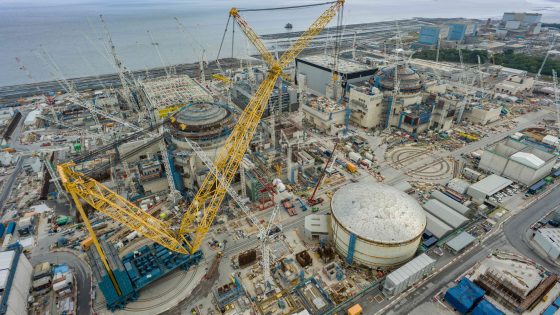
    Hinkley Point C transparency appeal: environmental data lessons for project teams

    September 9, 2026|

    Reviewed by Joe Ashwell

    Hinkley Point C transparency appeal: environmental data lessons for project teams

    First reported on New Civil Engineer

    30 Second Briefing

    EDF’s Hinkley Point C nuclear project has applied for permission to appeal a tribunal decision that would bring the 3.2GW plant under Environmental Information Regulations, forcing greater disclosure of environmental data. The ruling, won by campaigners, could require release of detailed monitoring on coastal impacts, cooling water abstraction and construction emissions from major works such as the 900m seawater intake tunnels. Designers, contractors and consultants on similar large infrastructure schemes may face tighter scrutiny over environmental modelling assumptions, baseline data and ongoing performance reporting.

    Technical Brief

    • Appeal targets a tribunal ruling that reclassified Hinkley Point C as subject to environmental transparency obligations.
    • Design consultants may need to structure environmental models, assumptions and raw monitoring outputs for potential third‑party scrutiny.
    • Contractors’ construction-phase environmental records (e.g. method statements, monitoring logs) could be treated as releasable information.

    Our Take

    EDF’s current UK nuclear fleet is under tighter scrutiny, with the ONR recently escalating regulatory attention at Hartlepool, so any move to limit environmental data transparency at Hinkley Point C is likely to attract a more sceptical response from regulators and NGOs than it might have a few years ago.

    Our database shows multiple recent UK nuclear project items involving Hinkley Point C and Sizewell C as flagship civil works, which means transparency disputes at Hinkley Point C could spill over into stakeholder expectations and consent processes for Sizewell C and other future new-builds.

    Geotechnical Software for Modern Teams

    Centralise site data, logs, and lab results with GEODB-io, CMRR-io, and HYDROGEO-io.

    No credit card required.

    • Save and export unlimited calculations
    • Advanced data visualisation
    • Generate professional PDF reports
    • Cloud storage for all your projects

    Prepared by collating external sources, AI-assisted tools, and Geomechanics.io’s proprietary mining database, then reviewed for technical accuracy & edited by our geotechnical team.

    Related Articles
    83% of Britain’s cities heat‑vulnerable: design implications for civil engineers
    Environmental
    about 2 hours ago

    83% of Britain’s cities heat‑vulnerable: design implications for civil engineers

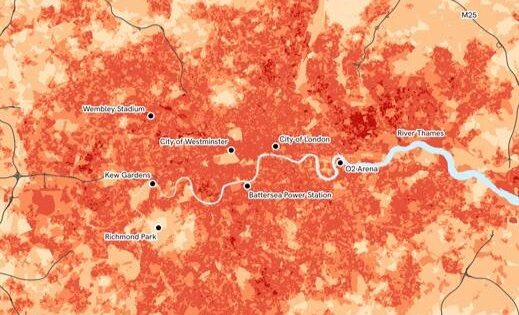
    Eighty-three per cent of Britain’s cities – 59 urban areas – are classed as highly vulnerable to urban heat in new spatial analysis by Ordnance Survey, the Met Office and 4 Earth Intelligence. The dataset combines OS building footprints, surface cover and green space with Met Office temperature projections to map local heat exposure at street-block scale. For civil and geotechnical engineers, this points to urgent retrofit of shading, permeable and high-albedo surfaces, and revised pavement and rail design to cope with more frequent extreme surface temperatures.

    Galliford Try’s £110M River Mease project: geotechnical notes for engineers
    Environmental
    1 day ago

    Galliford Try’s £110M River Mease project: geotechnical notes for engineers

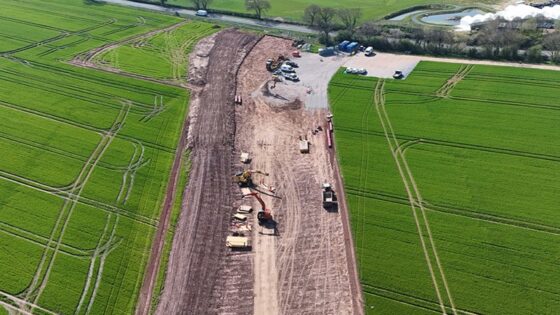
    Galliford Try’s environment business has secured a £110M contract from Severn Trent Water to deliver the River Mease improvement project, targeting water quality upgrades on the protected River Mease catchment in the Midlands. Works are expected to centre on wastewater treatment enhancements, sewer network upgrades and nature-based solutions to cut nutrient loading into this Special Area of Conservation. The scale of the programme signals significant opportunities for geotechnical input on riverbank stabilisation, outfall structures and construction in sensitive, high-groundwater environments.

    ScottishPower wind farm decommissioning: circularity lessons for UK designers
    Environmental
    7 days ago

    ScottishPower wind farm decommissioning: circularity lessons for UK designers

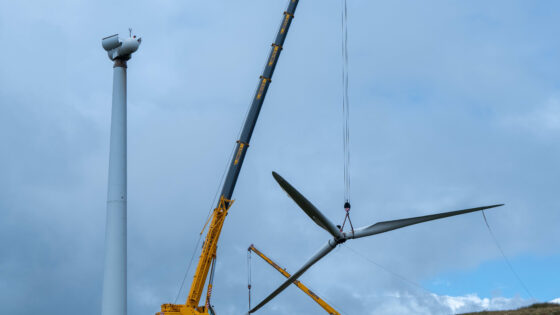
    Decommissioning of Scotland’s first commercial wind farm, operated by ScottishPower, is being used as a UK-first testbed to align turbine end-of-life with material reuse and circular economy principles. Analysis of the dismantling process tracks recovery pathways for steel towers, concrete foundations and composite blades, examining options such as onshore recycling, repowering and secondary construction uses. Outcomes will inform future decommissioning strategies for UK wind assets, with direct implications for design-for-disassembly, waste permitting and contractual requirements on recyclability.

    Related Industries & Products

    Construction

    Quality control software for construction companies with material testing, batch tracking, and compliance management.

    Mining

    Geotechnical software solutions for mining operations including CMRR analysis, hydrogeological testing, and data management.

    QCDB-io

    Comprehensive quality control database for manufacturing, tunnelling, and civil construction with UCS testing, PSD analysis, and grout mix design management.

    AllGeotechnicalInfrastructureHazardsEnvironmental