Geomechanics.io

  • Free Tools
Sign UpLog In

Geomechanics.io

Geomechanics, Streamlined.

© 2026 Geomechanics.io. All rights reserved.

Geomechanics.io

CMRR-ioGEODB-ioHYDROGEO-ioQCDB-ioFree Tools & CalculatorsBlogLatest Industry News

Industries

MiningConstructionTunnelling

Company

Terms of UsePrivacy PolicyLinkedIn
    Projects
    Product

    Geoquest geosynthetics in Australian roads: design and risk notes for engineers

    June 10, 2026|

    Reviewed by Tom Sullivan

    Geoquest geosynthetics in Australian roads: design and risk notes for engineers

    First reported on Roads & Infrastructure (AU)

    30 Second Briefing

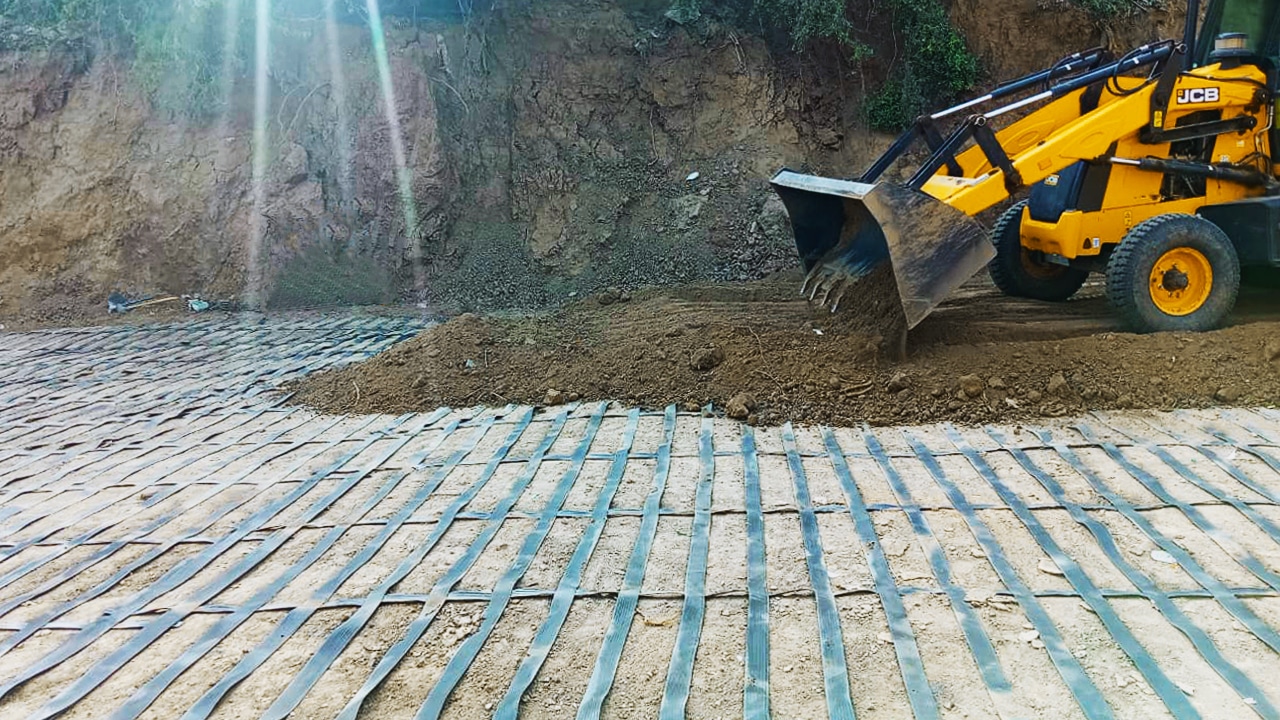
    Geosynthetics are moving from niche products to standard tools for Australian infrastructure delivery as Geoquest deploys geogrids, geotextiles and geocells to tackle increasingly poor ground and constrained project footprints. The company is customising reinforced soil structures, basal reinforcement and pavement subgrade improvement systems to reduce imported fill volumes, shorten construction programmes and enable construction over soft clays and variable alluvium that would previously require deep piling. For practitioners, the shift allows slimmer pavement designs, higher embankments on marginal soils and more predictable deformation behaviour under traffic loading.

    Technical Brief

    • Geoquest configures geogrid aperture size and stiffness to match aggregate grading and anticipated load paths.
    • Project teams are engaging Geoquest early in concept design to integrate reinforcement layouts with earthworks staging.
    • Custom solutions include combining geotextile separation layers with geogrid reinforcement to manage mixed fill and fines migration.
    • For constrained corridors, Geoquest is tailoring facing systems and reinforcement lengths to fit existing boundary conditions.
    • Design support extends to construction sequencing advice, ensuring geosynthetic layers are tensioned and confined as specified.
    • Geoquest’s role includes on-site installation guidance to avoid damage from trafficking, wrinkles and poor overlaps.
    • The company is increasingly involved in value-engineering reviews, substituting geosynthetics for thicker unreinforced granular layers.

    Our Take

    Geoquest Australia has been recurring in Roads & Infrastructure Magazine coverage alongside VicRoads’ approval of 60 per cent SCM concrete mixes, signalling that its geotechnical offering is being positioned within a low‑carbon materials ecosystem for transport projects in Victoria.

    In our database of 25 Geotechnical stories, Geoquest Australia is one of the few firms repeatedly linked to climate‑driven geo‑risk (sea level rise, higher rainfall intensity), which suggests its products are being framed as resilience tools rather than just investigation services in the Australian market.

    The appearance of Geoquest Australia in both transport infrastructure and niche structures like the Gurneys Cider underground cellar indicates its systems are being applied across a spectrum from road embankments to architecturally sensitive buried structures, which may appeal to designers seeking integrated ground–structure solutions.

    Geotechnical Software for Modern Teams

    Centralise site data, logs, and lab results with GEODB-io, CMRR-io, and HYDROGEO-io.

    No credit card required.

    • Save and export unlimited calculations
    • Advanced data visualisation
    • Generate professional PDF reports
    • Cloud storage for all your projects

    Prepared by collating external sources, AI-assisted tools, and Geomechanics.io’s proprietary mining database, then reviewed for technical accuracy & edited by our geotechnical team.

    Related Articles
    Vinci–Grupo TDM geosynthetics deal: design–build implications for Andean TSFs
    Geotechnical
    about 18 hours ago

    Vinci–Grupo TDM geosynthetics deal: design–build implications for Andean TSFs

    Vinci Construction has expanded its Latin American ground technologies portfolio by acquiring Grupo TDM’s geosynthetics division in Peru, a regional supplier of geotextiles, geomembranes and geogrids for mining, road and hydraulic works. The deal gives Vinci direct control of design–supply–install capability for reinforced soil walls, basal reinforcement and lining systems on high-embankment highways and tailings storage facilities in the Andes. For geotechnical contractors and designers, this signals stronger OEM-backed support for geosynthetic solutions on steep slopes, soft-ground foundations and aggressive seismic conditions in the region.

    Inter Helix Spacing in Helical Piles: design implications and torque guidance
    Geotechnical
    6 days ago

    Inter Helix Spacing in Helical Piles: design implications and torque guidance

    Inter‑helix spacing for helical piles and anchors is traced from early empirical rules of thumb (typically 3× helix diameter) to current design approaches based on cylindrical shear and individual bearing models. The review compares performance implications of close spacing (overlapping stress bulbs, higher installation torque, potential group behaviour) versus wider spacing (reduced interaction, deeper embedment, more steel), and links them to torque‑to‑capacity correlations. For practitioners, it clarifies when legacy spacing rules remain adequate and when soil type, load regime, and installation constraints justify project‑specific optimisation.

    TAS stadium works: Macquarie Point contract and ground risks for engineers
    Geotechnical
    15 days ago

    TAS stadium works: Macquarie Point contract and ground risks for engineers

    Tasmania’s Government has let a contract to dismantle and compact the early‑20th‑century Goods Shed at Macquarie Point to clear the site for a $1.13 billion multi‑purpose stadium in Hobart. The former rail and port freight hub will be packed down to formation level, providing a prepared platform for the stadium’s deep foundations, services corridors and future transport interfaces. Geotechnical teams will need to manage demolition spoil, variable fill and potential contamination typical of historic industrial waterfronts before main works can proceed.

    Related Industries & Products

    Construction

    Quality control software for construction companies with material testing, batch tracking, and compliance management.

    Mining

    Geotechnical software solutions for mining operations including CMRR analysis, hydrogeological testing, and data management.

    QCDB-io

    Comprehensive quality control database for manufacturing, tunnelling, and civil construction with UCS testing, PSD analysis, and grout mix design management.

    AllGeotechnicalMiningInfrastructureMaterialsHazardsEnvironmentalSoftwarePolicy