Geomechanics.io

  • Free Tools
Sign UpLog In
Built byBoxcut Studio

Geomechanics.io

Geomechanics, Streamlined.

© 2026 Geomechanics.io. All rights reserved.

Geomechanics.io

CMRR-ioGEODB-ioHYDROGEO-ioQCDB-ioFree Tools & CalculatorsBlogLatest Industry News

Industries

MiningConstructionTunnelling

Company

Terms of UsePrivacy PolicyLinkedIn
    Projects
    Failure
    Safety

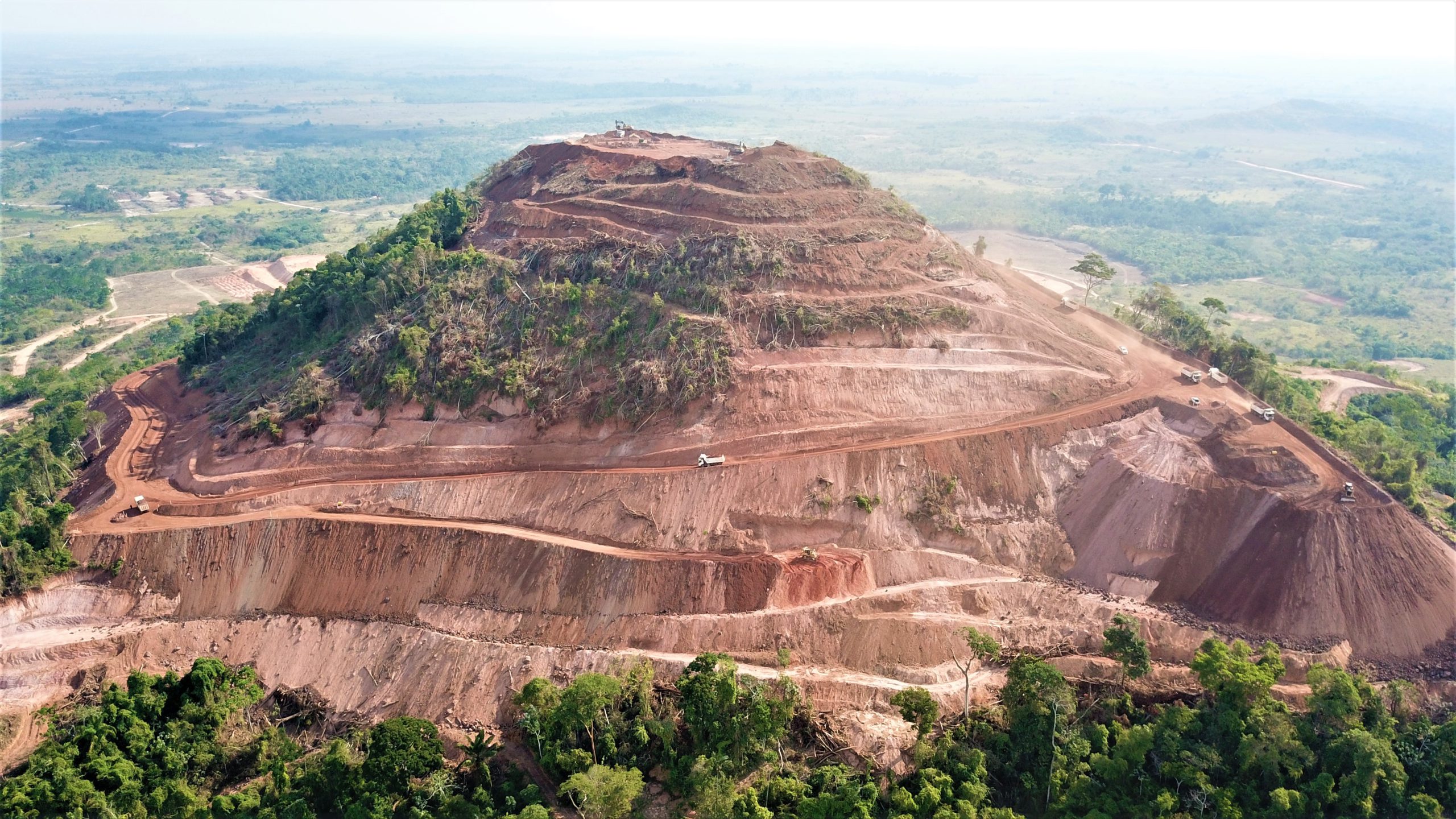
    Ero Copper Brazil mine halt: hydrological and risk lessons for project teams

    November 28, 2026|

    Reviewed by Joe Ashwell

    Ero Copper Brazil mine halt: hydrological and risk lessons for project teams

    First reported on MINING.com

    30 Second Briefing

    Ero Copper has suspended both mining and processing at its Tucumã open-pit operation in Pará, Brazil, after El Niño-driven rains of 275 mm in 20 days – 170% of the normal monthly total – overwhelmed a contact-water collection basin, causing acidic effluent with abnormal pH to reach a tributary of the Jatobá River. State regulator SEMAS has halted operations pending approval of a remediation and cleanup plan, with fines so far totalling about $4.8 million from state and municipal authorities. Tucumã, expected to produce 32,500–37,500 tonnes of copper in 2026 at a Q3 cash cost of US$2.12/lb, now faces potential prolonged downtime, with analysts estimating a 10-day shutdown could cut Q4 EBITDA by up to 4.3%.

    Technical Brief

    • Failure mechanism involved El Niño-driven storm bursts exceeding pump capacity at a contact-water collection basin.
    • Pará regulator SEMAS detected acidic industrial wastewater in a Jatobá River tributary via abnormal pH field measurements.
    • Ero reports having already increased pumping and storage capacity and relocated a stockpile to limit future contact water.
    • Regulatory non-compliance centred on failure to notify SEMAS and civil defence within the mandated 48-hour incident window.
    • Fines currently total about $4.8 million, split between SEMAS (~$2.9m) and São Félix do Xingu municipality (~$1.9m).
    • São Félix do Xingu’s municipal fine followed two reported fish-kill events about 50 km downstream, which Ero disputes are mine-related.
    • Through September, Tucumã had produced 26,383 tonnes of copper in concentrate, already 39% higher year-on-year.
    • For similar open pits in high-rainfall belts, design of contact-water basins and pump redundancy needs explicit allowance for El Niño-type extremes.

    Our Take

    With Tucumã in Pará contributing 21% of Ero Copper’s base-case NAV and 48% of its 2026 copper production target, any environmental non-compliance there risks outsized valuation and growth impacts compared with legacy assets like Caraíba in Bahia.

    The rainfall-driven overflow at Tucumã comes as Ero is also advancing the Furnas copper-gold-silver project in Pará, so regulators in the state may scrutinise future permitting and water management plans for Furnas more closely than for earlier filings.

    Geotechnical Software for Modern Teams

    Centralise site data, logs, and lab results with GEODB-io, CMRR-io, and HYDROGEO-io.

    Cancel at any time.

    • Save and export unlimited calculations
    • Advanced data visualisation
    • Generate professional PDF reports
    • Cloud storage for all your projects

    Prepared by collating external sources, AI-assisted tools, and Geomechanics.io’s proprietary mining database, then reviewed for technical accuracy & edited by our geotechnical team.

    Related Articles

    Global manganese reshuffle: supply and alloy trade shifts for mine planners
    Mining
    about 3 hours ago

    Global manganese reshuffle: supply and alloy trade shifts for mine planners

    African export bans and new smelting plans are reshaping manganese flows, with Gabon and Ghana moving to restrict raw ore exports by 2029–2030 while Gabon pursues coastal alloy capacity at Moanda with Eramet and entertains proposals from Chinese producer Inner Mongolia Xinchuang for two local plants. India, which imported 4.34 Mt of South African ore in 2025 and exported 1.25 Mt of silicomanganese, risks being squeezed between tighter African ore supply and Gabonese alloy competing in key markets such as Italy and Japan. OM Holdings’ exit from South Africa’s Tshipi mine while securing offtake from both Tshipi and Australia’s Butcherbird illustrates how traders and alloy producers are shifting from mine ownership to controlling marketing and processing routes.

    Entrée–Mongolia Oyu Tolgoi deal by 2027: development and planning notes for engineers
    Mining
    about 3 hours ago

    Entrée–Mongolia Oyu Tolgoi deal by 2027: development and planning notes for engineers

    Entrée Resources and the Mongolian government have set 31 March 2027 as a target to resolve whether Mongolia takes up to a 34% stake in Entrée LLC, which holds the Shivee Tolgoi and Javkhlant licences critical to underground development of the Hugo North Extension at Oyu Tolgoi. Oyu Tolgoi LLC, 34% owned by Mongolia and 66% by Rio Tinto, cannot resume lateral development on Shivee Tolgoi—paused after about 230 equivalent metres—until the licences are transferred and tax payment certificates issued. New underground drilling at Hugo North Extension includes hole UGD1025A with 125.3 m at 1.28% Cu, 0.27 g/t Au and 3.18 g/t Ag from 362.7 m, feeding into an updated technical report and revised mine plan targeted for Q1 2027.

    Barrick mine managers gain target control: planning and cost notes for engineers
    Mining
    about 3 hours ago

    Barrick mine managers gain target control: planning and cost notes for engineers

    Barrick Mining is pushing mine-level accountability after years of missed three-year production forecasts, giving site managers greater control over guidance while preparing an IPO of American Barrick Gold, which will hold Nevada Gold Mines, Fourmile and Pueblo Viejo. International CEO Sebastiaan Bock reports Barrick International has met or exceeded production guidance for seven consecutive years, expects 2026 copper AISC slightly above US$3.75/lb after a Q3 spike to US$4.52/lb driven by diesel, FX, royalties and waste stripping, and has invested over US$90 million in safety technology with 24,000+ critical control verifications in Q3. Key project levers for engineers are Lumwana’s expansion, with all major long-lead items procured and the mill building on the critical path for first copper in Q1 2028, and the Reko Diq build-out, now paced by security conditions and a yet-to-be-finalised capital and financing plan due for update by mid-2027.

    Related Industries & Products

    Mining

    Geotechnical software solutions for mining operations including CMRR analysis, hydrogeological testing, and data management.

    Construction

    Quality control software for construction companies with material testing, batch tracking, and compliance management.

    CMRR-io

    Streamline coal mine roof stability assessments with our cloud-based CMRR software featuring automated calculations, multi-scenario analysis, and collaborative workflows.

    HYDROGEO-io

    Comprehensive hydrogeological testing platform for managing, analysing, and reporting on packer tests, lugeon values, and hydraulic conductivity assessments.

    GEODB-io

    Centralised geotechnical data management solution for storing, accessing, and analysing all your site investigation and material testing data.

    AllGeotechnicalInfrastructureHazardsEnvironmental