Domestic air conditioning market lift: retrofit and design notes for engineers
Reviewed by Tom Sullivan
First reported on The Construction Index
30 Second Briefing
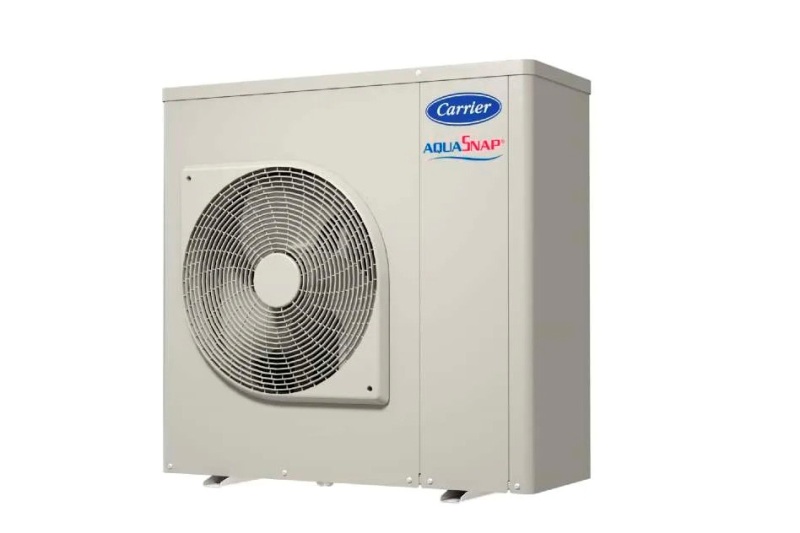
Expansion of the UK Boiler Upgrade Scheme now offers a £2,500 grant for air-to-air heat pumps alongside the existing £7,500 support for air-source and ground-source units, making domestic air-conditioning eligible for government funding for the first time. Carrier Solutions UK, distributor of Toshiba systems, expects this to catalyse a residential air-conditioning market, particularly in flats and apartments currently using direct-electric or storage heating. Multi-split air-to-air systems, with one outdoor unit serving several rooms, are positioned as a practical retrofit route where conventional air-to-water heat pumps are hard to install.
Technical Brief
- BUS expansion was announced by the Department for Energy Security & Net Zero “last week”, indicating immediate applicability.
- Air-to-air heat pumps in scope provide both space heating and cooling from a single reversible circuit.
- Managing director David Dunn (Carrier CSE-R Europe, UK & Ireland) is positioning these units as year-round comfort systems.
- Apartments and flats with legacy direct-electric or night-storage heaters are flagged as primary retrofit targets.
- Dunn references “emerging electric technologies” alongside air-to-air units, implying future integration with other non-hydronic systems.
- For building services designers, BUS recognition widens compliant low-carbon options where air-to-water units are spatially or hydraulically constrained.
Our Take
Within the 12 Policy stories in our coverage, the UK features frequently on building decarbonisation, so any lift in domestic air conditioning demand will likely be scrutinised by the Department for Energy Security & Net Zero for its impact on electricity peak loads and heat-pump deployment targets.
Carrier Solutions UK and Toshiba are among a small group of OEMs that recur in our Product and Sustainability-tagged pieces, suggesting that policy-driven efficiency standards in the UK & Ireland are increasingly being shaped in practice by a handful of large HVAC suppliers rather than smaller domestic manufacturers.
For UK projects, more domestic cooling typically pushes designers towards integrated HVAC strategies; in our database, this has meant a move from standalone AC units to packaged low-GWP refrigerant systems on new-build schemes, which favours firms such as Carrier CSE-R Europe that can supply complete, compliant systems.
Prepared by collating external sources, AI-assisted tools, and Geomechanics.io’s proprietary mining database, then reviewed for technical accuracy & edited by our geotechnical team.
Related Articles


Related Industries & Products
Mining
Geotechnical software solutions for mining operations including CMRR analysis, hydrogeological testing, and data management.
Construction
Quality control software for construction companies with material testing, batch tracking, and compliance management.
CMRR-io
Streamline coal mine roof stability assessments with our cloud-based CMRR software featuring automated calculations, multi-scenario analysis, and collaborative workflows.
HYDROGEO-io
Comprehensive hydrogeological testing platform for managing, analysing, and reporting on packer tests, lugeon values, and hydraulic conductivity assessments.
GEODB-io
Centralised geotechnical data management solution for storing, accessing, and analysing all your site investigation and material testing data.