Geomechanics.io

  • Free Tools
Sign UpLog In

Geomechanics.io

Geomechanics, Streamlined.

© 2026 Geomechanics.io. All rights reserved.

Geomechanics.io

CMRR-ioGEODB-ioHYDROGEO-ioQCDB-ioFree Tools & CalculatorsBlogLatest Industry News

Industries

MiningConstructionTunnelling

Company

Terms of UsePrivacy PolicyLinkedIn
    Projects
    Sustainability

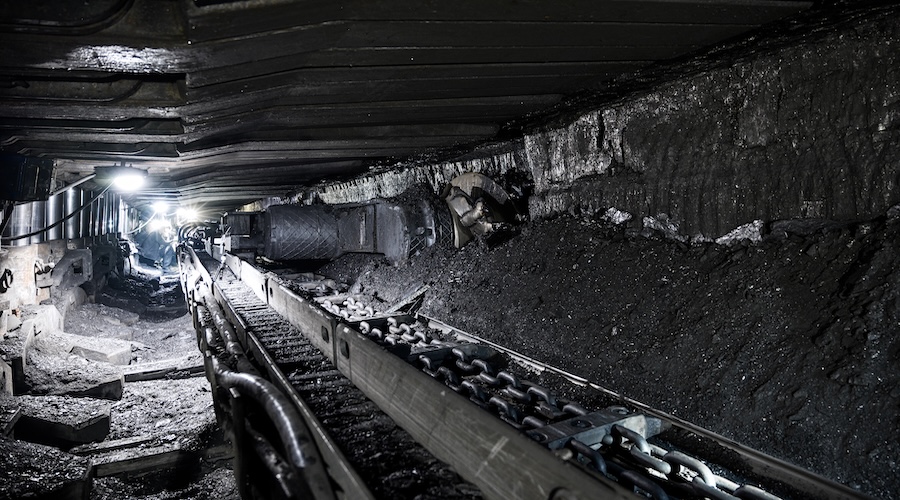
    Coal mine plans grow as new capacity plunges: risk signals for project teams

    August 14, 2026|

    Reviewed by Joe Ashwell

    Coal mine plans grow as new capacity plunges: risk signals for project teams

    First reported on MINING.com

    30 Second Briefing

    Proposed global coal mining capacity rose 11% in 2025, driven mainly by India where the project pipeline doubled as the government targets 1.15 billion tonnes of coal production in 2025–26 to cover peak power demand and energy security. In contrast, commissioning of new coal capacity fell almost 40%, with China’s additions down 44% amid tighter mine approvals and safety rules, and Australia’s new capacity plunging 96% as export demand weakens. Around 70% of proposed mines remain at pre-permit or construction stage, leaving significant scope for cancellations before capital is sunk into potentially uneconomic long-life assets.

    Technical Brief

    • Wind and solar overtook coal in the global electricity mix in 2025, altering long‑term baseload assumptions for new mines.
    • China’s slowdown is explicitly linked to tighter mine safety measures and more restrictive approvals for capacity expansions.
    • Australian capacity additions are additionally constrained by a proposed ban on new greenfield coal mines.
    • Around 70% of proposed coal projects being pre‑permit or under construction implies high exposure to permitting, ESG and financing risk.
    • GEM warns that new coal mines risk becoming long‑lived, stranded assets as clean energy undercuts coal on marginal generation cost.

    Our Take

    Global Energy Monitor’s coal work here sits alongside its role in the critical-minerals gap analysis covered on 11 August 2026, signalling that the same datasets the IEA is using to flag lithium and copper shortfalls are also underpinning concerns about stranded coal capacity in India, China and Australia.

    With 70% of proposed coal projects in India, China and Australia still at pre-permit or construction stage, operators and lenders face a materially higher risk that policy shifts aligned with the IEA’s post‑2030 coal demand decline will freeze projects before payback, compared with fully permitted brownfield expansions.

    Geotechnical Software for Modern Teams

    Centralise site data, logs, and lab results with GEODB-io, CMRR-io, and HYDROGEO-io.

    No credit card required.

    • Save and export unlimited calculations
    • Advanced data visualisation
    • Generate professional PDF reports
    • Cloud storage for all your projects

    Prepared by collating external sources, AI-assisted tools, and Geomechanics.io’s proprietary mining database, then reviewed for technical accuracy & edited by our geotechnical team.

    Related Articles

    US DOE $73M Mine of the Future funding: key testbed insights for engineers
    Mining
    about 4 hours ago

    US DOE $73M Mine of the Future funding: key testbed insights for engineers

    The US Department of Energy has awarded US$73 million through its Mine of the Future initiative to four projects creating national-scale mining testbeds in West Virginia, Colorado, Arizona, Missouri and Texas. Innovative Wireless Technologies will integrate underground and surface sites in Julian, Blacksburg and Idaho Springs to validate next‑generation digital, connectivity and automation systems, while the University of Arizona and University of Missouri will build underground and comminution proving grounds focused on electrification and energy management. Southern Methodist University will repurpose a heavily instrumented Navasota drilling site into a “synthetic mine” for repeatable testing of drilling, sensing and autonomous workflows, aiming to de‑risk commercial deployment.

    Mining leads Canadian PM’s C$1T pitchbook: project finance signals for engineers
    Mining
    about 4 hours ago

    Mining leads Canadian PM’s C$1T pitchbook: project finance signals for engineers

    Mining projects dominate Prime Minister Mark Carney’s leaked C$1 trillion, five‑year investment pitchbook, with 63 of 167 opportunities spanning lithium, nickel, graphite, rare earths, gold and copper, and including proposals such as Canada’s first uranium refining and conversion plant in more than 40 years. Confirmed entries range from LithiumBank’s Boardwalk lithium brine project in Alberta, with 5.2 million measured and indicated tonnes LCE at 81.6 mg/L, to Surge Copper’s Berg copper‑molybdenum project, scoped for a 28‑year life and 176 million lb copper per year. Despite a 75% year‑on‑year rise to C$10.1 billion in TSX/TSXV mining equity raisings, pension and sovereign funds remain cautious on finite‑life mines, making long‑life assets and midstream processing plants more likely to secure capital.

    Cyclic Materials’ Mesa rare earth recycling plant: process and scale notes for engineers
    Mining
    about 4 hours ago

    Cyclic Materials’ Mesa rare earth recycling plant: process and scale notes for engineers

    Cyclic Materials has opened a 144,000-square-foot rare earth magnet recycling plant in Mesa, Arizona, designed to process up to 25,000 tonnes per year of magnet-bearing end-of-life products using its proprietary MagCycle mechanical separation technology. The feedstock-agnostic facility is already running at 8 tonnes per hour, producing Mag-Xtract rare earth magnet material and recovering copper, aluminium and steel for sale to US smelters, with over 7,000 tonnes of material already delivered. Backed by more than US$20 million in investment, the plant is intended as a replicable model ahead of a planned South Carolina rare earth recycling campus.

    Related Industries & Products

    Mining

    Geotechnical software solutions for mining operations including CMRR analysis, hydrogeological testing, and data management.

    Construction

    Quality control software for construction companies with material testing, batch tracking, and compliance management.

    CMRR-io

    Streamline coal mine roof stability assessments with our cloud-based CMRR software featuring automated calculations, multi-scenario analysis, and collaborative workflows.

    HYDROGEO-io

    Comprehensive hydrogeological testing platform for managing, analysing, and reporting on packer tests, lugeon values, and hydraulic conductivity assessments.

    GEODB-io

    Centralised geotechnical data management solution for storing, accessing, and analysing all your site investigation and material testing data.

    AllGeotechnicalInfrastructureHazardsEnvironmental