Catalyst’s 280% Keillor gold Resource lift: design and scheduling notes for engineers
Reviewed by Tom Sullivan
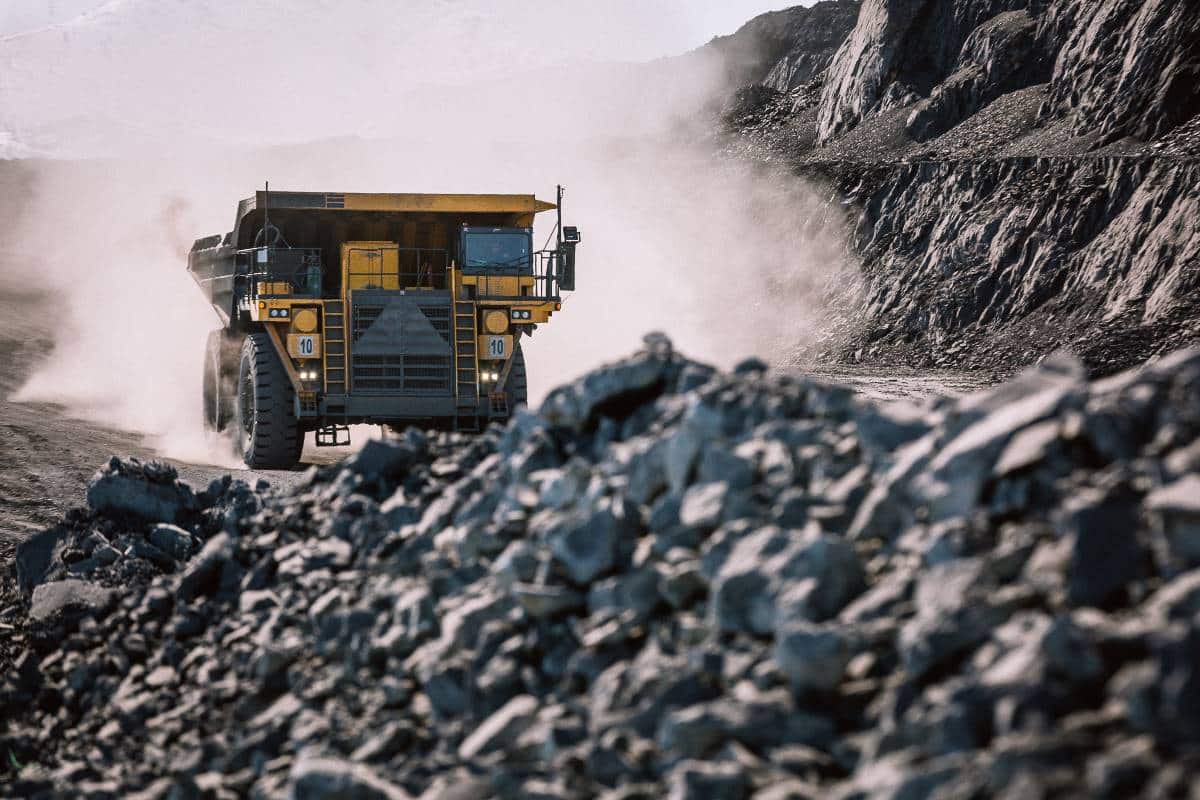
First reported on Australian Mining
30 Second Briefing
Catalyst Metals has lifted the Mineral Resource at its Keillor gold mine in Western Australia by about 280 per cent to 3.2 million tonnes at 3.0g/t gold for 307,000oz, up from 81,000oz. The company is targeting an extension of the operation beyond its initial three‑year mine life, signalling scope for revised pit designs, updated production schedules and potential plant throughput adjustments. Geotechnical and mine planning teams will need to reassess slope designs, sequencing and ground support to accommodate the larger, higher‑confidence inventory.
Technical Brief
- Resource upgrade implies re-optimisation of pit shells, cut-off grades and economic pit limits.
- Additional ore inventory will likely require revised waste:ore stripping ratios and haulage fleet sizing.
- Extended mine life will drive updates to tailings storage capacity, embankment staging and closure concepts.
- Higher contained ounces enable reconsideration of stockpiling strategy, including preferential treatment of higher-grade domains.
- Geotechnical domains may need redefined slope sectors as pits deepen and wall exposure durations increase.
- Processing schedule revisions could alter plant utilisation, maintenance windows and reagent/consumables procurement contracts.
- Longer operation horizon affects camp, power and water supply contracts, potentially justifying incremental infrastructure upgrades.
- Similar mid-tier gold operations often use such step-change resource upgrades to justify pushbacks rather than satellite pits.
Our Take
With Catalyst Metals recently doubling its revolving credit facility to $200 million and total liquidity to $531 million, the enlarged Keillor gold resource in Western Australia is likely to compete directly for capital against the multi-mine expansion pipeline highlighted in our other coverage.
Our database shows several recent Catalyst Metals items centred on the Plutonic Gold Belt, so the Keillor gold mine resource upgrade signals a gradual broadening of the company’s Western Australian production base beyond a single camp.
An initial three-year mine life at Keillor, combined with a 3.2Mt resource at around 3g/t gold, positions it as a near- to medium-term feed source that could be integrated into regional processing or toll-treatment strategies common in Western Australia’s mature gold sector.
Prepared by collating external sources, AI-assisted tools, and Geomechanics.io’s proprietary mining database, then reviewed for technical accuracy & edited by our geotechnical team.
Related Articles
Related Industries & Products
Mining
Geotechnical software solutions for mining operations including CMRR analysis, hydrogeological testing, and data management.
Construction
Quality control software for construction companies with material testing, batch tracking, and compliance management.
CMRR-io
Streamline coal mine roof stability assessments with our cloud-based CMRR software featuring automated calculations, multi-scenario analysis, and collaborative workflows.
HYDROGEO-io
Comprehensive hydrogeological testing platform for managing, analysing, and reporting on packer tests, lugeon values, and hydraulic conductivity assessments.
GEODB-io
Centralised geotechnical data management solution for storing, accessing, and analysing all your site investigation and material testing data.