Budget 2026 power focus: project and grid implications for civil engineers
Reviewed by Tom Sullivan
First reported on New Civil Engineer
30 Second Briefing
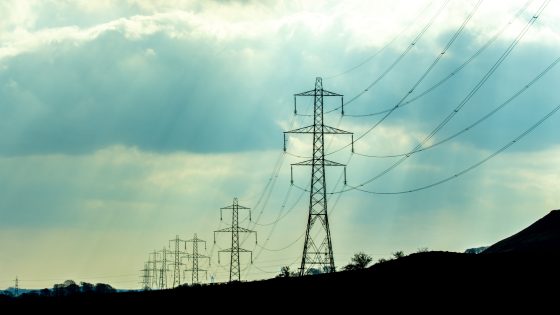
Budget 2026 commits the government to approving only new electricity generation projects that demonstrably reduce consumer bills, signalling a tilt towards low‑marginal‑cost technologies such as offshore wind, solar PV and nuclear with Contracts for Difference–style revenue models. Ministers also pledged to accelerate grid reforms, likely prioritising transmission reinforcements, new 400kV corridors and faster connection processes to clear the current multi‑year queue. For civil and geotechnical contractors, the shift points to more balance‑of‑plant, substation and cable‑route work, but tougher value‑for‑money scrutiny on capex and programme risk.
Technical Brief
- Only “build” language implies constraint on state-backed schemes, not necessarily private-merchant generation.
- Grid reforms are bundled with generation policy, signalling linked approvals for lines, substations and corridors.
- Contractors should expect budget-driven design optimisation, with value engineering scrutinised at Treasury and regulator level.
- Planning examinations likely to interrogate whole-life cost models and consumer-tariff pass-through assumptions in more detail.
- Policy framing encourages standardised, repeatable civil works packages for rapid deployment and lower soft costs.
Our Take
Because this piece sits at the intersection of Projects, Contract Award and Sustainability tags, it signals that future contract awards covered by New Civil Engineer are likely to hinge on demonstrable whole‑life cost reductions for consumers, which will favour electricity projects with strong LCOE and demand‑management arguments.
New Civil Engineer’s broader coverage of digital asset management and early‑career innovation suggests that, by the time of the 2026 budget, bidders on new electricity projects may be expected to evidence not just capex efficiency but also data‑driven operational savings that can be traced through to lower tariffs.
Prepared by collating external sources, AI-assisted tools, and Geomechanics.io’s proprietary mining database, then reviewed for technical accuracy & edited by our geotechnical team.
Related Articles


Related Industries & Products
Mining
Geotechnical software solutions for mining operations including CMRR analysis, hydrogeological testing, and data management.
Construction
Quality control software for construction companies with material testing, batch tracking, and compliance management.
CMRR-io
Streamline coal mine roof stability assessments with our cloud-based CMRR software featuring automated calculations, multi-scenario analysis, and collaborative workflows.
HYDROGEO-io
Comprehensive hydrogeological testing platform for managing, analysing, and reporting on packer tests, lugeon values, and hydraulic conductivity assessments.
GEODB-io
Centralised geotechnical data management solution for storing, accessing, and analysing all your site investigation and material testing data.