Geomechanics.io

  • Free Tools
Sign UpLog In
Built byBoxcut Studio

Geomechanics.io

Geomechanics, Streamlined.

© 2026 Geomechanics.io. All rights reserved.

Geomechanics.io

CMRR-ioGEODB-ioHYDROGEO-ioQCDB-ioFree Tools & CalculatorsBlogLatest Industry News

Industries

MiningConstructionTunnelling

Company

Terms of UsePrivacy PolicyLinkedIn
    Projects

    Sizewell C financing ‘terrible deal’: risk and funding lessons for project teams

    October 29, 2026|

    Reviewed by Tom Sullivan

    Sizewell C financing ‘terrible deal’: risk and funding lessons for project teams

    First reported on New Civil Engineer

    30 Second Briefing

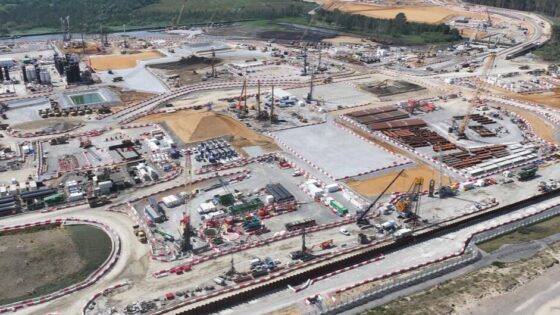
    Financing for the 3.2GW Sizewell C nuclear plant on the Suffolk coast has been condemned as “a terrible deal for the UK taxpayer” by the House of Commons Public Accounts Committee, which scrutinises value for money in major public projects. MPs are challenging the current funding model, which relies heavily on long-term consumer and taxpayer commitments to underwrite construction and financing risk. The criticism raises fresh uncertainty for large, capital-intensive low‑carbon infrastructure schemes that depend on complex, multi-decade funding structures.

    Technical Brief

    • Long construction duration for a 3.2GW plant locks contractors into extended exposure to inflation and financing risk.
    • Nuclear-grade civil works require stringent QA/QC on concrete, earthworks and structural detailing, increasing upfront construction cost.
    • PAC scrutiny of value-for-money may drive tighter cost control and risk transfer in nuclear civils contracts.
    • Similar large low-carbon plants with long build times face comparable financing–construction interface risk profiles.

    Our Take

    The 3.2GW Sizewell C scheme has already been the subject of a separate Public Accounts Committee session on cost overrun risk and transparency (June 2026 coverage), signalling that scrutiny of its financing is part of a broader concern over nuclear megaproject governance rather than a one-off intervention.

    For contractors and financiers, the PAC’s pattern of challenging delivery models on other projects (e.g. Northern Powerhouse Rail’s funding cap issues) implies that any complex financing structure at Sizewell C is likely to face ongoing pressure for simpler, more transparent risk allocation over the project’s life.

    Geotechnical Software for Modern Teams

    Centralise site data, logs, and lab results with GEODB-io, CMRR-io, and HYDROGEO-io.

    No credit card required.

    • Save and export unlimited calculations
    • Advanced data visualisation
    • Generate professional PDF reports
    • Cloud storage for all your projects

    Prepared by collating external sources, AI-assisted tools, and Geomechanics.io’s proprietary mining database, then reviewed for technical accuracy & edited by our geotechnical team.

    Related Articles

    Budget 2026 power focus: project and grid implications for civil engineers
    Policy
    about 2 hours ago

    Budget 2026 power focus: project and grid implications for civil engineers

    Budget 2026 commits the government to approving only new electricity generation projects that demonstrably reduce consumer bills, signalling a tilt towards low‑marginal‑cost technologies such as offshore wind, solar PV and nuclear with Contracts for Difference–style revenue models. Ministers also pledged to accelerate grid reforms, likely prioritising transmission reinforcements, new 400kV corridors and faster connection processes to clear the current multi‑year queue. For civil and geotechnical contractors, the shift points to more balance‑of‑plant, substation and cable‑route work, but tougher value‑for‑money scrutiny on capex and programme risk.

    £1bn household renewables payouts in six months: grid planning notes for engineers
    Policy
    about 2 hours ago

    £1bn household renewables payouts in six months: grid planning notes for engineers

    Government payouts under the Renewables Obligation to Exchequer Scheme have exceeded £1bn in six months since its launch in April, subsidising household-scale renewable electricity generation across the UK. The scheme redirects Renewables Obligation buy-out and late payment receipts from suppliers into direct bill support, effectively lowering unit costs for homes using technologies such as rooftop solar PV and small wind. For infrastructure planners and grid engineers, this signals continued policy backing for distributed generation, with implications for low-voltage network capacity, export constraints and smart metering roll-out.

    Basildon local plan order: infrastructure and flood risk takeaways for engineers
    Policy
    about 2 hours ago

    Basildon local plan order: infrastructure and flood risk takeaways for engineers

    Housing minister Matthew Pennycook has directed Basildon Borough Council to restart and complete its stalled local plan, warning that any further attempts to pause the process could trigger formal intervention powers. The plan will set housing and infrastructure allocations across the borough, shaping road upgrades, utilities capacity and flood risk management for new development sites. For consultants and contractors, the order signals that Basildon’s strategic land releases and associated transport and drainage schemes are likely to move back into the pipeline under tighter central scrutiny.

    Related Industries & Products

    Construction

    Quality control software for construction companies with material testing, batch tracking, and compliance management.

    Mining

    Geotechnical software solutions for mining operations including CMRR analysis, hydrogeological testing, and data management.

    QCDB-io

    Comprehensive quality control database for manufacturing, tunnelling, and civil construction with UCS testing, PSD analysis, and grout mix design management.

    AllGeotechnicalInfrastructureHazardsEnvironmental