Brazil’s top court mining ruling: key project and ESG takeaways for engineers
Reviewed by Joe Ashwell
First reported on MINING.com
30 Second Briefing
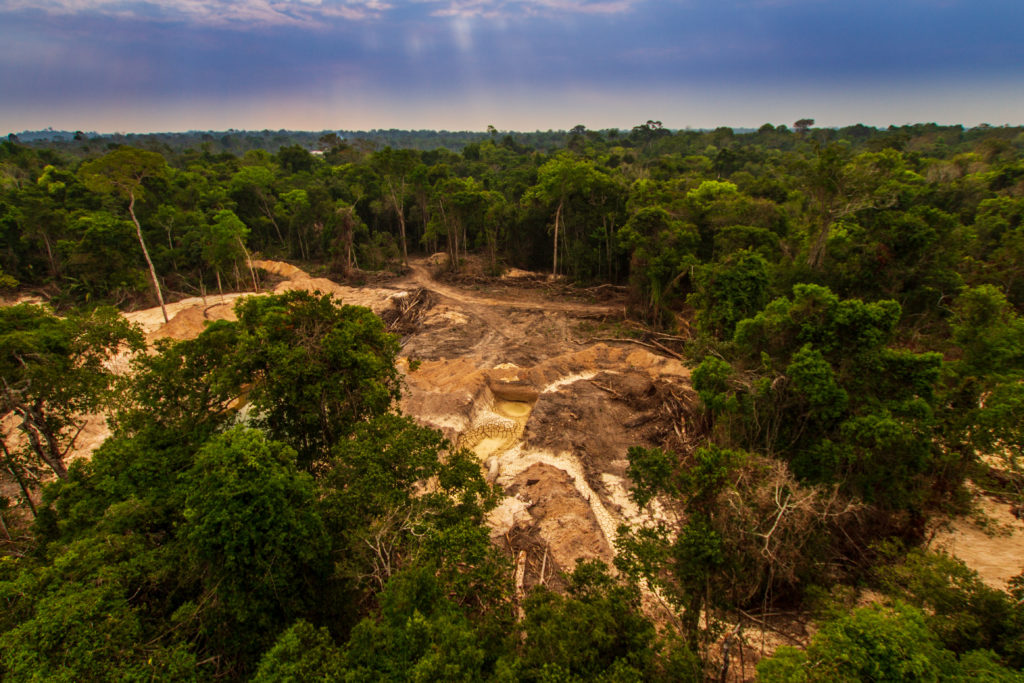
Brazil’s Supreme Court has upheld Justice Flávio Dino’s March 2025 ruling allowing the Cinta Larga to conduct legal mineral exploration and mining on four territories in Rondônia and Mato Grosso under a temporary framework while Congress has 24 months to pass national Indigenous mining legislation. The interim rules cap mining footprints at 1% of each territory, require prior community consultation plus environmental, Congressional and National Mining Agency approvals, and give Indigenous groups preference as operators. Where third parties mine, Cinta Larga communities must receive 50% of the value otherwise owed to state and federal governments, directed to safety, environmental recovery, health, education and sustainable production.
Technical Brief
- Interim framework is restricted to four named Cinta Larga territories in Rondônia and Mato Grosso only.
- Justice Flávio Dino’s March 2025 decision explicitly conditions mining on prior environmental, Congressional and ANM authorisations.
- Prior consultation with affected Cinta Larga communities is mandatory before any exploration or mining approvals.
- Indigenous organisations are required to form cooperatives to hold mining rights and manage project governance.
- Environmental studies must address both operational impacts and post‑mining recovery, embedding closure planning into early project stages.
- The framework is explicitly framed as a conflict‑reduction measure in areas already affected by violent illegal mining.
- Article 231 of Brazil’s Constitution is the legal basis, requiring congressional authorisation plus benefit‑sharing after consultation.
Our Take
In our database, this Brazil Supreme Court ruling sits alongside recent Canadian cases (e.g. the Gitxaala appeal and the KSM ‘substantial start’ review) as part of a small but growing cluster where top courts are effectively setting interim rules for Indigenous consent ahead of full legislative reform.
The 1% occupation cap and 24‑month regulation window in Brazil will be closely watched by operators pursuing critical minerals such as gallium, germanium and rare earth elements, especially as parallel US projects like Ramaco’s Brook mine are advancing without comparable Indigenous‑territory constraints.
With 125 Policy stories and several Supreme Court–level items in our coverage, Brazil’s move signals that Latin American jurisdictions hosting Amazon and Pará projects are converging with Canada and the UK in using high‑court decisions to frame the risk envelope for gold and critical‑mineral projects on or near Indigenous lands.
Prepared by collating external sources, AI-assisted tools, and Geomechanics.io’s proprietary mining database, then reviewed for technical accuracy & edited by our geotechnical team.
Related Articles

Related Industries & Products
Mining
Geotechnical software solutions for mining operations including CMRR analysis, hydrogeological testing, and data management.
CMRR-io
Streamline coal mine roof stability assessments with our cloud-based CMRR software featuring automated calculations, multi-scenario analysis, and collaborative workflows.
HYDROGEO-io
Comprehensive hydrogeological testing platform for managing, analysing, and reporting on packer tests, lugeon values, and hydraulic conductivity assessments.
GEODB-io
Centralised geotechnical data management solution for storing, accessing, and analysing all your site investigation and material testing data.