Geomechanics.io

  • Free Tools
Sign UpLog In
Built byBoxcut Studio

Geomechanics.io

Geomechanics, Streamlined.

© 2026 Geomechanics.io. All rights reserved.

Geomechanics.io

CMRR-ioGEODB-ioHYDROGEO-ioQCDB-ioFree Tools & CalculatorsBlogLatest Industry News

Industries

MiningConstructionTunnelling

Company

Terms of UsePrivacy PolicyLinkedIn
    Projects
    Sustainability

    AME report’s C$23B boost from new Canadian mines: policy lens for project teams

    October 8, 2026|

    Reviewed by Joe Ashwell

    AME report’s C$23B boost from new Canadian mines: policy lens for project teams

    First reported on MINING.com

    30 Second Briefing

    Federal plans to expand Canadian Exploration Expense eligibility to engineering, feasibility and technical work, alongside a broadened Mineral Exploration Tax Credit, are projected by an EY assessment for AME to add up to C$33 billion in economic growth from at least three to five new mines and increased exploration. The report estimates C$1.6 billion per year in extra exploration spend, around 34,000 full-time jobs over 10 years, and a 5:1 GDP return on each public dollar. AME says 171 mines awaiting commercial production could be kickstarted if the CEE changes are enacted in Budget 2026.

    Technical Brief

    • CEE expansion explicitly adds engineering, feasibility and technical work to tax-deductible exploration activities.
    • METC was already broadened in federal Budget 2025 under the Carney government, preceding the CEE change.
    • AME claims 171 mines “awaiting commercial production” could be advanced if CEE changes are enacted in Budget 2026.
    • Over 170 companies, Provinces, Territories and Nations have formally backed AME’s national campaign for CEE expansion.
    • Provincial governments supporting the policy include British Columbia, Alberta, Saskatchewan, Manitoba, Nova Scotia and Yukon.
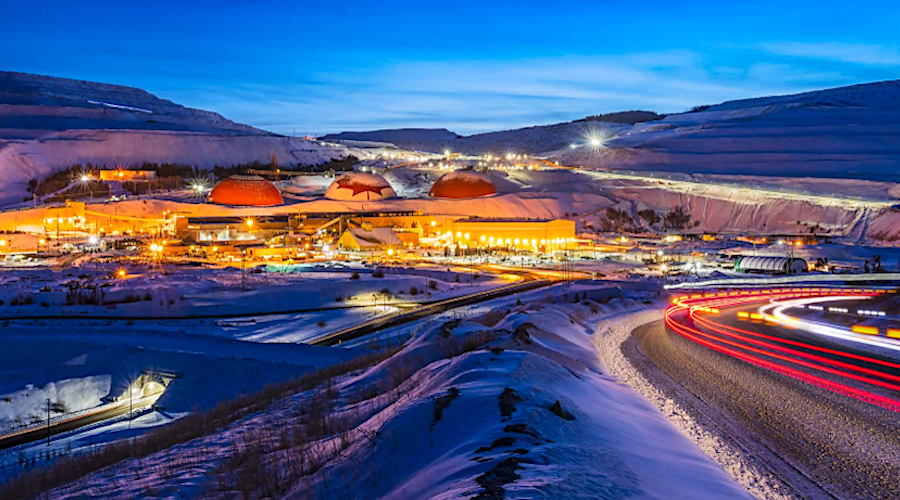
    • Teck’s Highland Valley Copper mine alone generated C$18 billion in economic activity for British Columbia in 2022, illustrating scale.
    • AME links expanded CEE and METC directly to critical mineral supply chains and Canada’s military and industrial sovereignty objectives.

    Our Take

    Teck Resources’ Highland Valley Copper operations already contributing C$18 billion to British Columbia’s economy in 2022 gives policymakers a concrete precedent for the AME/EY claim that bringing 3–5 new critical minerals and graphite mines online could materially shift provincial GDP baselines.

    With 171 mines across Canada awaiting commercial production, the implied 5x GDP return on government investment suggests that even modest, targeted permitting or infrastructure support could unlock far more value than new greenfield exploration alone over the next ten years.

    Teck Resources appears repeatedly in our Policy coverage, including the planned Anglo American–Teck merger into Anglo Teck, which signals that any Canadian incentive regime for critical minerals will intersect with the capital-allocation decisions of a much larger, globally diversified operator headquartered in Vancouver.

    Geotechnical Software for Modern Teams

    Centralise site data, logs, and lab results with GEODB-io, CMRR-io, and HYDROGEO-io.

    No credit card required.

    • Save and export unlimited calculations
    • Advanced data visualisation
    • Generate professional PDF reports
    • Cloud storage for all your projects

    Prepared by collating external sources, AI-assisted tools, and Geomechanics.io’s proprietary mining database, then reviewed for technical accuracy & edited by our geotechnical team.

    Related Articles

    Conservatives to scrap Environment Agency and Natural England: risk lens for engineers
    Policy
    3 days ago

    Conservatives to scrap Environment Agency and Natural England: risk lens for engineers

    Conservative Party leaders are preparing an election pledge to abolish the Environment Agency and Natural England, removing the current statutory regulators for flood risk management, main river consents, environmental permits and protected habitats. Scrapping these bodies would affect technical approvals for flood defences, reservoir safety oversight, abstraction licences and environmental impact assessments on major road, rail and energy schemes. Engineers could face a restructured or entirely new permitting regime, with uncertainty over design standards, programme risk and long-term asset maintenance responsibilities.

    ORR cuts third party rail charges: project delivery implications for engineers
    Policy
    5 days ago

    ORR cuts third party rail charges: project delivery implications for engineers

    The Office of Rail and Road has reduced the charges that third parties pay to fund upgrades and maintenance on the UK rail network, aiming to cut project costs for developers and investors. Lower access and investment charges are expected to make it more viable for ports, freight terminals and property-led schemes to finance track, signalling and station enhancements tied to their own developments. For civil and rail engineers, the change could unlock more privately backed schemes and require closer early-stage coordination on asset standards, possession planning and long-term maintenance responsibilities.

    Space miners’ Earth-sized tax problem: policy design notes for project teams
    Policy
    6 days ago

    Space miners’ Earth-sized tax problem: policy design notes for project teams

    Space mining ventures could face a UN-style global tax regime, with Petr Zimčík of NEWTON University proposing a Space Resources Tax Authority linked to COPUOS and a three-stage levy: a small extraction fee, a larger tax at sale or consumption, and final settlement if material enters Earth markets. The core tax would target economic rent only after recovery of capital and operating costs, with thresholds set in a basket-based international accounting unit to neutralise inflation and currency swings. A fixed share of revenue would fund a Global Space Resource Dividend and a separate Global Development Fund, using population, development gaps and space-sector contributions to allocate proceeds without conferring property rights over celestial bodies.

    Related Industries & Products

    Mining

    Geotechnical software solutions for mining operations including CMRR analysis, hydrogeological testing, and data management.

    Construction

    Quality control software for construction companies with material testing, batch tracking, and compliance management.

    CMRR-io

    Streamline coal mine roof stability assessments with our cloud-based CMRR software featuring automated calculations, multi-scenario analysis, and collaborative workflows.

    HYDROGEO-io

    Comprehensive hydrogeological testing platform for managing, analysing, and reporting on packer tests, lugeon values, and hydraulic conductivity assessments.

    GEODB-io

    Centralised geotechnical data management solution for storing, accessing, and analysing all your site investigation and material testing data.

    AllGeotechnicalInfrastructureHazardsEnvironmental