Battery electric shunter at Whatley Quarry: design and emissions notes for engineers
Reviewed by Joe Ashwell
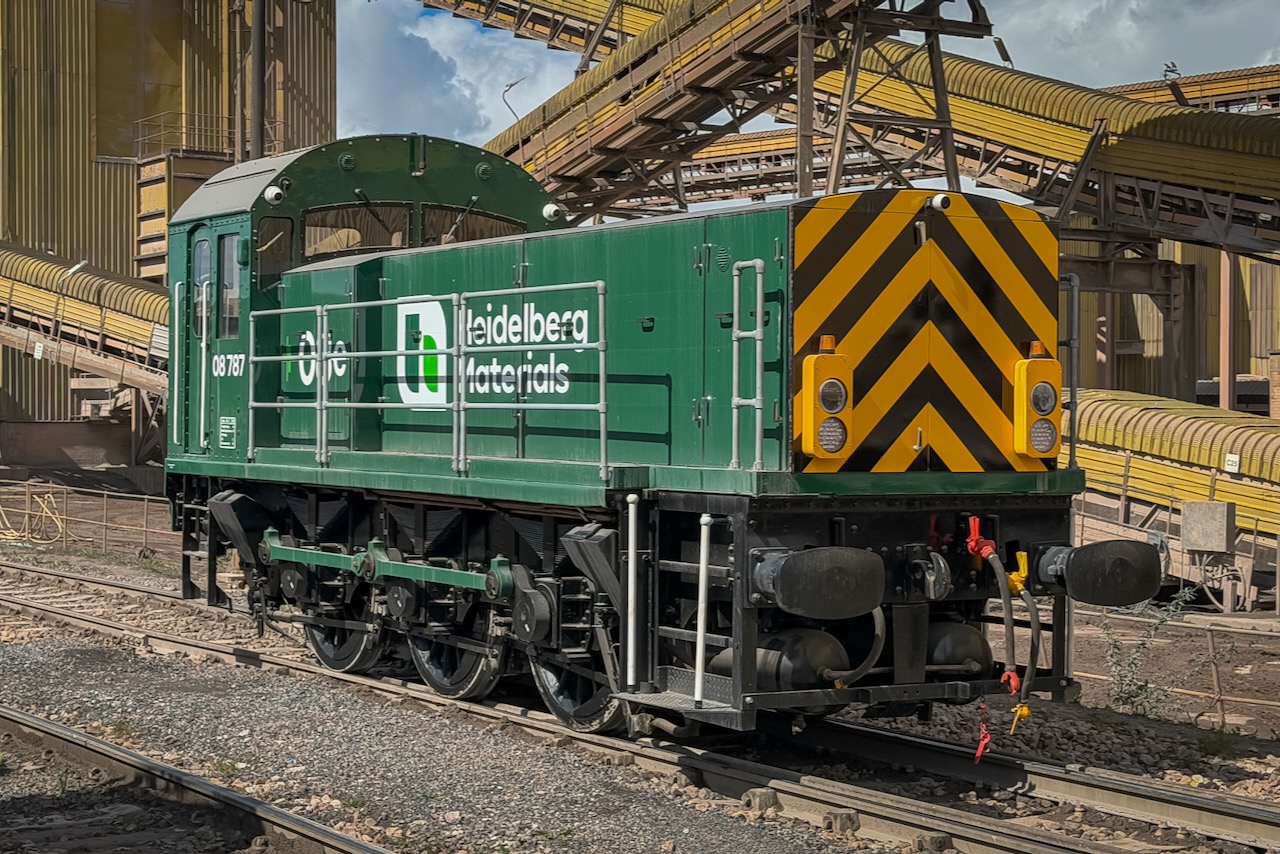
First reported on The Construction Index
30 Second Briefing
Heidelberg Materials has commissioned a converted Class 08e battery electric shunting locomotive for Whatley Quarry, the first electric shunter to operate at any UK quarry. Rebuilt by Positive Traction from a withdrawn diesel unit, the loco uses six Powerpod battery packs providing 600 kWh of energy and up to 50% more tractive effort than the original configuration. The deployment supports Heidelberg’s target to cut delivery transport emissions by 15% by 2030 from a 2019 baseline, signalling practical zero‑emission options for heavy rail movements on quarry sites.
Technical Brief
- Electric traction improves low-speed control for heavy rakes, reducing wheel slip and rail damage during shunting.
- Regenerative braking potential on short gradients can cut net energy draw from the six Powerpod packs.
- Noise reduction from removing the diesel engine benefits quarry night operations and nearby communities.
- Battery-electric shunters at quarries could simplify underground or covered loading shed ventilation design versus diesel units.
Our Take
Heidelberg Materials UK’s 15% delivery-transport emissions reduction target by 2030 at Whatley Quarry sits alongside its hydrogen-fuel asphalt trials at Criggion, signalling a multi-vector decarbonisation strategy that tackles both process heat and on-site logistics in the UK.
The 600 kWh battery capacity on the Positive Traction shunter aligns with a broader move in UK infrastructure projects towards heavy electric plant, as seen in the A47 electric paver deployment with Heidelberg Materials involvement, suggesting emerging interoperability and charging-standard questions for quarry and road fleets.
Within our Mining-category coverage, Heidelberg Materials UK appears frequently in sustainability-tagged pieces, indicating that UK regulators and clients are likely to view assets such as Whatley Quarry as early testbeds for low-carbon specifications in aggregates supply contracts.
Prepared by collating external sources, AI-assisted tools, and Geomechanics.io’s proprietary mining database, then reviewed for technical accuracy & edited by our geotechnical team.
Related Articles


Related Industries & Products
Mining
Geotechnical software solutions for mining operations including CMRR analysis, hydrogeological testing, and data management.
Construction
Quality control software for construction companies with material testing, batch tracking, and compliance management.
CMRR-io
Streamline coal mine roof stability assessments with our cloud-based CMRR software featuring automated calculations, multi-scenario analysis, and collaborative workflows.
HYDROGEO-io
Comprehensive hydrogeological testing platform for managing, analysing, and reporting on packer tests, lugeon values, and hydraulic conductivity assessments.
GEODB-io
Centralised geotechnical data management solution for storing, accessing, and analysing all your site investigation and material testing data.