Geomechanics, Streamlined.
© 2026 Geomechanics.io. All rights reserved.
Use of calcined clay concrete on the London Museum project, led by Sir Robert McAlpine with close input from engineers, contractors and materials suppliers, is enabling on-site deployment of a lower-clinker, lower-carbon mix rather than limiting it to precast elements. The team is adapting mix design and placing methods in real time on a live heritage-site build, addressing workability, setting time and strength-gain behaviour under typical UK site conditions. For practitioners, this signals growing confidence in calcined clay binders for mainstream structural applications where conventional CEM I would previously have been specified.
HS2 absorbed 69% of all UK rail infrastructure enhancement and rolling stock expenditure between April 2024 and March 2025, effectively dominating capital allocation across the network. With most funding channelled into the high-speed route’s civil works, stations and dedicated rolling stock, conventional main line renewals and smaller enhancement schemes were left sharing the remaining 31%. This concentration of spend signals continued pressure on budgets for regional capacity upgrades, electrification infill and resilience works on legacy assets.
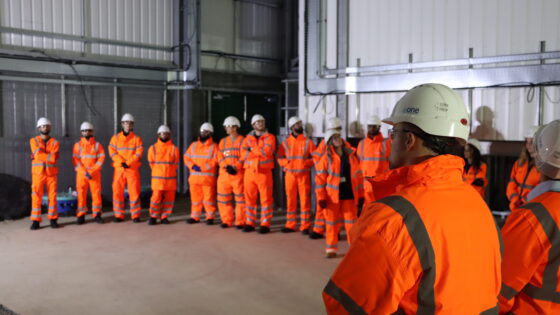
Anglian Water’s @one Alliance is profiled for its integrated delivery model on large water and wastewater schemes, where designers, contractors and the client work as a single organisation under long-term framework agreements. The discussion focuses on programme-wide standardisation of treatment plant components, use of digital twins and 4D BIM for sequencing, and early contractor involvement to reduce rework on complex pipeline and pumping station upgrades. Engineers listening can benchmark alliancing approaches, risk allocation and digital workflows against their own capital delivery programmes.
Speedier grid connections have been named the top infrastructure priority by the AI Energy Council to support planned AI Growth Zones, where new data centres and high‑density compute clusters will place heavy, localised loads on transmission and distribution networks. The council is pushing for accelerated connection approvals and targeted reinforcement of substations and 33–132kV corridors to avoid multi‑year delays. Civil and electrical engineers can expect increased demand for grid‑adjacent sites, high‑capacity cable routes and substation upgrades near major urban and research hubs.
Sweco is leading new wastewater infrastructure and solid waste management projects in Ukraine as part of a long-term reconstruction partnership with national and municipal authorities. The consultancy is providing planning and design services for damaged treatment plants and collection systems, alongside modernisation of waste handling facilities to meet EU-aligned environmental standards. For civil and environmental engineers, the work signals continuing demand for resilient network design, rapid rehabilitation of war-affected assets, and integration of European regulatory requirements into Ukrainian utility projects.
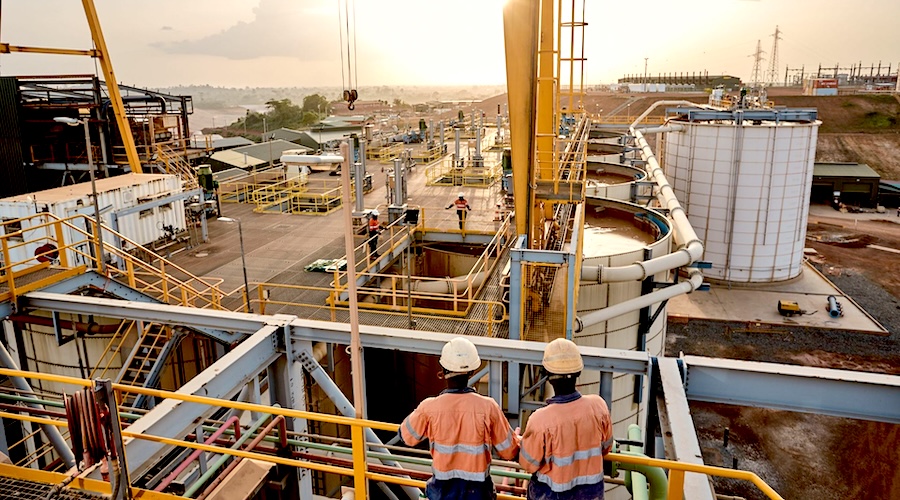
Brightstar Resources has completed its largest-ever processing campaign at the Laverton gold operations in Western Australia, driven by a new high-grade lode feeding the existing CIL plant. The campaign used toll treatment at a nearby third-party mill to run multiple ore parcels from the Cork Tree Well and Menzies projects, validating haulage, blending and metallurgical performance at commercial scale. Results will feed directly into Brightstar’s Laverton restart study, influencing pit designs, plant throughput assumptions and mine scheduling for the planned standalone processing facility.
AVESS Energy has lodged a stage one expression of interest for the Western Australian Government’s “breakthrough” vanadium battery project, targeting deployment of vanadium redox flow batteries to support long-duration grid storage. The proposal centres on using locally sourced vanadium from WA deposits to manufacture electrolyte and integrate containerised battery systems with existing transmission infrastructure. For miners and project developers, the move signals growing state-level backing for downstream vanadium processing and could influence future feasibility assumptions for WA vanadium ore bodies and associated infrastructure.
Deep Yellow has appointed former Rio Tinto uranium executive Greg Field as its new managing director and chief executive officer, signalling a leadership shift as it advances the Tumas project in Namibia and the Mulga Rock project in Western Australia. Field previously held senior roles in Rio Tinto’s uranium portfolio, including work on large-scale operations such as Ranger and Jabiluka, bringing direct experience in permitting, long-life open-pit design and yellowcake export logistics. His appointment points to a stronger development push on Deep Yellow’s multi-deposit pipeline as uranium prices remain elevated.
Black Cat Syndicate and Dreadnought Resources have signed a binding operations agreement to develop, mine and process the high-grade Star of Mangaroon gold deposit through Black Cat’s 450,000tpa Paulsens processing plant in Western Australia. The deal gives Dreadnought a low-capex processing route via existing underground infrastructure and permitted tailings at Paulsens, while Black Cat secures additional high-grade feed to improve plant utilisation. Geotechnical and mine planning teams will need to integrate Star of Mangaroon’s orebody geometry, ground conditions and haulage logistics with Paulsens’ established stoping and backfill systems.
Tasmania is emerging as a rare earths hub after ABx Group produced a mixed rare earth carbonate (MREC) sample from its Deep Leads ionic clay project, signalling potential for low-cost, near-surface extraction similar to Chinese-style deposits. The MREC product consolidates multiple rare earth oxides into a single carbonate stream, a key intermediate for downstream separation into magnet metals such as neodymium and praseodymium. For miners and process engineers, the result points to favourable metallurgy and a clearer pathway to commercial-scale leach and beneficiation flowsheets in Tasmania.
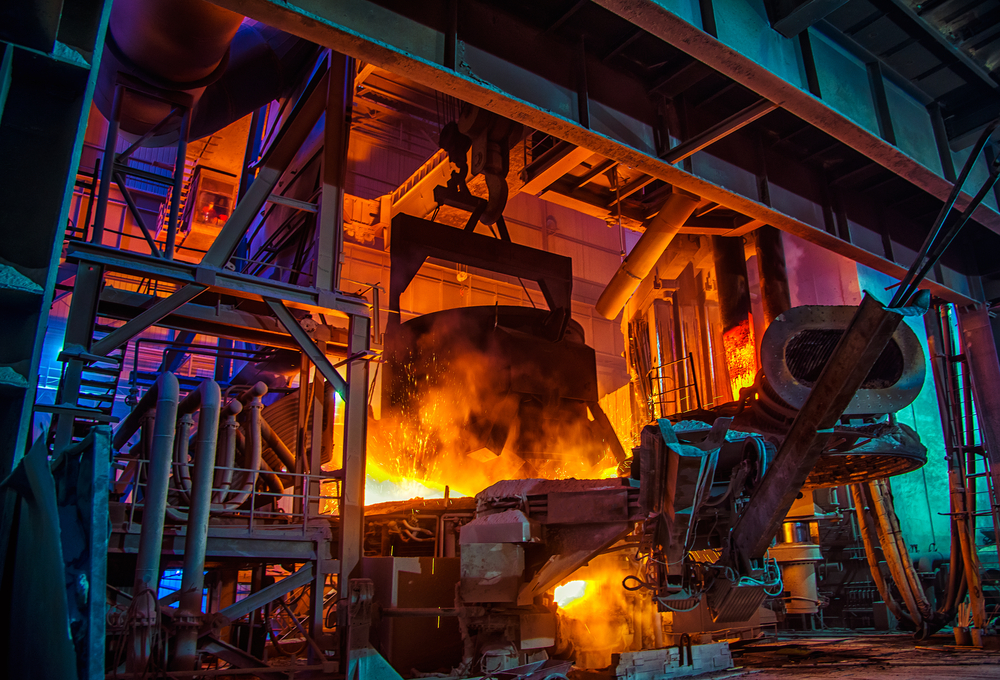
A new ARC Research Hub for Smart Process Design and Control has been launched at Monash University to cut emissions from steelmaking, which currently accounts for about 8% of global CO₂ output and 18–20% of Australia’s export income via iron ore. The Hub links Monash, Macquarie, Queensland, UNSW and Western Sydney University with Rio Tinto, Baowu Steel and China Steel Corporation to develop AI- and simulation-driven, low-emission processes tailored to diverse Australian ores. More than 100 technical presentations from Australia, China and Korea marked the launch at a three-day conference.
Sandvik’s mechanical cutting division is expanding beyond coal with grid-connected roadheaders, bolter miners and borer miners, a 430-unit active fleet, and new hard-rock systems such as the second-generation MX650 and the MN330 narrow reef production unit for Anglo American. Automation and digitalisation are advancing through CUTRONIC®, the Roadheader Guidance System, a cloud-based maintenance platform outside MySandvik, and a fully automated bolting process on the MB672, with teleremote capability targeted across all machines by 2030 and full automation by 2040. At BHP’s Jansen potash project in Canada, each mining system pairs a cable-powered MF460 borer miner with a PO140 extendable conveyor, cutting 6.3 m-wide, up to 4.36 m-high headings with 2 km cuts to form approximately 12 m-wide rooms.
A new design has been released for the $200 million upgrade of the Homebush Bay Drive–Australia Avenue signalised intersection in Sydney, a key access route to Sydney Olympic Park that suffers heavy AM/PM peak and event congestion. The scheme targets long queues and extended cycle times on the multi-lane approaches, where current delays spike during major events at Accor Stadium and Qudos Bank Arena. For designers and traffic modellers, the project signals scope for additional through lanes, extended turn bays and revised signal phasing to restore corridor capacity.
BHP’s latest approach to acquire Anglo American reportedly reached about £40 billion ($53 billion), offering roughly £34 per share — a 24% premium to Anglo’s £27.36 close on 20 November — in a mostly scrip deal with some cash. Anglo’s board is said to have rejected the bid in favour of expected value from its planned acquisition of Teck Resources, which would combine neighbouring Andean copper operations into a top-five global copper producer. Regulatory risk and exposure to BHP share-price volatility were additional concerns.
Endeavour Mining plans to discover 12–15Moz of new resources between 2026 and 2030 on a $540 million budget, targeting a discovery cost below $40/oz after delivering 20.7Moz at under $25/oz from 2016–2025. The company will test about 50 near-mine targets across 7,000km² in Côte d’Ivoire, Senegal, and Burkina Faso, with Houndé and Sabodala-Massawa each aiming for 1.5–2Moz and Ity, Lafigué, Assafou and Mana together adding up to 4.5–5Moz. Endeavour also invested £1.8 million in East Star Resources to back gold-copper exploration in Kazakhstan.
Torex Gold Resources has defined a 400 x 300 metre mineralised footprint at Media Luna West, 180 km southwest of Mexico City, with step-out drilling returning high-grade intercepts including 11 metres at 11.7 g/t gold, 10.3 g/t silver and 0.26% copper from 647 metres, and 12.9 metres at 17.25 g/t gold, 8.7 g/t silver and 0.27% copper from about 704 metres. The 24-hole, 11,303-metre programme also delivered thicker zones such as nearly 50 metres at 2.47 g/t gold from 652 metres, including 20 metres at 7.24 g/t gold, supporting a maiden inferred resource targeted for March. Torex plans further drilling along the north–south corridor towards the San Miguel fault to grow and upgrade resources, with Media Luna West viewed as a potential new underground mining front feeding the existing Morelos processing plant.
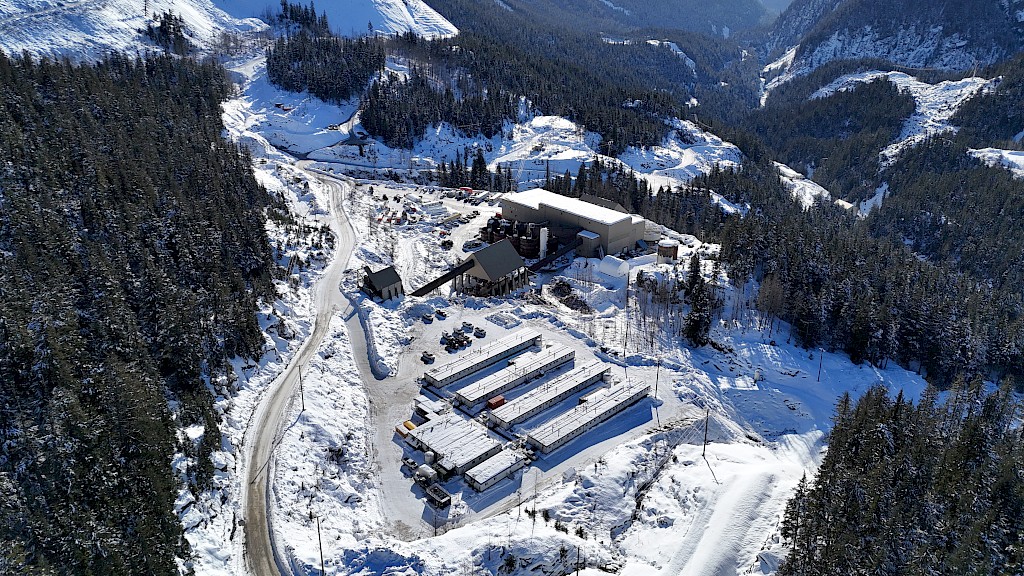
Ascot Resources is launching a post-consolidation C$150 million private placement, issuing common shares at C$0.60 and up to C$15 million in flow-through shares at C$0.73, alongside a C$14.9 million rights offering and 50:1 share consolidation to stabilise its BC-focused operations. Major shareholder Ccori Apu will participate to maintain its 32% stake, while senior lender Nebari has agreed to extend loan maturity and amend repayment terms, averting potential creditor protection. Proceeds target restarting development at the Premier gold project near Stewart, currently in care and maintenance after a five-month restart was halted.
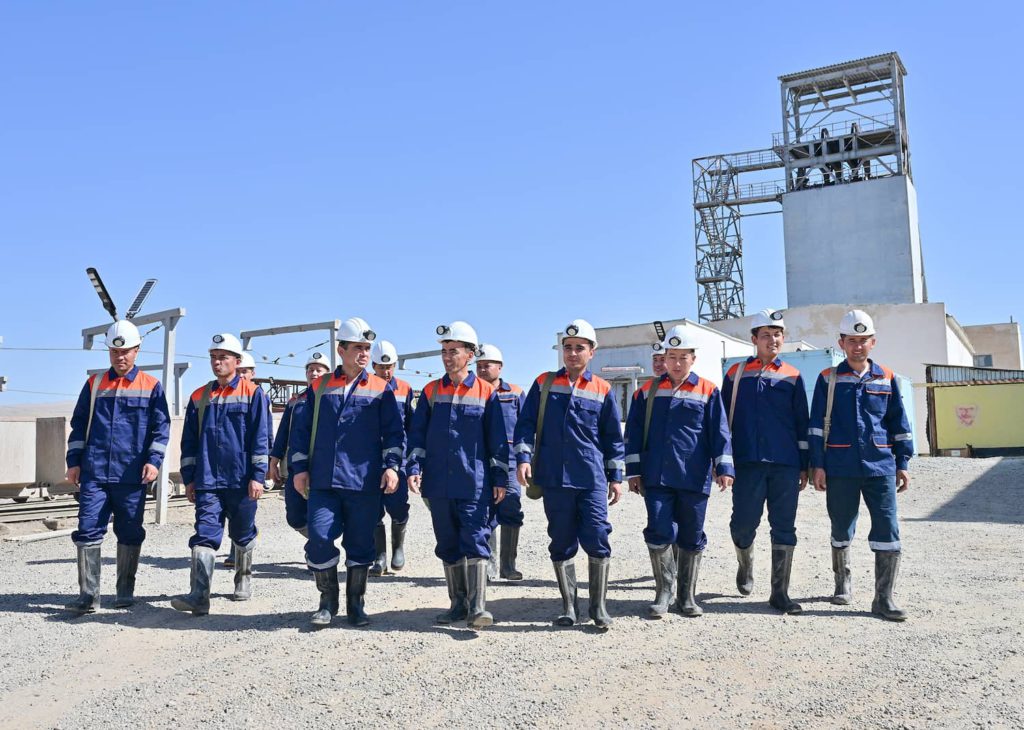
Navoi Mining and Metallurgical Company has been upgraded by S&P Global to a ‘BB’ long-term credit rating with a ‘Stable’ outlook, following Uzbekistan’s sovereign rating improvement and in line with Fitch’s issuer default rating. Fitch cites NMMC’s position as the world’s fourth-largest gold producer, with output above 3 million oz per year, low costs, long mine life and low leverage, underpinned by the Muruntau deposit and a 150 million oz resource base. Earlier in 2025 NMMC issued a $500 million London-listed corporate bond via Citi, JP Morgan, Société Générale and MUFG to optimise and diversify its debt profile.
Latin America is accelerating critical mineral value-chain development as the Inter-American Development Bank (IDB) and EU deploy a €6.3 million grant to unlock about €120 million in IDB funding for lithium, copper and rare earths projects in Argentina, Bolivia, Brazil, Chile and Ecuador. The IDB’s Mining for the Energy Transition (MET) programme is targeting regulatory reform, improved geological data and low‑carbon mining, while Washington signals a preference for sourcing and processing within the hemisphere. IDB is also financing extraction, including a $100 million loan into Rio Tinto’s $2.5 billion battery‑grade lithium project in Salta, Argentina.
China has issued the first batch of one-year “general” rare earth export licences to magnet producers JL Mag Rare Earth, Ningbo Yunsheng and Beijing Zhong Ke San Huan High-Tech, easing shipment-by-shipment approvals imposed under April’s export controls. The move follows Beijing’s agreement to suspend expanded October controls as part of a trade truce with the US, after rare earth magnet exports initially slumped and 2025 shipments remained about 20% down year-on-year despite a nine-month high to the US in October. European manufacturers report shorter delays but still flag opaque criteria and the risk that broader restrictions could quickly tighten again.
Tin market tightness is set to deepen as Fitch Solutions’ BMI lifts its 2026 tin price forecast to $35,000/tonne, with LME three‑month futures already near $36,787/tonne on 14 November amid persistent supply disruptions. Indonesian exports remain constrained by delays in annual work permit approvals, while uncertainty continues over the real timing of resumed output from Myanmar’s Man Maw operations in Wa State despite reported three‑year mining permits. BMI notes a thin pipeline of new tin projects and steadily rising demand from semiconductors, EV electronics and photovoltaic cells, pointing to a sustained concentrate and refined metal deficit.
Structural steel specialist Severfield reported a widened pre-tax loss of £5.6m for the six months to 27 September 2025, with revenue down 18% to £206m and underlying pre-tax profit collapsing from £16.1m to £0.6m. New chief executive Paul McNerney, formerly of Laing O’Rourke, has launched a strategic review of markets, operations and organisational structure, with findings due in 2026. Despite a subdued UK and European steelwork market and tight bid prices, Severfield has secured major packages on the Agratas battery gigafactory in Somerset, a London energy-from-waste plant and Ineos’ Project One in Antwerp.
Kier Group has appointed Tom Hinton, currently interim chief executive and former chief financial officer of logistics operator Wincanton, as its new CFO with effect from 1st January 2026, succeeding Simon Kesterton after his six-year tenure ends on 31st December 2025. Hinton previously served as group CFO at Infinis Energy, Domestic & General and WE Soda, bringing experience across energy, insurance and mining and chemicals to the UK contractor. The move follows last month’s transition to new chief executive Stuart Togwell, signalling a refreshed leadership team as Kier pursues its medium-term value creation plan and balance sheet strengthening.
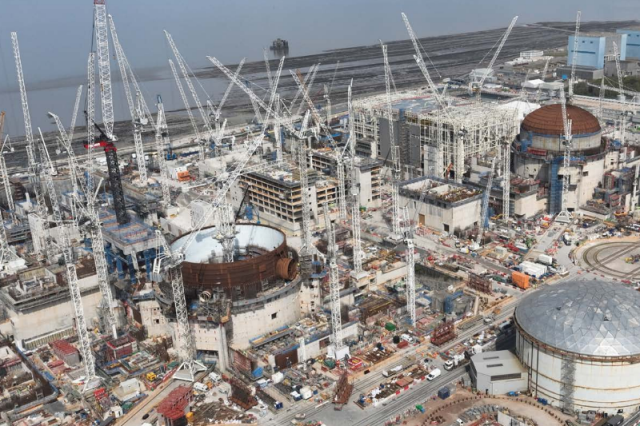
Fire enforcement notice has been served on Bylor JV (Laing O’Rourke and Bouygues Travaux Publics) at Hinkley Point C after ONR inspectors found significant fire safety shortfalls in multiple advanced-stage site buildings, including inadequate general fire precautions and absence of a compliant emergency lighting system. The notice, issued under the Regulatory Reform (Fire Safety) Order 2005, requires improvements to be completed by 30 June 2026, with interim risk controls expected. Bylor is already facing two ONR prosecutions over a November 2022 fatality and an August 2022 rebar mesh wall collapse causing serious injury.