Geomechanics, Streamlined.
© 2026 Geomechanics.io. All rights reserved.
Construction output in the UK is now forecast by the Construction Products Association to grow just 1.7% in 2026, down from 2.8% predicted in October, with private housing output cut to 1.5% growth and private housing RMI expected to contract by 1.0%. Infrastructure remains the main volume driver, with 3.9% growth in 2026 anchored by energy generation and grid projects, AMP8 water investment and ongoing work at Hinkley Point C despite HS2 and roads pipeline uncertainty. The CPA says the modest growth outlook depends heavily on commercial fit-out and refurbishment and timely delivery of public sector building programmes for schools, hospitals and prisons.
Infrastructure tender prices in the UK are forecast by Turner & Townsend’s Winter 2025 UK Market Intelligence report to rise 5.0% annually for infrastructure and 3.5% for real estate through 2026–27, a 0.5 percentage point increase on last year’s tender price inflation. New orders jumped 29.3% year-on-year to Q3 2024, while the sector has lost around 50,000 workers in 12 months, signalling a tightening capacity squeeze just as the Planning and Infrastructure Act accelerates project starts. Turner & Townsend urges earlier supply chain engagement, mutual incentives and continuous viability reviews beyond the initial procurement decision.
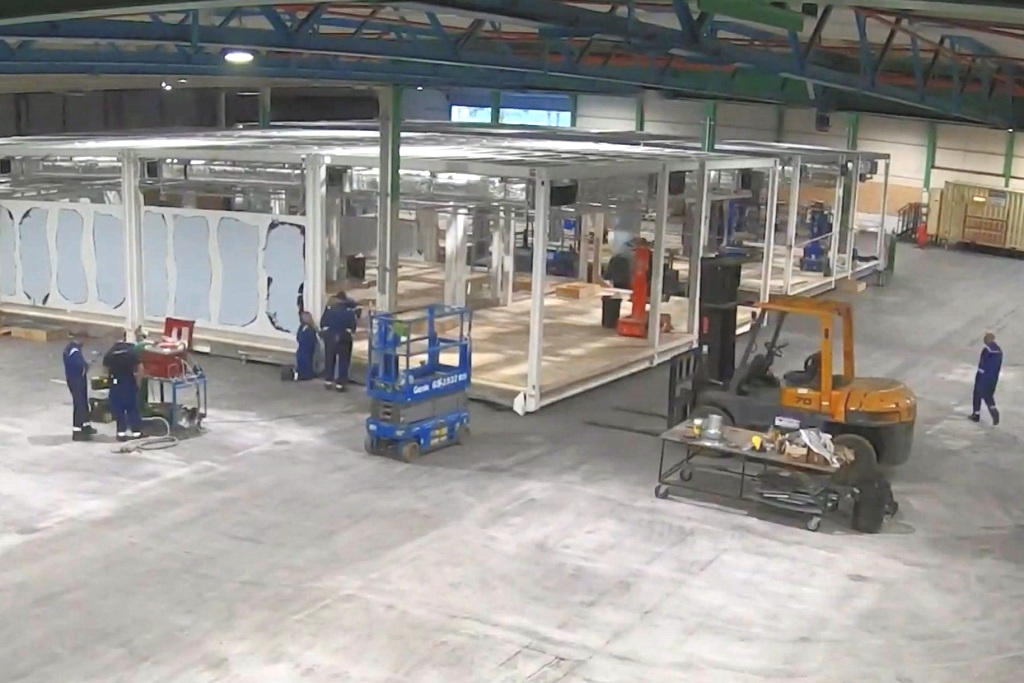
Modulex Modular Buildings has acquired a majority stake in newly formed Merit Industrialised Construction Limited, securing Merit's Cramlington factory assets, proprietary digital platform and validated design library for hospitals, clean rooms, biotech and pharmaceutical facilities. The deal underpins Modulex’s new modular steel MegaFactory in India, where it plans to manufacture high-specification modular kits for export back to the UK and other markets, targeting hospital buildings, data centres and science facilities. Integrated design–engineering–costing on a single platform promises rapid, fully costed designs and early-stage cost certainty, with reduced bespoke engineering.
UCL’s Megaproject Delivery Centre founding director Juliano Denicol sets out a research-led approach to improving delivery of multi‑billion‑pound schemes such as HS2 and Crossrail, focusing on governance, contracting models and systems integration. He stresses early definition of scope and interfaces, disciplined change control and portfolio‑level learning from more than 30 international case studies of rail, energy and tunnelling projects. Denicol also calls for clients to build in‑house capability in data analytics and assurance, using consistent performance baselines rather than ad‑hoc KPIs to manage cost and schedule risk.
A new digital Built Environment Competence Hub has been launched by the British Standards Institution (BSI) to clarify how competence requirements are defined and applied across UK construction and infrastructure projects. The online resource is intended to help dutyholders interpret evolving regulatory obligations, particularly around building safety and competence frameworks introduced after the Building Safety Act. For geotechnical, structural and civil engineers, it centralises guidance on role-specific competence expectations, supporting more consistent documentation for audits, procurement and regulatory submissions.
Dayton-Phoenix Group has completed validation testing of its VOLT hybrid locomotive power solution, which retrofits directly to existing diesel-electric locomotives used on industrial and mine site rail systems. The VOLT system operates as an add-on hybrid module rather than a full locomotive replacement, targeting lower fuel burn and emissions while retaining the original traction equipment and control architecture. For mine operators, this offers a brownfield decarbonisation path for in-pit and plant rail without scrapping current diesel fleets or reconfiguring track layouts.
Metso’s HRC 8 high pressure grinding roll, distributed in southern Africa by Pilot Crushtec, is being deployed to convert crusher fines and other unsaleable by-products into high-quality manufactured sand with tightly controlled particle shape. The compact HPGR unit is engineered for tertiary and quaternary crushing, using inter-particle compression to improve cubicality and reduce overgrinding compared with cone crushers. For mines and quarries, this allows higher overall plant yield from existing deposits and can cut waste stockpiles and associated environmental liabilities.
Robit’s down-the-hole drilling tools have completed competitive field trials at the La Arena open-pit gold-copper mine in northern Peru, located on the Andean porphyry copper-gold belt. Testing focused on hammer and bit performance in high-altitude, hard-rock conditions typical of large porphyry deposits, with Robit equipment reported to maintain penetration rates and wear life against rival systems. For mine operators, the results point to potential reductions in bit change-out frequency and more consistent blast-hole quality in similar Andean geologies.
Eldorado Gold reports that automation is already being built into development at the Skouries underground gold project in Greece, with the mine advancing alongside the Olympias Expansion and Perama Hill projects as part of a coordinated growth plan. The company is progressing a high-grade, underground operation designed from the outset for automated production systems, including remote-capable mobile equipment and centralised control infrastructure. For mine planners and engineers, Skouries signals further integration of automation into European hard‑rock underground projects, with associated implications for layout, communications, and workforce deployment.
Zijin Mining has commissioned Phase 2 of the Julong Copper Mine on 23 January 2026, adding 200,000 t/d of new mining and processing capacity to the existing 150,000 t/d operation. The expansion lifts total ore throughput to 350,000 t/d, positioning Julong among the world’s larger open-pit copper operations by plant scale. Geotechnical and plant engineers will now be managing significantly higher pit slopes, waste movement and tailings volumes, with corresponding demands on haulage, dewatering and process water circuits.
Zijin Mining has passed 1,000 MW of installed clean energy capacity across its global operations, driven by projects such as a 70 MW wind farm at Bayannur Zijin in China and a 23.87 MW solar plant in the Democratic Republic of Congo. The company is also beginning in-house production of electric mining trucks in partnership with Longking, targeting large open-pit fleets. For mine planners and electrical engineers, the combination of on-site renewables and OEM-level truck development signals a push towards integrated power–haulage systems and reduced diesel dependency.
The First-tier Tribunal has ruled that any risk, however small, of fire spread or structural failure can constitute a “building safety risk” under s.120 of the Building Safety Act 2022, in a case concerning the 280-apartment Canary Riverside estate (Belgrave Court, Berkeley Tower, Eaton House and Hanover House). In applications for Remediation Orders and Remediation Contribution Orders over seven external wall systems, six were found to contain relevant defects, with reconstituted stone cladding the sole exception. The Tribunal prioritised current compliance with Building Regulations B3 and B4 and Approved Document B over historic regulatory compliance or PAS 9980 “low” risk ratings, finding missing or defective cavity barriers in masonry cavity walls with phenolic insulation (EWT1) to be a relevant defect.
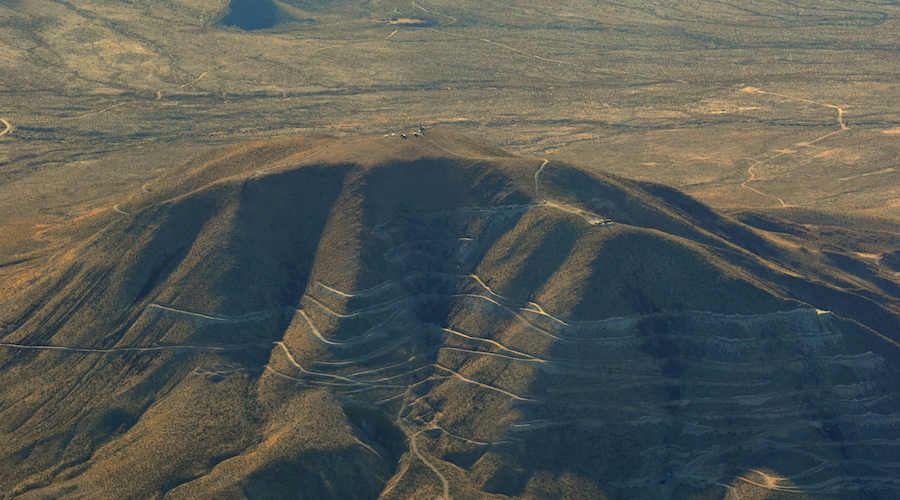
The US government is set to take a 10% stake in USA Rare Earth via 16.1 million shares plus warrants for 17.6 million more at $17.17 each, alongside $1.3 billion in debt financing under a CHIPS Act facility and a reported additional $1 billion private investment, valuing the package at about $1.6 billion. Funding targets USAR’s Round Top open-pit rare earth project at Sierra Blanca, Texas, which a 2019 report estimates could produce 2,213 tonnes of REEs over 20 years, including over 1,900 tonnes of heavy REEs such as dysprosium. The deal underpins a US mine-to-magnet chain centred on Round Top feedstock, a 5,000 t/y magnet plant in Stillwater, Oklahoma, and a processing and separation lab in Wheat Ridge, Colorado.
Novagold’s Donlin Gold project in southwest Alaska now carries an initial capital cost estimate of $9.2 billion (up 25%) and sustaining capital of $2.3 billion (up 35%), but its post-tax NPV has risen to $5.1 billion at $2,100/oz and 5% discount, with a 10.3% IRR and $19.6 billion after-tax cash flow. The 27-year operation is underpinned by 560 million measured and indicated tonnes at 2.22 g/t Au (about 40 million oz) plus 88.9 million inferred tonnes at 2.03 g/t, based on drilling to end-2024 by Wood Group and Geosyntec. Owners Novagold (60%) and John Paulson (40%) plan to appoint a prime contractor in Q1 for a new bankable feasibility study, targeting construction from 2027 and commercial production from 2031.
Engineers led by the University of Warwick have produced what is described as the world’s first structural engineering design manual for bamboo, aimed at standardising calculations for loadbearing frames, connections and serviceability checks. Developed by an international team, the manual is intended to support code-compliant design of engineered bamboo elements such as laminated beams and columns, moving beyond prescriptive, region-specific rules. For civil and structural engineers, this offers a reference to justify bamboo in primary structures, particularly in low- to mid-rise buildings in high-seismic and high-humidity regions.
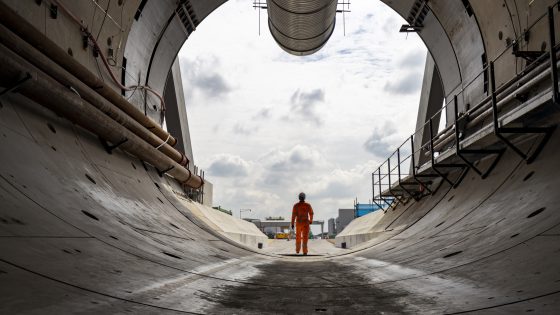
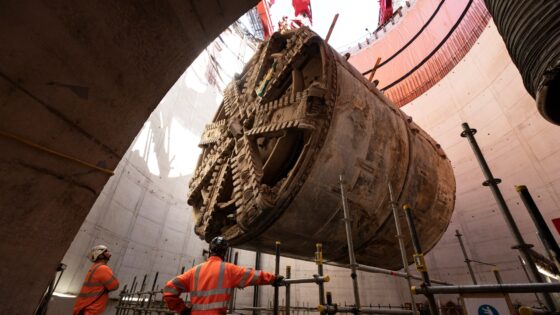
Work has started on United Utilities’ £48M upgrade of the Knutsford sewer network in Cheshire, centred on a 1.8km stormwater tunnel to increase storage and reduce storm overflows. The scheme will add new underground capacity to intercept peak flows before discharge to local watercourses, targeting improved bathing and ecological water quality. Contractors will need to manage tunnelling in urban ground conditions around existing utilities and foundations, with construction staging critical to maintaining sewer service during tie-ins.
AFC Bournemouth has secured planning permission for enabling works at Vitality Stadium, initiating a multi‑phase redevelopment that could more than double the current spectator capacity. Early works are expected to focus on site clearance, service diversions and ground preparation to accommodate new stands and associated infrastructure. Contractors and designers will need to plan phased construction and temporary works around continued stadium operation, with careful sequencing of piling, foundations and access routes to manage crowd safety and match‑day logistics.
Millions more homes across England, Scotland and Wales are projected to face severe flood risk as climate breakdown accelerates, with some communities likely to become effectively uninsurable and potentially require managed retreat. The Guardian’s investigation points to sustainable drainage systems (SuDS) – such as permeable pavements, swales, detention basins and green roofs – as critical to reducing peak flows and surface water overload in urban catchments. For civil and drainage engineers, the message is rapid retrofitting of SuDS into existing streets and developments, not just tightening design standards for new builds.
Formal approval for the £108M Middlewich Eastern Bypass allows main construction to proceed in Cheshire East, unlocking a long‑planned relief route around the A54/A533 corridor. The scheme is expected to divert heavy traffic away from Middlewich town centre, reducing congestion on existing single‑carriageway sections and improving journey time reliability for regional freight. Contractors and designers will now move from enabling works to full earthworks, structures and pavement construction, with detailed phasing critical to maintaining access to local industrial estates and residential areas.
The Department for Transport has agreed to re-test the business case and engineering feasibility of an underground Manchester Piccadilly station as part of new agreements with northern regional authorities on Northern Powerhouse Rail upgrades. The review will compare sub-surface options against the existing surface station configuration, focusing on capacity, journey time benefits and constructability in a dense urban rail hub. Outcomes will influence future alignments, tunnelling requirements and interchange design for east–west NPR services through central Manchester.
Thirty construction workers on Johnson Matthey’s planned hydrogen gigafactory in Hertfordshire remain suspended and risk dismissal after the client refused to reinstate their site access passes. The dispute affects a major process-industrial build, likely involving large-scale structural steelwork, extensive M&E integration and hazardous-area design typical of hydrogen production facilities. Prolonged loss of this workforce could disrupt programme sequencing, specialist installation continuity and commissioning schedules, with knock-on effects for contractors’ labour planning and cost control.
HS2 raised concerns about contractor safety practices only months before a “serious” crane disassembly incident in September on the high‑speed rail project. The event involved a crane being taken down on an HS2 worksite, prompting investigation into lifting plans, exclusion zones and contractor competence in line with CDM Regulations. Engineers can expect closer scrutiny of temporary works design, crane stability checks and method statements for assembly/disassembly operations across HS2 packages.
Dennis Boehm has received the Wallace Hayward Baker Award from the Deep Foundations Institute for more than three decades of work on deep foundations, starting with Hayward Baker (now Keller) in 1990. He is recognised as an expert in both wet and dry soil mixing, applying these methods on complex ground improvement and deep foundation projects across North America. For practitioners, his work reinforces the role of soil mixing in controlling settlement and improving bearing capacity where conventional piling or mass excavation is impractical.
Sydvaranger Drift AS, GRANGEX AB’s wholly owned subsidiary, has signed a mining services agreement with Finnish contractor E. Hartikainen Oy to support the restart of the Sydvaranger open-pit iron ore mine at Kirkenes in northern Norway. Hartikainen, founded in 1965 and active across the Nordic region, will bring large-scale open-pit mining and earthworks capability to the brownfield operation. The deal signals mobilisation of experienced Nordic mining fleets and operators for near-term pre-stripping, haulage and pit rehabilitation planning at the idled site.