Geomechanics, Streamlined.
© 2026 Geomechanics.io. All rights reserved.
Aeris Resources has secured court approval to acquire Peel Mining Limited, adding the South Cobar Copper Project – including the Mallee Bull and Wirlong copper deposits – to its New South Wales portfolio centred on the Tritton copper operations. The transaction consolidates multiple high-grade copper resources within trucking distance of Tritton’s existing processing plant, giving Aeris options for satellite underground developments rather than standalone infrastructure. For mine planners and geotechs, the deal signals a shift towards a regional hub model around Tritton, with potential for extended mine life and staged resource conversion.
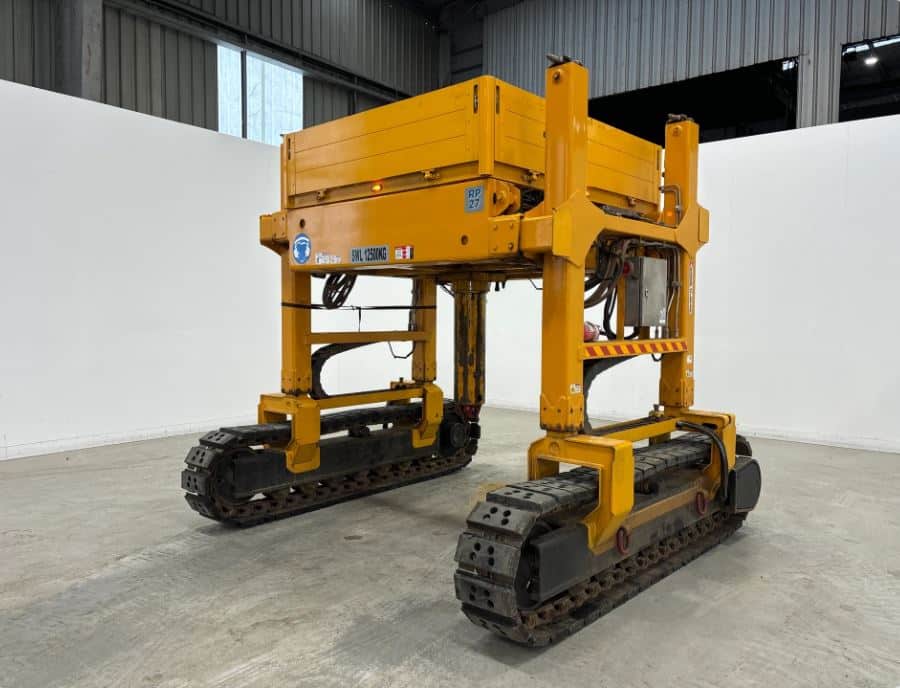
A liquidation auction in Sydney is offering sixteen near‑new McCulloch TRT Panel Lifters, purpose‑built rail track renewal and panel‑handling machines, to qualified bidders via an online sale run by Slattery’s. The TRT units are designed for rapid, controlled lifting and placement of prefabricated rail panels, allowing mechanised replacement of track sections with reduced manual handling and shorter possession windows. Rail and mining operators with in‑house track infrastructure can use the equipment to expand or modernise maintenance fleets without long OEM lead times.
Core Lithium has begun a major drilling campaign at its Blackbeard prospect, about 20km from the Finniss lithium processing plant in the Northern Territory, as it looks for the next ore source to support a restart. The company is also acquiring additional ground around Blackbeard to secure control of the emerging pegmatite system and potential strike extensions. Any economic discovery would likely be trucked to the existing Finniss plant, making haulage distance, ore continuity and geotechnical conditions along the corridor critical design considerations.
Volvo Construction Equipment is pushing to expand its share of the smaller rigid mining truck segment, challenging Caterpillar’s 777/775 and Komatsu’s HD785/HD685 with its rigid haulers built in Motherwell, Scotland. The “right-sized” Volvo units target mines where ultraclass trucks are impractical, focusing on optimised payload-to-weight ratios and shorter cycle times on tighter haul roads. For operators, the main implications are alternative fleet configurations in the 60–100 t class and potential lifecycle cost competition in brownfield pits constrained by ramp geometry and crusher layouts.
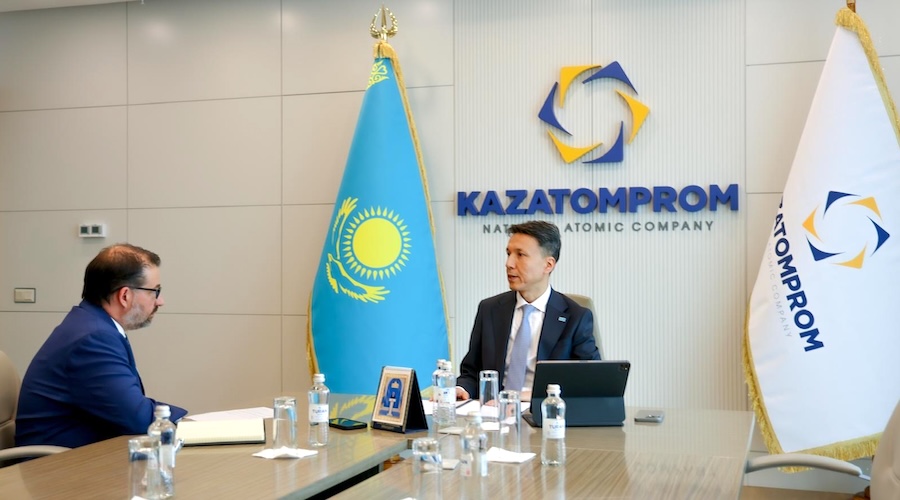
Kazatomprom CEO Meirzhan Yussupov says the company will maintain its “value over volume” strategy, limiting output growth to about 10% year-on-year rather than chasing market share, despite surging nuclear demand from China, India’s 100 GW-by-2047 SHANTI targets and AI-driven data centres. He confirms Kazakhstan already mines, processes and fabricates fuel assemblies for export to China, and is now evaluating an in-country conversion plant using newly acquired technology, with investment contingent on IRR, NPV and payback. Yussupov notes up to roughly 60–65% of Western deliveries have recently moved via the Trans-Caspian Middle Corridor, while transit through Russia to St Petersburg remains legally available as Kazakh uranium is not covered by Russian-origin bans.
Kazakhstan’s state-controlled Kazatomprom, which produces most of the country’s roughly 40% share of global uranium supply via low-cost in-situ recovery, is doubling down on its “value over volume” strategy, refusing to flood the market despite a sevenfold rise in its London-listed share price since 2018. CEO Meirzhan Yussupov says any move further down the fuel cycle, including ambitions for domestic enrichment, must clear strict payback, IRR and NPV hurdles and comply with non-proliferation constraints. He also positions Kazatomprom’s dual listing in London and on the common-law-governed Astana International Exchange as a proof point for Kazakhstan’s investor protections.
Namdeb has taken delivery of four Caterpillar D11 dozers from Barloworld Namibia on a rent-to-buy deal to support its Dry Mining Unit (DMU) plants by feeding sand via high-power dozer pushing. The D11s, among the largest production dozers in the Cat fleet, are expected to improve DMU throughput and reduce reliance on truck-and-shovel haulage in unconsolidated coastal deposits. For mine planners and geotechs, the shift concentrates loading on defined push corridors, affecting bench geometry, trafficable beach design and equipment interaction around the DMU.
A 60-day ceasefire between the US and Iran is expected to stabilise Brent crude prices and reduce recent spikes in bunker fuel and aviation kerosene costs that have hit UK contractors’ logistics and plant operation budgets. Lower shipping and haulage rates could ease pressure on materials such as imported steel, bitumen and cement, where transport can account for 20–30% of delivered cost on long-distance routes. Civil contractors should, however, treat any short-term relief in tender allowances and fuel escalations as temporary, given the ceasefire’s limited duration and political fragility.
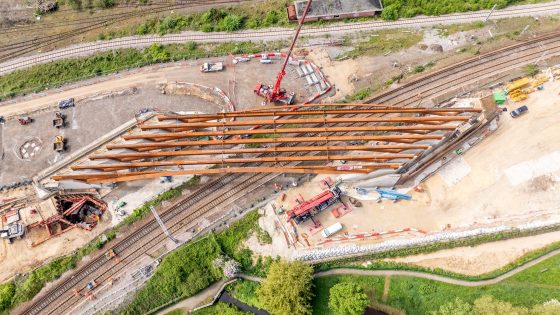
Installation of a new overbridge across the four‑track East Coast Main Line at York has been completed in a single possession using a large tandem lift, unlocking access to the 45ha York Central regeneration site. The steel composite structure was assembled offline on piled foundations and driven into position with self‑propelled modular transporters to minimise disruption to high‑speed rail traffic. Complex staging, tight clearances over 25kV overhead line equipment and coordination with Network Rail asset protection teams shaped the temporary works, lift planning and deck geometry.
UK Atomic Energy Authority and Japan’s National Institutes for Quantum Science and Technology have signed a memorandum of cooperation to advance nuclear fusion development, linking UK work at Culham with Japanese programmes on devices such as JT-60SA. The agreement is expected to cover joint R&D on plasma physics, superconducting magnet technology and tritium handling, plus exchanges of engineers and shared use of large experimental facilities. Civil and structural specialists can anticipate future demand for designs accommodating high neutron flux, intense thermal loads and complex shielding in next‑generation fusion testbeds and pilot plants.
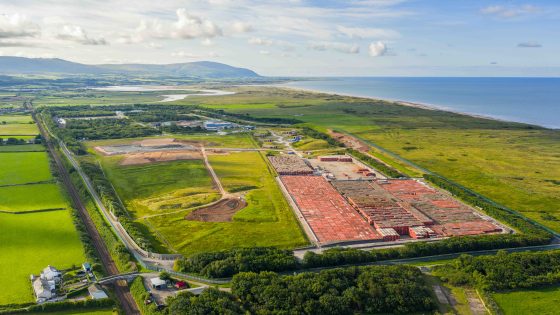
Market engagement has opened for a £382M vault optimisation and capping delivery contract at Nuclear Waste Services’ Low Level Waste Repository (LLWR) in Cumbria, signalling a major phase of engineered containment works. The package is expected to cover optimisation of existing disposal vaults and installation of multi-layer capping systems over legacy trenches and vaults to long-term standards for low-level radioactive waste isolation. Contractors will need deep experience in complex earthworks, geosynthetic barrier systems, and long-duration performance of engineered covers in aggressive coastal conditions.
City of York Council has set up a £15.36M, four-year minor civils framework to deliver capital maintenance and small-scale civil engineering works across the city. Five contractors have been appointed to handle schemes such as local highway repairs, small bridge and structure refurbishments, and drainage upgrades, typically below full capital project thresholds. The framework should streamline procurement for repeat works, giving designers and contractors clearer pipelines for pavement rehabilitation, minor retaining structures and junction improvements within existing streetscapes.
Civil engineering contractors are being invited by the Northern Lighthouse Board to refurbish North Rona Lighthouse, located on one of Britain’s most remote and previously inhabited islands, north of the Outer Hebrides. The works will involve logistics to a site accessible only by boat or helicopter, with no resident population, power, or local accommodation, demanding full self-sufficiency in plant, materials, and welfare. Firms will need robust marine access planning, weather-contingency programming, and designs suited to extreme Atlantic exposure and difficult rock landings.
Sizewell C’s leadership and government officials faced the House of Commons Public Accounts Committee over cost overrun risks and transparency on the twin EPR nuclear plant planned to deliver 3.2GW on the Suffolk coast. MPs pressed for clarity on contingency budgeting, contract structures and the impact of inflation on major civils packages, including marine works and the main nuclear island. The session also covered enabling infrastructure such as site access roads, earthworks platforms and grid connection timelines, with concerns about schedule slippage and long-term value for money.
New climate-modelling by the British Geological Survey (BGS) projects that up to 11% of UK homes – several million properties – could face increased clay-related subsidence risk by 2070 as hotter, drier summers drive greater soil shrink–swell. The work uses UKCP18 climate scenarios to map susceptibility on shrink–swell clays, flagging particular exposure in southern and eastern England where high-plasticity London Clay and similar formations are widespread. For geotechnical and asset engineers, this points to tighter foundation design, tree and drainage management, and targeted monitoring of existing low-rise housing stock.
The UK government has issued a revised Draft Airports National Policy Statement that advances Heathrow Airport Ltd’s proposal for a third runway, signalling renewed political backing for major expansion at the hub. The framework is a key step in the Development Consent Order process under the Planning Act 2008, setting out need, policy tests and assessment criteria for new runway capacity in the South East. Civil and geotechnical teams can now expect more detailed work on ground conditions, surface access corridors and mitigation of construction impacts around the existing two-runway platform.
St Barbara’s 15‑Mile Processing Hub in Nova Scotia has cleared the federal conformity review, triggering a 20‑day public comment and First Nation consultation period under Canada’s impact assessment regime and the new “one project, one review” cooperation agreement. The central plant is designed to treat 3 million tonnes of ore per year from the 15‑Mile, Old Austen and Old Mitchell mines, targeting over 100,000 oz of gold annually for more than 11 years based on proven and probable reserves. Redesign work claims to cut land disturbance by 23–55% across the three sites, remove several access roads and legacy facilities, and integrate remediation of historic mercury and arsenic contamination, with a feasibility study and full environmental assessment filing planned by Q3 FY2027.
Underground operations at Newmont’s Cadia mine in New South Wales have been halted for the second time in nine weeks after magnitude-3.2 and 3.4 earthquakes struck the site early Friday, with the latter event occurring about 1 km below surface. Cadia, a panel-cave operation producing roughly 385,000 oz of gold and 82,000 tonnes of copper annually and contributing about 11% of Newmont’s net asset value, had only recently undergone a five-week rehabilitation to restore output to 80% capacity after an April magnitude-4.5 tremor. RBC warns that recurring seismicity introduces material safety, production and regulatory uncertainty for the long-life operation, currently approved to 2031.
EnCore Energy has secured Bureau of Land Management approval to begin constructing the Dewey Burdock in-situ recovery (ISR) uranium mine on 97 hectares of public land in southwest South Dakota, including access roads, monitoring wells and power lines. The project, licensed by the Nuclear Regulatory Commission since 2014 and recently cleared of Environmental Protection Agency permit challenges, is designed to produce 1 million lb U₃O₈ per year and recover over 14 million lb across a 28-year life. A 2025 PEA gives Dewey Burdock a post-tax NPV of $133.6 million, 33% IRR and initial capex of $264.2 million.
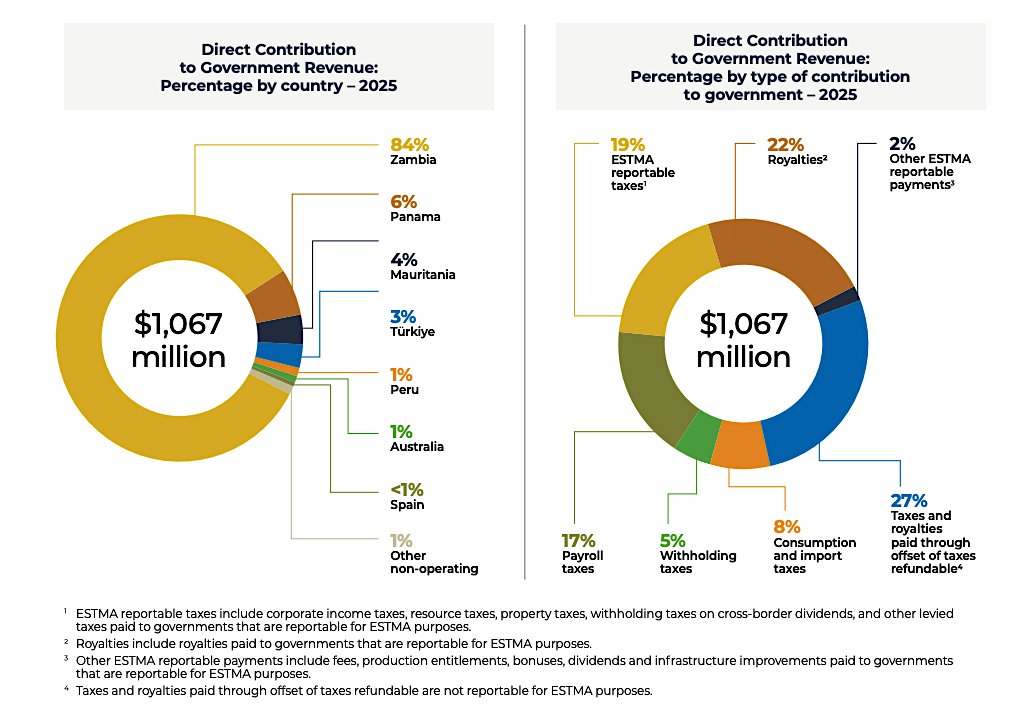
Panama’s environment ministry reports that First Quantum Minerals’ suspended Cobre Panama operation has achieved about 88% compliance with 370 commitments under its Category III Environmental Impact Assessment and environmental management programmes, with deficiencies centred on biodiversity management, ecological restoration and environmental monitoring. The SGS-led audit reviewed legal, fiscal, environmental and operational performance across the two open pits, processing plant, dual power stations and port, and found no “insurmountable structural failures”. An inter-agency task force will now use the findings to advise on a potential restart of the mine, which produced roughly 350,000 tonnes of copper in 2022.
Goldman Sachs has cut its end‑2026 gold price forecast by US$500/oz to US$4,900/oz after the US Federal Reserve, under new chair Kevin Warsh, signalled a hawkish shift that has pushed market-implied December rate hike odds to 87%. Spot gold has already fallen to about US$4,100/oz, down 27% from its near‑US$5,600/oz January peak, with three consecutive monthly losses between March and May and a 4% year‑to‑date decline. Goldman warns a 2026 year‑end target as low as US$4,400/oz is possible if rates rise, partly offset by ongoing central‑bank buying of roughly 50 tonnes/month this year and 40 tonnes/month next year.
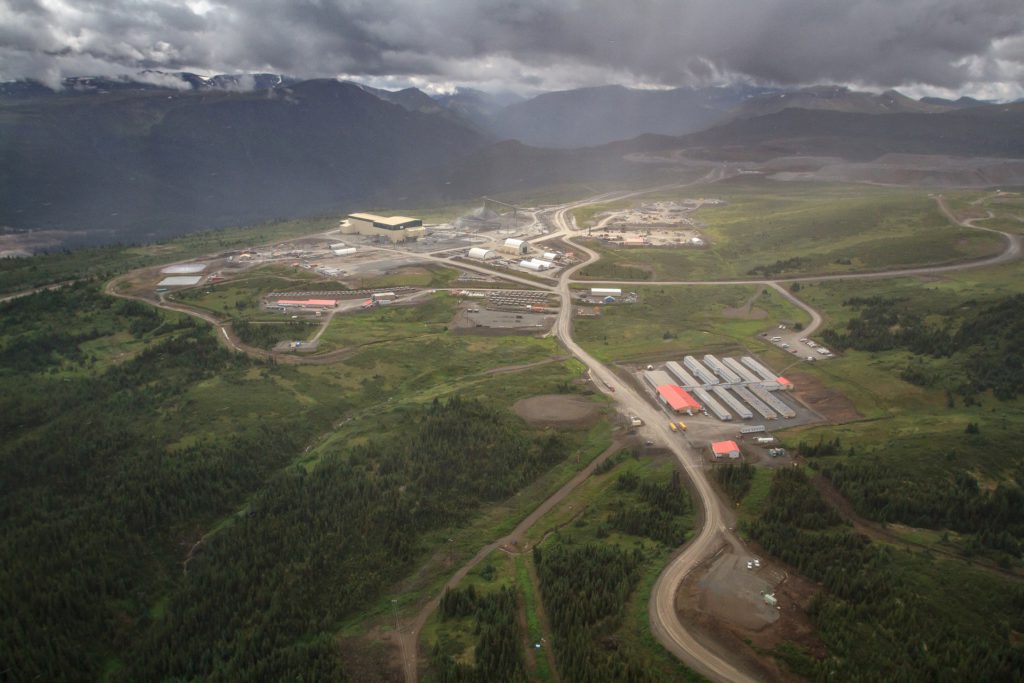
Newmont’s Red Chris mine in British Columbia has secured an amended Environmental Assessment Certificate and Mines Act permit, allowing a shift from open-pit to underground block caving and extending operations into the mid-2040s. The copper-gold porphyry deposit in the Golden Triangle hosts an estimated 20 million oz of gold and 13 billion lb of copper, with the block cave expected to lift Canada’s copper output by about 15%. The project entails several billion dollars in capital, around 1,800 construction jobs and roughly 1,500 operating roles at peak.
A ransomware attack on Perth-based Scope Systems’ Pronto Xi ERP cloud stack disrupted dozens of mining customers, including Northern Star Resources and Evolution Mining, in what MM‑ISAC’s Rob Labbe calls the broadest single third‑party cyber event the sector has seen. Scope says client servers were restored from backups and not directly accessed, but admits internal data was exfiltrated and has not disclosed the attack vector, raising questions about visibility at hypervisor, storage and backup layers. The incident spotlights how multi‑tenant vCenter/ESXi environments, VM cloning and snapshot abuse—already used by groups like Akira—could expose integrated exploration, production and maintenance data across more than 400 Pronto Xi‑reliant mining operations.
Vizsla Silver has awarded FLSmidth an equipment supply and engineering contract for the full process plant flowsheet at its wholly owned Panuco silver-gold project in Sinaloa, Mexico, covering all major unit operations defined in the planned 2025 feasibility study. The scope spans comminution, classification, flotation and dewatering circuits, with FLSmidth responsible for detailed process design and specification of key machines such as mills, cyclones, flotation cells and filters. Engineering work starts immediately, giving Panuco a vendor-anchored flowsheet ahead of final plant sizing and capex decisions.