VIC Gov $1B road works spend: asset renewal and safety notes for engineers
Reviewed by Tom Sullivan
First reported on Roads & Infrastructure (AU)
30 Second Briefing
Victoria will spend a record $1.04 billion in 2025–26 to rebuild and resurface arterial roads, maintain bridges and traffic signals, and fund emergency roadworks across the state, with around 70 per cent of the package directed to regional networks. The programme covers pavement rehabilitation, barrier upgrades and sign replacement, alongside vegetation control such as mowing, slashing and herbicide spraying on verges. Contractors can expect sustained demand for asphalt, spray sealing, bridge maintenance and traffic management services across both metropolitan and rural corridors.
Technical Brief
- Barrier installation implies updated containment levels and impact performance to current VicRoads and Austroads guidance.
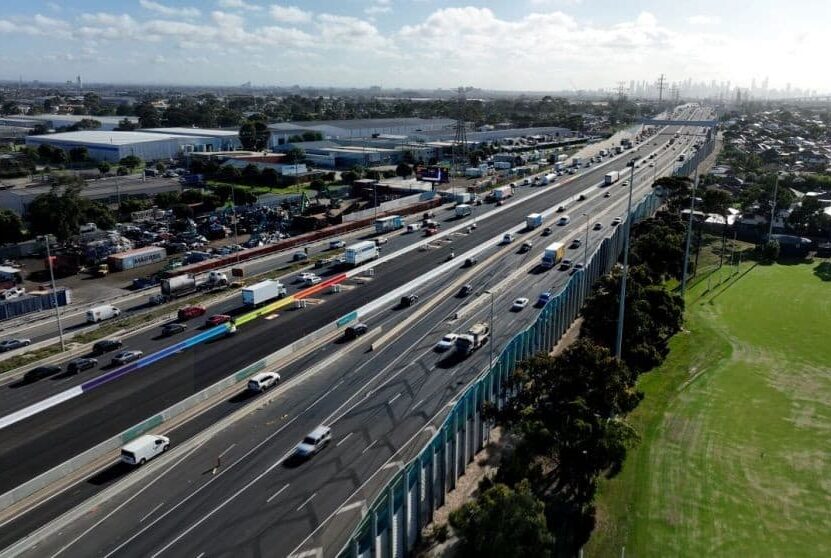
- Express lane configuration will concentrate higher-speed flows, increasing reliance on barrier performance and pavement skid resistance.
- Additional lanes and barriers will require revised incident management plans and temporary traffic management layouts.
- West Gate Freeway works provide a reference standard for barrier and resurfacing treatments on other Victorian arterials.
Our Take
In our database of 812 Infrastructure stories, the Victorian Government features frequently in level crossing removals and rail-bridge upgrades, so a record state-wide road works package in VIC likely signals a pivot to consolidate earlier rail-focused safety gains with broader road network upgrades.
Recent related pieces on completed level crossing removals at Diggers Rest and the planned Macleod rail bridge show VIC’s transport program steadily eliminating at‑grade conflicts; a $1B road works push should further reduce crash exposure on feeder and arterial routes that connect into these upgraded corridors.
The involvement of the Transport Accident Commission in earlier Victorian safety grants suggests this road works spend will probably be tightly aligned with TAC’s evidence-based crash data, favouring treatments such as intersection upgrades, shoulder sealing and barrier installations rather than purely capacity-driven widening.
Prepared by collating external sources, AI-assisted tools, and Geomechanics.io’s proprietary mining database, then reviewed for technical accuracy & edited by our geotechnical team.
Related Articles


Related Industries & Products
Construction
Quality control software for construction companies with material testing, batch tracking, and compliance management.
CMRR-io
Streamline coal mine roof stability assessments with our cloud-based CMRR software featuring automated calculations, multi-scenario analysis, and collaborative workflows.
HYDROGEO-io
Comprehensive hydrogeological testing platform for managing, analysing, and reporting on packer tests, lugeon values, and hydraulic conductivity assessments.
GEODB-io
Centralised geotechnical data management solution for storing, accessing, and analysing all your site investigation and material testing data.