US Department of Energy $65.5M oil and gas push: infrastructure and digital twin lens
Reviewed by Tom Sullivan
First reported on MINING.com
30 Second Briefing
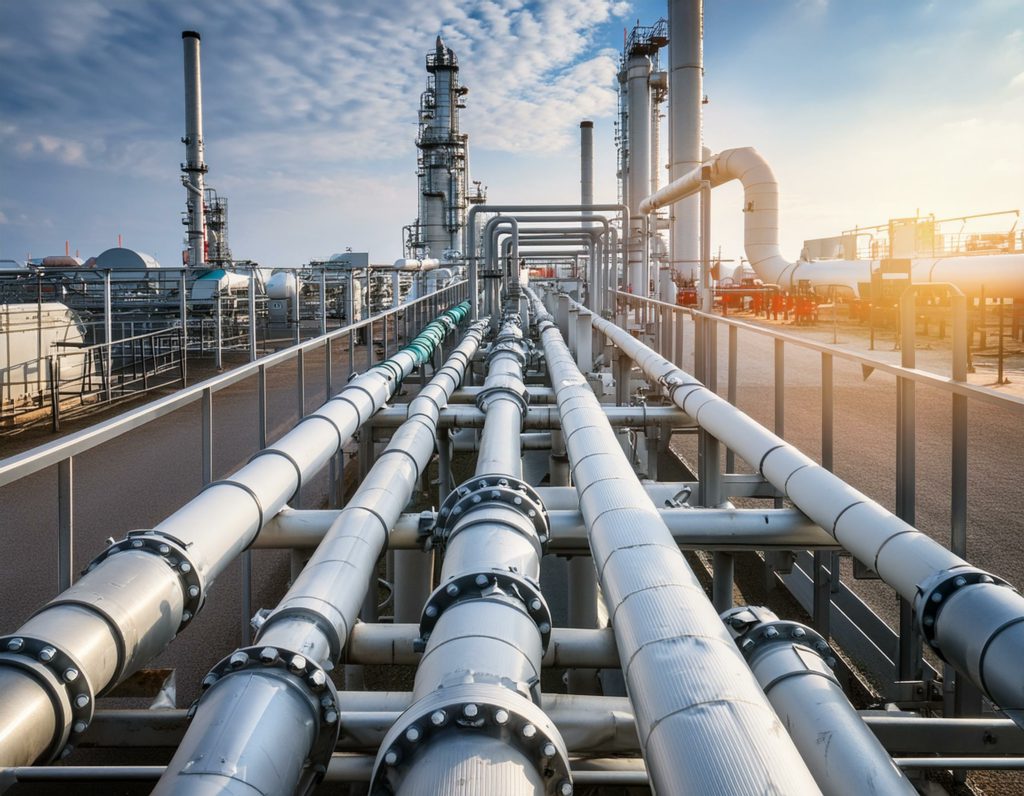
US Department of Energy is offering up to $65.5 million in cost-shared funding for projects that convert stranded, flared or contaminant-limited oil and gas streams into high-value, transportable products and field-test modular gas conversion and sour gas processing units in active basins. Additional funding targets advanced materials and equipment—compressors, valves, piping, storage tanks, coatings and alloys—to cut product losses and harden midstream infrastructure. A third track backs digital twins, continuous monitoring and full-scale smart test sites to optimise upstream and midstream operations, building on a separate $150 million programme for unconventional reservoirs and hydraulic fracture characterisation.
Technical Brief
- Scope explicitly spans laboratory-scale catalyst and reactor validation through to field deployment in active production basins.
- Midstream reliability work focuses on compressors, valves, piping, tanks, coatings and alloys to cut fugitive and liquid losses.
- Facility-level upgrades are aimed at both fixed plant and transport infrastructure, including pipeline and storage interfaces.
- Full-scale, field-based validation platforms are mandated for digital twins and continuous monitoring rather than purely simulated pilots.
Our Take
In our database, the US Department of Energy features heavily across 140 Policy stories, but most recent funding items skew towards nuclear and critical minerals (e.g. the July 2026 rare earths recovery pilots), so a sizeable allocation to oil and natural gas R&D signals that hydrocarbons remain an explicit pillar of US energy policy rather than just a legacy sector.
The earlier US$150 million DOE opportunity to enhance recovery from unconventional oil and gas reservoirs suggests this new US$65.5 million commitment will likely be layered onto an existing technology pipeline, which can accelerate field deployment of EOR and data-driven reservoir management in the USA rather than starting from greenfield research.
DOE’s parallel support for critical minerals and uranium projects (such as the July 2026 coal-waste rare earths pilots and the AP1000 nuclear supply-chain loans) means oil and natural gas producers in America are competing for federal capital against lower-carbon or strategic-materials plays, which may push hydrocarbon projects to emphasise methane abatement and sustainability metrics to stay fundable.
Prepared by collating external sources, AI-assisted tools, and Geomechanics.io’s proprietary mining database, then reviewed for technical accuracy & edited by our geotechnical team.
Related Articles

Related Industries & Products
Mining
Geotechnical software solutions for mining operations including CMRR analysis, hydrogeological testing, and data management.
Construction
Quality control software for construction companies with material testing, batch tracking, and compliance management.
CMRR-io
Streamline coal mine roof stability assessments with our cloud-based CMRR software featuring automated calculations, multi-scenario analysis, and collaborative workflows.
HYDROGEO-io
Comprehensive hydrogeological testing platform for managing, analysing, and reporting on packer tests, lugeon values, and hydraulic conductivity assessments.
GEODB-io
Centralised geotechnical data management solution for storing, accessing, and analysing all your site investigation and material testing data.