UK energy infrastructure resilience: design envelopes and asset priorities for engineers
Reviewed by Tom Sullivan
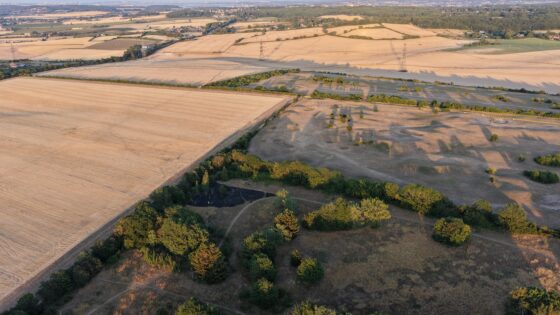
First reported on New Civil Engineer
30 Second Briefing
Britain’s energy infrastructure, historically designed for a stable temperate climate, now faces more frequent 40°C heatwaves and intense rainfall events that exceed historic design storms, exposing substations, overhead lines and gas networks to overheating, flooding and ground movement. Engineers are urged to adopt “enduring resilience” strategies such as raising critical equipment above 1-in-200-year flood levels, hardening coastal assets against accelerated erosion, and designing transformers and cabling for higher peak temperatures. The shift implies revisiting legacy design envelopes, updating asset condition models and reprioritising capital works on ageing transmission and distribution corridors.
Technical Brief
- Design envelopes now need explicit allowances for compound events, e.g. concurrent fluvial, pluvial and coastal loading.
- Substation platforms and access roads require geotechnical checks for cyclic softening and shrink–swell under repeated drought–deluge.
- Overhead line foundations must be reassessed for increased wind loading and differential ground movement on long-span towers.
- Gas pipeline wayleaves call for updated slope stability and scour assessments at river crossings and coastal margins.
- Asset owners are urged to embed climate-adjusted fragility curves into risk-based inspection and maintenance regimes.
- Emergency response planning is shifting towards multi-day grid stress scenarios, with redundancy in control, comms and access routes.
- For brownfield transmission corridors, enduring resilience implies phased retrofit of foundations, drainage and firebreaks rather than full rebuild.
Our Take
New Civil Engineer’s recent webinar on BIM, CDEs and asset management platforms highlights a ‘data handover gap’ at project close-out, which is directly relevant to UK energy assets needing long-term climate resilience data embedded into their digital twins and O&M regimes.
The launch of New Civil Engineer’s Floods & Water Awards suggests that flood and water management is becoming a distinct performance lens for UK infrastructure; energy operators in Britain will likely be judged not just on decarbonisation but on how their assets withstand and manage extreme hydrological events.
Prepared by collating external sources, AI-assisted tools, and Geomechanics.io’s proprietary mining database, then reviewed for technical accuracy & edited by our geotechnical team.
Related Articles


Related Industries & Products
Construction
Quality control software for construction companies with material testing, batch tracking, and compliance management.
Mining
Geotechnical software solutions for mining operations including CMRR analysis, hydrogeological testing, and data management.
CMRR-io
Streamline coal mine roof stability assessments with our cloud-based CMRR software featuring automated calculations, multi-scenario analysis, and collaborative workflows.
HYDROGEO-io
Comprehensive hydrogeological testing platform for managing, analysing, and reporting on packer tests, lugeon values, and hydraulic conductivity assessments.
GEODB-io
Centralised geotechnical data management solution for storing, accessing, and analysing all your site investigation and material testing data.