TfL’s ‘very poor’ Underground track: renewal and risk priorities for engineers
Reviewed by Tom Sullivan
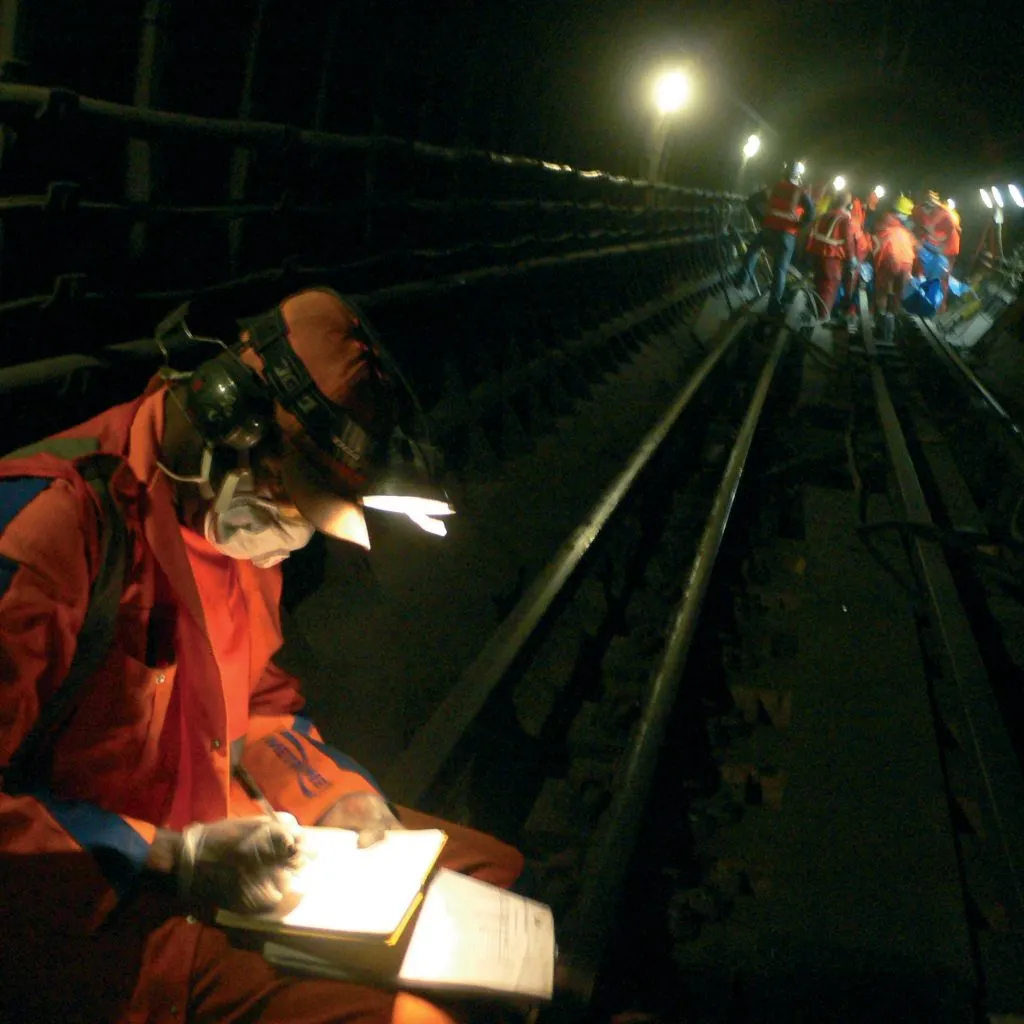
First reported on New Civil Engineer
30 Second Briefing
Forty-two per cent of London Underground track is now rated in “very poor” condition, prompting the London Assembly’s Budget and Performance Committee to press Transport for London to accelerate capital renewals. A committee letter on “TfL capital renewals” warns of rising asset failures across deep tube tunnels, ageing points and crossings, and obsolete signalling equipment, with knock-on risks for speed restrictions and unplanned closures. TfL’s response centres on constrained funding in the current business plan and the need to prioritise life-expired track and civils on the oldest lines.
Technical Brief
- Investigation approach implied: condition scoring, defect trend analysis and correlating failures with maintenance deferral periods.
- Monitoring needs include tighter geometry tolerances, increased ultrasonic rail testing and more frequent visual inspections in deep tubes.
- For other legacy metros, the case underlines the risk of deferring renewals once “very poor” thresholds are exceeded.
Our Take
With 42% of London Underground track now classed as in 'very poor' condition, TfL’s recent Professional Services Framework 3 appointments for AtkinsRéalis and Arcadis position those consultants to pick up a large volume of inspection, renewal design and risk-prioritisation work rather than just expansion schemes.
Aecom’s feasibility work on new depots and sidings for the Bakerloo Line Upgrade suggests that, even as rolling stock modernisation proceeds, legacy permanent way on existing lines across London may become the critical constraint on reliability and safety unless capital is rebalanced towards core track renewals.
In our infrastructure coverage for the UK capital, TfL increasingly appears in climate-resilience and environment-plan pieces rather than failure-tagged items, so this deterioration signal is likely to sharpen scrutiny from the London Assembly over how resilience spending is being traded off against basic asset condition.
Prepared by collating external sources, AI-assisted tools, and Geomechanics.io’s proprietary mining database, then reviewed for technical accuracy & edited by our geotechnical team.
Related Articles


Related Industries & Products
Mining
Geotechnical software solutions for mining operations including CMRR analysis, hydrogeological testing, and data management.
Construction
Quality control software for construction companies with material testing, batch tracking, and compliance management.
CMRR-io
Streamline coal mine roof stability assessments with our cloud-based CMRR software featuring automated calculations, multi-scenario analysis, and collaborative workflows.
HYDROGEO-io
Comprehensive hydrogeological testing platform for managing, analysing, and reporting on packer tests, lugeon values, and hydraulic conductivity assessments.
GEODB-io
Centralised geotechnical data management solution for storing, accessing, and analysing all your site investigation and material testing data.