Spain’s second high-speed rail crash: signalling and ETCS lessons for engineers
Reviewed by Tom Sullivan
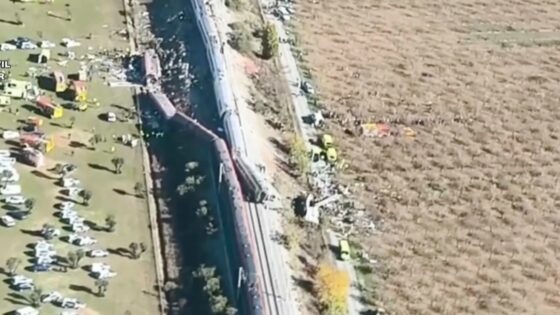
First reported on New Civil Engineer
30 Second Briefing
Two high-speed trains collided south of Madrid on 28 October, marking Spain’s second high-speed rail crash this year and prompting scrutiny of signalling and train control systems on one of Europe’s busiest AVE corridors. Investigators are focusing on a suspected computer malfunction within the traffic management or onboard control software, rather than track or civil works failure. For rail engineers, the incident raises immediate questions over redundancy in ETCS/ERTMS logic, fail-safe braking behaviour, and integration testing of software updates on high-speed lines.
Technical Brief
- Early focus is on a software or computer malfunction, not on permanent way, structures or power supply.
- Investigation will rely heavily on data loggers, event recorders and ETCS/ERTMS diagnostic traces from both trains.
- Safety inquiry is expected to examine fail-safe braking logic, movement authority revocation and interlocking integrity.
- Short-term remediation likely involves speed restrictions, additional human oversight in control centres and temporary operating rules.
- Medium-term response may require regression testing of recent software updates and independent safety validation of control algorithms.
- For other European high-speed lines, the case will sharpen scrutiny of software redundancy and common-cause failure in digital signalling.
Our Take
With this being the second high‑speed rail failure in Spain in 2026, operators south of Madrid are likely to face closer scrutiny of signalling and control software validation, especially where legacy systems interface with newer digital platforms.
New Civil Engineer’s recent webinar on BIM, CDEs and asset management platforms highlights a ‘data handover gap’ at project close‑out; if similar gaps exist on Spanish rail schemes, they could complicate root‑cause analysis and long‑term tracking of control-system modifications after this Madrid‑area crash.
Prepared by collating external sources, AI-assisted tools, and Geomechanics.io’s proprietary mining database, then reviewed for technical accuracy & edited by our geotechnical team.
Related Articles


Related Industries & Products
Construction
Quality control software for construction companies with material testing, batch tracking, and compliance management.
Mining
Geotechnical software solutions for mining operations including CMRR analysis, hydrogeological testing, and data management.
CMRR-io
Streamline coal mine roof stability assessments with our cloud-based CMRR software featuring automated calculations, multi-scenario analysis, and collaborative workflows.
HYDROGEO-io
Comprehensive hydrogeological testing platform for managing, analysing, and reporting on packer tests, lugeon values, and hydraulic conductivity assessments.
GEODB-io
Centralised geotechnical data management solution for storing, accessing, and analysing all your site investigation and material testing data.