Geomechanics.io

  • Free Tools
Sign UpLog In

Geomechanics.io

Geomechanics, Streamlined.

© 2026 Geomechanics.io. All rights reserved.

Geomechanics.io

CMRR-ioGEODB-ioHYDROGEO-ioQCDB-ioFree Tools & CalculatorsBlogLatest Industry News

Industries

MiningConstructionTunnelling

Company

Terms of UsePrivacy PolicyLinkedIn
    Safety
    Failure

    ROPS removal proves fatal: slope stability and risk lessons for ground engineers

    February 19, 2026|

    Reviewed by Joe Ashwell

    ROPS removal proves fatal: slope stability and risk lessons for ground engineers

    First reported on The Construction Index

    30 Second Briefing

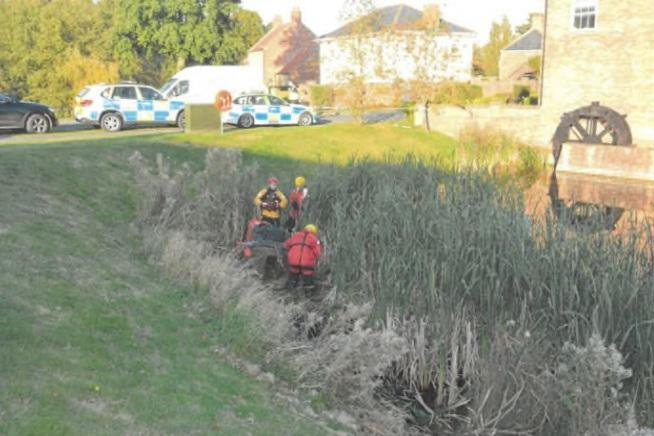
    A 23-year-old grounds worker, Kamil Grygieniec, was killed when a ride-on mower without its roll-over protection system (ROPS) descended a steep slope and overturned into a village pond at North Stainley, near Ripon, on 8 October 2021. HSE investigators found the factory-fitted ROPS had been removed and that no suitable, site-specific risk assessment for mowing on sloping, uneven ground had been carried out. Employer MHS Countryside Management Limited, of Bishop Auckland, was fined £27,000 plus £11,166 costs at York Magistrates’ Court for breaching Section 2(1) of the Health and Safety at Work etc. Act 1974.

    Technical Brief

    • Factory-fitted roll-over protection system had been physically removed from the mower before the task.
    • ROPS is classed by HSE as a safety‑critical feature for work on uneven or sloping ground.
    • Failure mechanism: mower instability on a steep grassed incline leading to overturn into the adjacent pond.
    • HSE investigation focused on equipment configuration, slope conditions and the absence of task‑specific risk controls.
    • No “suitable and sufficient” site‑specific risk assessment had been documented for mowing around the pond perimeter.
    • MHS Countryside Management Limited pleaded guilty to breaching Section 2(1) of the Health and Safety at Work etc. Act 1974.
    • Sentencing at York Magistrates’ Court on 17 February 2026 imposed a £27,000 fine plus £11,166 costs.
    • For similar grounds-maintenance work, monitoring should verify ROPS presence, operator restraint systems and exclusion zones on steep slopes.

    Our Take

    HSE appears repeatedly across recent Hazards coverage in our database, with prosecutions ranging from falls from height to unsafe lifting gear, signalling that UK regulators are actively pursuing duty‑holder failures across both construction and plant operations rather than treating them as isolated events.

    This North Yorkshire fatality involving MHS Countryside Management Limited sits within a cluster of HSE cases where relatively small contractors face criminal proceedings, which is likely to push even micro‑operators towards more formalised plant modification controls and written safe systems of work.

    Section 2(1) prosecutions, as in this case, are commonly used in the other recent HSE actions in our coverage, underlining that the regulator is focusing on employers’ core duty to provide safe equipment and systems rather than relying solely on more specific regulations about individual machine components.

    Geotechnical Software for Modern Teams

    Centralise site data, logs, and lab results with GEODB-io, CMRR-io, and HYDROGEO-io.

    No credit card required.

    • Save and export unlimited calculations
    • Advanced data visualisation
    • Generate professional PDF reports
    • Cloud storage for all your projects

    Prepared by collating external sources, AI-assisted tools, and Geomechanics.io’s proprietary mining database, then reviewed for technical accuracy & edited by our geotechnical team.

    Related Articles

    Melbourne sinkhole investigations: geotechnical lessons for tunnel project teams
    Hazards
    in about 2 months

    Melbourne sinkhole investigations: geotechnical lessons for tunnel project teams

    A sinkhole roughly 8–10 m wide and several metres deep has opened on the AJ Burkitt Reserve sporting oval in Heidelberg, directly adjacent to the North East Link tunnel alignment in Melbourne’s northeast. Victorian Infrastructure Delivery Authority has confirmed the “surface hole” is in the vicinity of active tunnelling operations, leading to a work pause while engineers and emergency crews carry out geotechnical investigations and monitoring. No injuries or structural damage have been reported, but the area remains fully cordoned off pending cause determination and stability assessment.

    Flooding mindset and financial change: asset management lessons for engineers
    Hazards
    3 days ago

    Flooding mindset and financial change: asset management lessons for engineers

    Flood and coastal defence assets are facing mounting maintenance backlogs as ageing embankments, culverts and sea walls are exposed to more frequent, higher-intensity storm events. Experts warn that current operational budgets and short funding cycles prevent timely renewal of critical structures such as tidal barriers, pumping stations and flap valves, increasing failure risk under extreme water levels. They call for a shift from reactive patch repairs to long-term, whole-life asset management with multi-year funding settlements to support planned inspections, resilience upgrades and adaptive design.

    Iran CO2 plant reopening: nuclear safety and supply-chain lessons for engineers
    Hazards
    4 days ago

    Iran CO2 plant reopening: nuclear safety and supply-chain lessons for engineers

    A disused UK carbon dioxide production plant has been recommissioned by the government to address a CO2 shortage triggered by the Iran conflict, with officials calling the gas “vital” for safe nuclear power station operation. CO2 is required for reactor systems such as coolant circuits, pressurisation and fire suppression, making supply-chain resilience a direct nuclear safety and availability issue. Engineers should expect renewed scrutiny of single-point vulnerabilities in industrial gas logistics and potential retrofits to diversify on-site CO2 storage and backup supply routes.

    Related Industries & Products

    Construction

    Quality control software for construction companies with material testing, batch tracking, and compliance management.

    Mining

    Geotechnical software solutions for mining operations including CMRR analysis, hydrogeological testing, and data management.

    QCDB-io

    Comprehensive quality control database for manufacturing, tunnelling, and civil construction with UCS testing, PSD analysis, and grout mix design management.

    AllGeotechnicalInfrastructureHazardsEnvironmental