Geomechanics.io

  • Free Tools
Sign UpLog In

Geomechanics.io

Geomechanics, Streamlined.

© 2026 Geomechanics.io. All rights reserved.

Geomechanics.io

CMRR-ioGEODB-ioHYDROGEO-ioQCDB-ioFree Tools & CalculatorsBlogLatest Industry News

Industries

MiningConstructionTunnelling

Company

Terms of UsePrivacy PolicyLinkedIn
    Projects
    Sustainability
    Product

    Rio Tinto–Prysmian low‑carbon aluminium rod: implications for cable designers

    March 12, 2026|

    Reviewed by Joe Ashwell

    Rio Tinto–Prysmian low‑carbon aluminium rod: implications for cable designers

    First reported on MINING.com

    30 Second Briefing

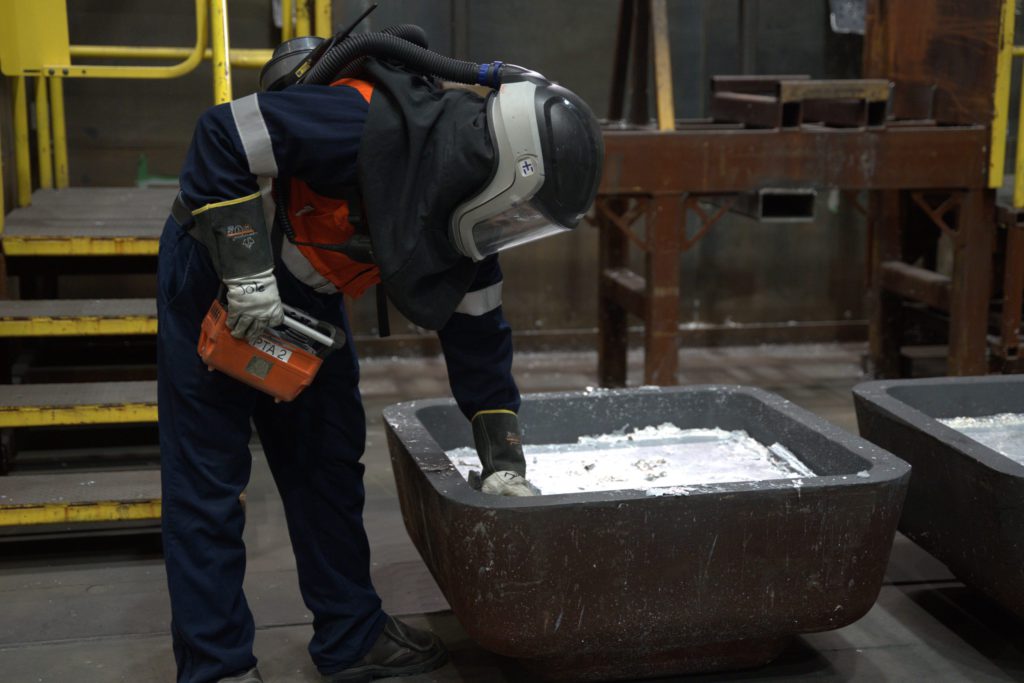
    Rio Tinto has completed an industrial trial with Prysmian to produce low‑carbon aluminium rod for power cables, blending metal from its hydro-powered Alma smelter in Quebec with ELYSIS inert-anode technology that eliminates direct smelting greenhouse gas emissions and generates oxygen. The trial sits within a five-year supply agreement signed in October 2023 to roll out lower‑carbon aluminium cable solutions for energy transmission and data centres. CRU forecasts data centres will grow from about 7% of North American cable demand in 2025 at roughly 17% CAGR to 2030, with aluminium gaining share for campus power distribution.

    Technical Brief

    • Hydro-powered Alma smelter in Quebec supplies low-carbon primary metal as a key blend component.
    • ELYSIS inert-anode cells remove direct process CO₂ from smelting, releasing oxygen at the anode instead.
    • Five-year Rio Tinto–Prysmian supply agreement, signed October 2023, underpins commercial scale-up and qualification testing.
    • Joint R&D scope spans energy transmission and data centre cabling, not just single product grades.
    • Data centres accounted for ~7% of North American cable demand in 2025, per CRU.
    • CRU projects ~17% compound annual growth in data centre cable demand from 2026 to 2030.
    • Rio Tinto’s separate partnership with CATL targets mine electrification, battery recycling and circular use of key minerals.

    Our Take

    In our Materials coverage, aluminium stories linked to North American data centre build-out are still relatively rare compared with battery metals, so Rio Tinto’s low‑carbon rod from the Alma smelter positions it early in a cable segment CRU expects to grow at a 17% CAGR between 2026 and 2030.

    With data centres projected to account for 7% of total North American cable demand by 2025, Prysmian’s access to low‑carbon aluminium feedstock could give it a differentiator for hyperscale and AI‑focused builds where power-use and Scope 3 emissions are starting to influence procurement specs.

    The presence of CATL and Enami in the same fact set underlines how decarbonised aluminium is now being discussed alongside battery and copper supply in our database, signalling that cable-grade aluminium is increasingly treated as strategic infrastructure material rather than a generic bulk metal.

    Geotechnical Software for Modern Teams

    Centralise site data, logs, and lab results with GEODB-io, CMRR-io, and HYDROGEO-io.

    No credit card required.

    • Save and export unlimited calculations
    • Advanced data visualisation
    • Generate professional PDF reports
    • Cloud storage for all your projects

    Prepared by collating external sources, AI-assisted tools, and Geomechanics.io’s proprietary mining database, then reviewed for technical accuracy & edited by our geotechnical team.

    Related Articles
    Designing asphalt for circularity: performance-based mix lessons for engineers
    Materials
    1 day ago

    Designing asphalt for circularity: performance-based mix lessons for engineers

    Australia’s asphalt sector, led by guidance from the Australian Flexible Pavements Association (AfPA) and Projects Technical Advisor Trevor Distin, is pushing performance-based mix design to exploit asphalt’s 100 per cent recyclability and cut pavement carbon. Reclaimed asphalt pavement (RAP) is being reprocessed into new surface and base courses, with higher RAP contents enabled by rejuvenators, tighter binder grading and improved plant controls. For designers and asset owners, the shift means specifying functional performance (rutting, fatigue, texture, skid resistance) and lifecycle cost rather than prescriptive mix recipes.

    US DOE gallium TRACE-Ga awards: process flowsheet insights for engineers
    Materials
    3 days ago

    US DOE gallium TRACE-Ga awards: process flowsheet insights for engineers

    The US Department of Energy’s TRACE-Ga initiative is awarding about $5.4 million to five firms to design and validate flowsheets to restart primary gallium production, after nearly 40 years of zero domestic output and 100% import reliance under China’s 98% global supply dominance. PHNX Materials will target non-traditional waste streams to co-produce gallium, supplementary cementitious materials, alumina and ammonium sulphate, while Atlantic Alumina and Found Energy will apply counter-current ion exchange, electrochemistry and Direct Bayer Extraction to recover gallium from hot, dilute Bayer liquors. Kunin Technologies aims for a 12 tpa gallium pathway from high-Ga metal streams, and Indium Corporation will build recycling-based recovery from scrap, signalling new process options for alumina refineries and metallurgical residues.

    Murphy’s UK-first Ecocem ACT concrete pour: specification notes for designers
    Materials
    3 days ago

    Murphy’s UK-first Ecocem ACT concrete pour: specification notes for designers

    Murphy has completed the UK’s first permanent works pour using Ecocem ACT low‑carbon concrete, marking a shift from traditional CEM I mixes on a live infrastructure scheme. Ecocem ACT is a clinker‑reduced binder system designed to cut embodied CO₂ significantly while maintaining CEM I‑equivalent strength and setting performance, enabling direct substitution in structural elements. For designers and contractors, this early UK deployment provides a live reference for specification, QA testing, and durability assessment of next‑generation low‑carbon binders in permanent works.

    Related Industries & Products

    Mining

    Geotechnical software solutions for mining operations including CMRR analysis, hydrogeological testing, and data management.

    Construction

    Quality control software for construction companies with material testing, batch tracking, and compliance management.

    CMRR-io

    Streamline coal mine roof stability assessments with our cloud-based CMRR software featuring automated calculations, multi-scenario analysis, and collaborative workflows.

    HYDROGEO-io

    Comprehensive hydrogeological testing platform for managing, analysing, and reporting on packer tests, lugeon values, and hydraulic conductivity assessments.

    GEODB-io

    Centralised geotechnical data management solution for storing, accessing, and analysing all your site investigation and material testing data.

    AllGeotechnicalMiningInfrastructureMaterialsHazardsEnvironmentalSoftwarePolicy