OptionX trenchless pipeline systems: design and risk takeaways for road engineers
Reviewed by Tom Sullivan
First reported on Roads & Infrastructure (AU)
30 Second Briefing
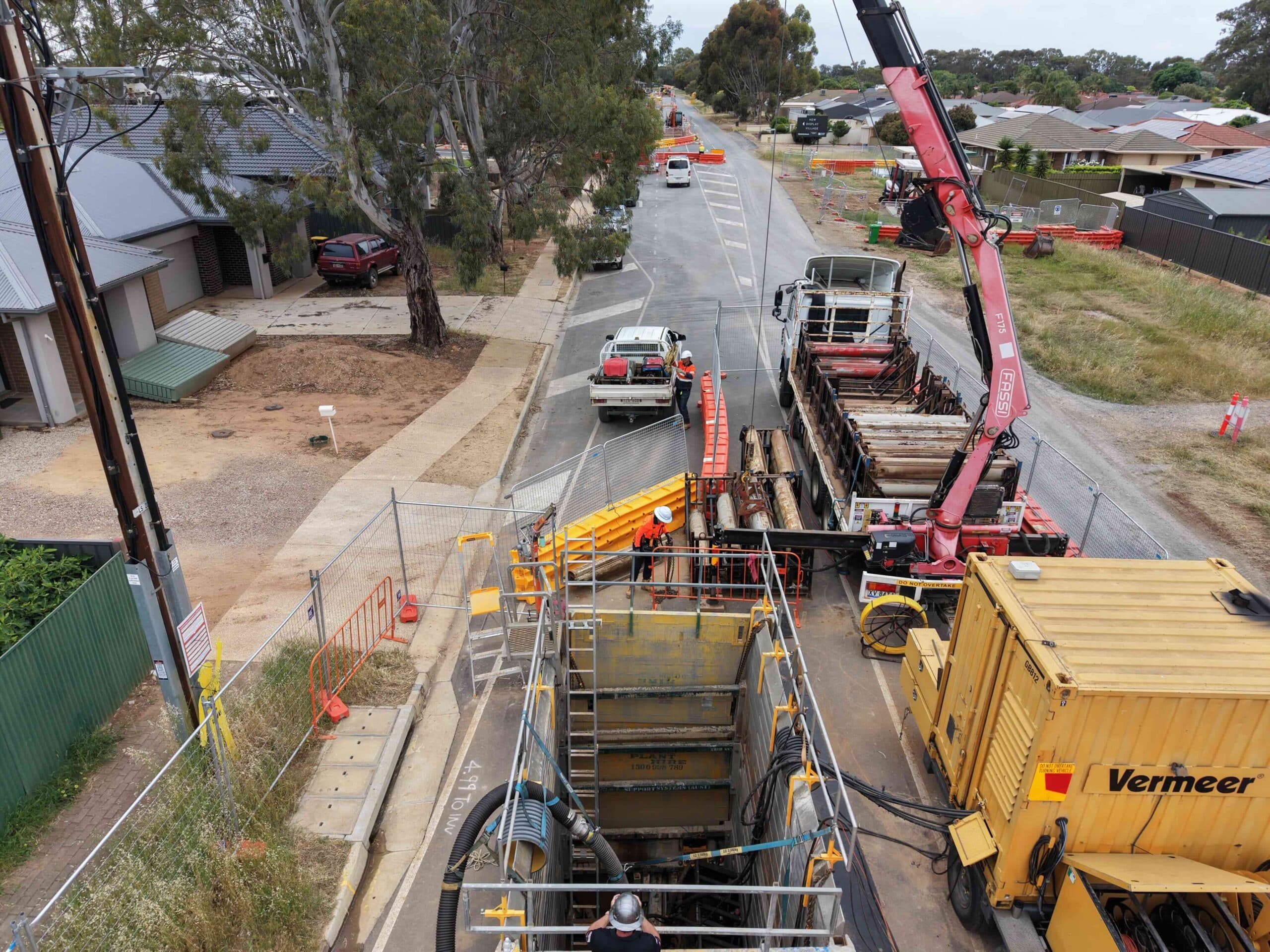
OptionX Group is deploying Australian-developed trenchless pipeline systems that thread new water, sewer, power and telecoms lines through heavily congested road corridors without open-cut trenches. Founder Stuart Harrison cites steerable boring heads, real-time tracking and modular tooling that can navigate around existing services and variable ground, allowing installations under live carriageways and critical intersections. For civil and utility engineers, the approach reduces pavement demolition, traffic staging and service clash risk, while demanding more rigorous subsurface mapping and construction tolerance control.
Technical Brief
- Real-time tracking is paired with strict allowable deviation envelopes to avoid encroaching on minimum service clearances.
- The company pushes clients toward consolidated, multi-utility bores to minimise repeated ground disturbance and cumulative strike risk.
- OptionX positions trenchless works as “live traffic” operations, embedding traffic management and exclusion zones into method statements.
- Training content focuses on reading utility survey outputs, understanding tolerance limits, and escalation protocols when as-built data conflicts.
- Harrison argues that safety risk now shifts from excavation collapse to data quality, survey control and bore-path validation.
- Lessons are being applied on urban road upgrade programmes where legacy, poorly documented services are the dominant construction hazard.
Our Take
Safety-tagged ‘Product’ coverage tends to gain traction when vendors like OptionX Group can show clear productivity or cost benefits alongside risk reduction, which is often a deciding factor for major road and civil projects during procurement.
Our safety-related infrastructure items increasingly highlight digital planning and non-destructive excavation methods, so a message like “the best trench is the one you never dig” aligns with a shift towards designing out ground disturbance rather than just managing it on site.
Prepared by collating external sources, AI-assisted tools, and Geomechanics.io’s proprietary mining database, then reviewed for technical accuracy & edited by our geotechnical team.
Related Articles


Related Industries & Products
Construction
Quality control software for construction companies with material testing, batch tracking, and compliance management.
Mining
Geotechnical software solutions for mining operations including CMRR analysis, hydrogeological testing, and data management.
QCDB-io
Comprehensive quality control database for manufacturing, tunnelling, and civil construction with UCS testing, PSD analysis, and grout mix design management.