Network Rail’s £9M Lewes and Wickford derailments: asset and inspection lessons for engineers
Reviewed by Tom Sullivan
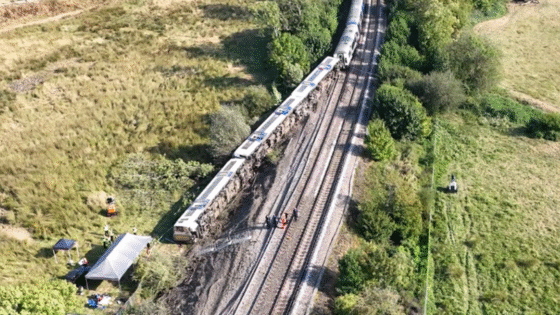
First reported on New Civil Engineer
30 Second Briefing
Network Rail faces an estimated £9.05M repair bill after derailments at Lewes and Wickford, with restoration costs put at £5.4M and £3.65M respectively. The works will involve full track renewal in the affected possessions, ballast and formation reconstruction, and replacement of damaged signalling and overhead line equipment where required. The scale of expenditure signals significant disruption to asset condition budgets and may prompt closer scrutiny of inspection, maintenance and wheel–rail interface management on similar UK routes.
Technical Brief
- Failure investigations will focus on wheel–rail interaction, track geometry, and potential local formation weakness at Lewes and Wickford.
- Site works will likely require full possession with temporary speed restrictions on adjacent lines during reconstruction.
- Ballast and subgrade condition will be sampled and laboratory‑tested to confirm fouling, stiffness and drainage performance.
- Continuous track geometry monitoring (e.g. recording trains) is likely to be intensified on comparable routes post‑incident.
- Remediation design will need to re‑validate track support stiffness, settlement behaviour and drainage against current Network Rail standards.
- Safety reviews are expected to examine inspection intervals, ultrasonic rail testing coverage and wheel condition monitoring regimes.
- Lessons are likely to feed into national standards for wheel–rail interface management on mixed‑traffic UK routes.
Our Take
Recent coverage of Network Rail’s winter resilience measures after multiple derailments indicates that incidents like Lewes and Wickford are likely to feed directly into accelerated programmes for track, embankment and drainage interventions on comparable routes rather than purely like‑for‑like reinstatement.
With other pieces in our infrastructure database showing £3–4M being spent on proactive tunnel strengthening and bridge replacement, the higher reactive spend at Lewes and Wickford underlines the cost penalty of failure versus planned asset renewal, which asset managers can use to justify earlier interventions on similar risk‑profile sections of the network.
Prepared by collating external sources, AI-assisted tools, and Geomechanics.io’s proprietary mining database, then reviewed for technical accuracy & edited by our geotechnical team.
Related Articles


Related Industries & Products
Construction
Quality control software for construction companies with material testing, batch tracking, and compliance management.
Mining
Geotechnical software solutions for mining operations including CMRR analysis, hydrogeological testing, and data management.
QCDB-io
Comprehensive quality control database for manufacturing, tunnelling, and civil construction with UCS testing, PSD analysis, and grout mix design management.