Network Rail winter resilience plans: geotechnical risk lens for engineers
Reviewed by Tom Sullivan
First reported on New Civil Engineer
30 Second Briefing
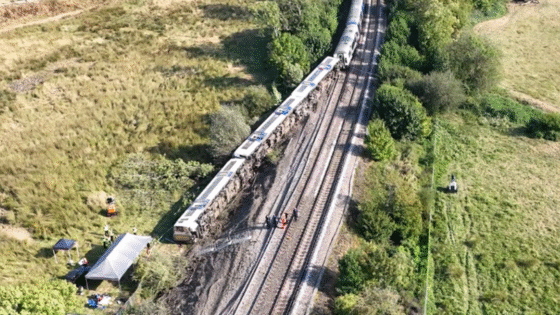
Network Rail chief executive Jeremy Westlake has outlined winter resilience measures for Britain’s rail network after summer heatwaves and several high-profile derailments, focusing on track, embankment and drainage performance under extreme temperature swings. Plans include targeted renewals of continuously welded rail on heat-affected sections, expanded remote condition monitoring of points and overhead line equipment, and accelerated inspections of cuttings and embankments prone to washout or desiccation cracking. For geotechnical and civil teams, this signals more data-driven asset management and tighter intervention thresholds on vulnerable earthworks and structures.
Technical Brief
- Jeremy Westlake links resilience actions to recent “extreme temperatures” affecting both permanent way and earthwork stability.
- High‑profile derailments are being treated as trigger events for tightening internal safety thresholds and escalation routes.
- Asset management teams are being directed to prioritise locations with known historical buckling, heave or washout issues.
- Westlake signals closer integration between track, drainage and geotechnical inspections rather than discipline‑siloed winter checks.
- Safety messaging stresses maintaining passenger and workforce confidence after visible failures on the public network.
- For other rail owners, the approach reinforces using incident back‑analysis to reset intervention criteria network‑wide.
Our Take
Network Rail’s winter resilience planning sits alongside its recent deployment of specialist treatment trains across 87,000km of track in Wales and the Borders, signalling a system-wide move towards more proactive, route-level asset conditioning rather than purely reactive maintenance.
Our infrastructure coverage shows Network Rail currently balancing resilience work with major capacity projects such as the £115M Manchester Airport station upgrade and the Transpennine Route Upgrade, which suggests winter plans will need to be deliverable alongside significant possessions and construction interfaces rather than in isolation.
Prepared by collating external sources, AI-assisted tools, and Geomechanics.io’s proprietary mining database, then reviewed for technical accuracy & edited by our geotechnical team.
Related Articles


Related Industries & Products
Construction
Quality control software for construction companies with material testing, batch tracking, and compliance management.
Mining
Geotechnical software solutions for mining operations including CMRR analysis, hydrogeological testing, and data management.
QCDB-io
Comprehensive quality control database for manufacturing, tunnelling, and civil construction with UCS testing, PSD analysis, and grout mix design management.