Geomechanics.io

  • Free Tools
Sign UpLog In

Geomechanics.io

Geomechanics, Streamlined.

© 2026 Geomechanics.io. All rights reserved.

Geomechanics.io

CMRR-ioGEODB-ioHYDROGEO-ioQCDB-ioFree Tools & CalculatorsBlogLatest Industry News

Industries

MiningConstructionTunnelling

Company

Terms of UsePrivacy PolicyLinkedIn
    Projects
    Safety
    Sustainability

    Nepal’s Himalayan settlements: flood and landslide risk lens for engineers

    May 23, 2026|

    Reviewed by Tom Sullivan

    Nepal’s Himalayan settlements: flood and landslide risk lens for engineers

    First reported on Geoengineer.org – News

    30 Second Briefing

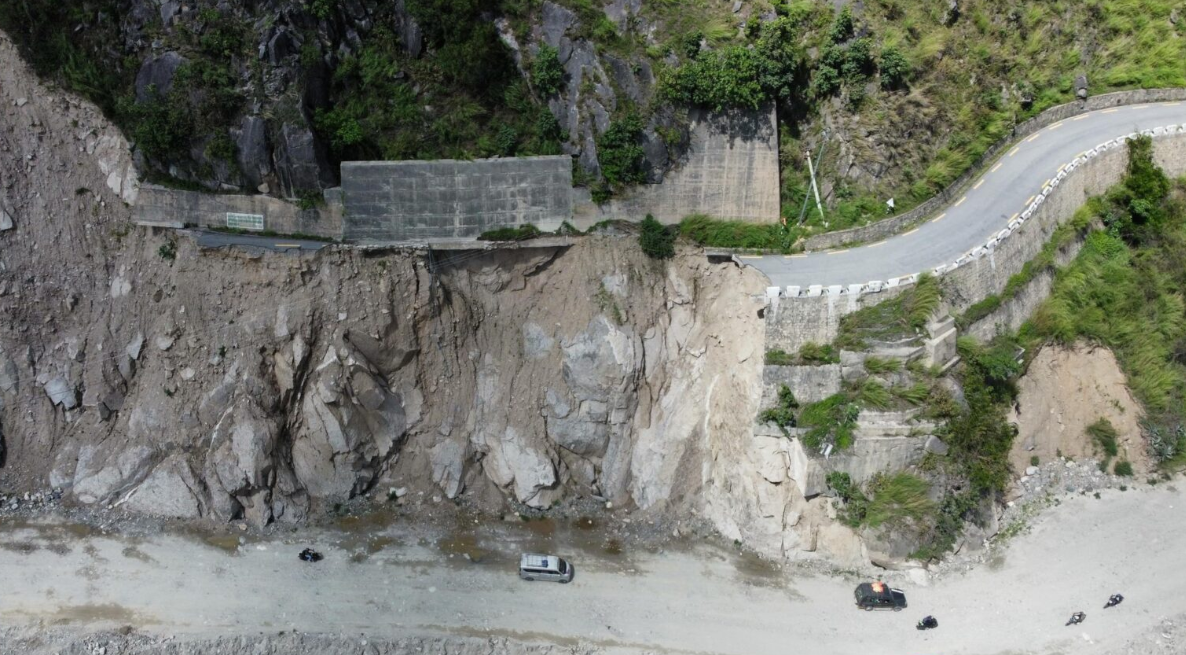
    Escalating extreme rainfall and glacial melt are driving more frequent floods and landslides in Nepal’s Himalayan districts, with Karnali Province’s steep, highly fractured slopes and narrow river valleys particularly exposed. Recent events include debris flows cutting off road access to remote settlements and riverbank erosion undermining gabion walls and informal river training works along the Karnali and Bheri rivers. Engineers are being pushed towards slope stabilisation with bioengineering, improved drainage, and relocation or elevation of critical infrastructure away from active channels and unstable colluvium.

    Technical Brief

    • For similar Himalayan corridors, stricter road design standards and drainage audits are implied as minimum safety practice.

    Our Take

    For infrastructure and hydropower projects in Karnali Province, the environmental incident profile flagged in this piece implies that design teams will increasingly need to treat compound flood–landslide scenarios as baseline load cases rather than exceptional events, especially for access roads and slope cuts.

    Geotechnical Software for Modern Teams

    Centralise site data, logs, and lab results with GEODB-io, CMRR-io, and HYDROGEO-io.

    No credit card required.

    • Save and export unlimited calculations
    • Advanced data visualisation
    • Generate professional PDF reports
    • Cloud storage for all your projects

    Prepared by collating external sources, AI-assisted tools, and Geomechanics.io’s proprietary mining database, then reviewed for technical accuracy & edited by our geotechnical team.

    Related Articles
    Worsening wildfire seasons for mine operators: design and continuity lessons
    Hazards
    1 day ago

    Worsening wildfire seasons for mine operators: design and continuity lessons

    Wildfire seasons in Western Canada are intensifying, with 2023 seeing more than 2,240 fires burning 2.84 million hectares in B.C. and insured losses of $720 million in the Okanagan/Shuswap and $1.3 billion from the 2024 Jasper fire, forcing repeated evacuations at sites such as Artemis Gold’s Blackwater and Cameco’s Cigar Lake. Operators and insurers are now treating wildfire as a core business-interruption risk, driving investment in backup generation for long transmission corridors, detailed continuity planning, and stricter underwriting. Engineers are also redesigning mine layouts and buildings for fire, favouring sites on ridge tops, wider building separation, non-combustible steel roofing and use of natural and linear infrastructure firebreaks.

    National Trust–United Utilities leaky dams: runoff control lessons for drainage engineers
    Hazards
    5 days ago

    National Trust–United Utilities leaky dams: runoff control lessons for drainage engineers

    National Trust and United Utilities are installing a series of timber “leaky dams” on moorland and farmland above the Stubbins Estate in Lancashire in a two‑year natural flood management programme to slow runoff into the River Irwell. The structures are designed to back up high flows in small headwater channels while allowing baseflow to pass, temporarily storing stormwater on the floodplain and in upstream depressions. For civil and drainage engineers, the scheme signals continued deployment of low‑cost, nature‑based attenuation measures alongside conventional hard‑engineered defences in upland catchments.

    Construction worker fatalities 2025/26: HSE data and risk lessons for site engineers
    Hazards
    7 days ago

    Construction worker fatalities 2025/26: HSE data and risk lessons for site engineers

    Construction recorded the highest number of worker fatalities in Britain in 2025/26, according to new Health and Safety Executive (HSE) figures on work-related deaths. Although absolute numbers are not yet broken down publicly by sub-sector, the data place construction ahead of manufacturing, agriculture and waste, continuing a long-term pattern of disproportionate risk. The figures will sharpen scrutiny of temporary works design, work-at-height controls and plant–people interface management on sites, particularly for SMEs and subcontractor-heavy projects.

    Related Industries & Products

    Mining

    Geotechnical software solutions for mining operations including CMRR analysis, hydrogeological testing, and data management.

    Construction

    Quality control software for construction companies with material testing, batch tracking, and compliance management.

    CMRR-io

    Streamline coal mine roof stability assessments with our cloud-based CMRR software featuring automated calculations, multi-scenario analysis, and collaborative workflows.

    HYDROGEO-io

    Comprehensive hydrogeological testing platform for managing, analysing, and reporting on packer tests, lugeon values, and hydraulic conductivity assessments.

    GEODB-io

    Centralised geotechnical data management solution for storing, accessing, and analysing all your site investigation and material testing data.

    AllGeotechnicalMiningInfrastructureMaterialsHazardsEnvironmentalSoftwarePolicy