Motion in-situ machining at Australian mines: outage and risk notes for engineers
Reviewed by Tom Sullivan
First reported on Australian Mining
30 Second Briefing
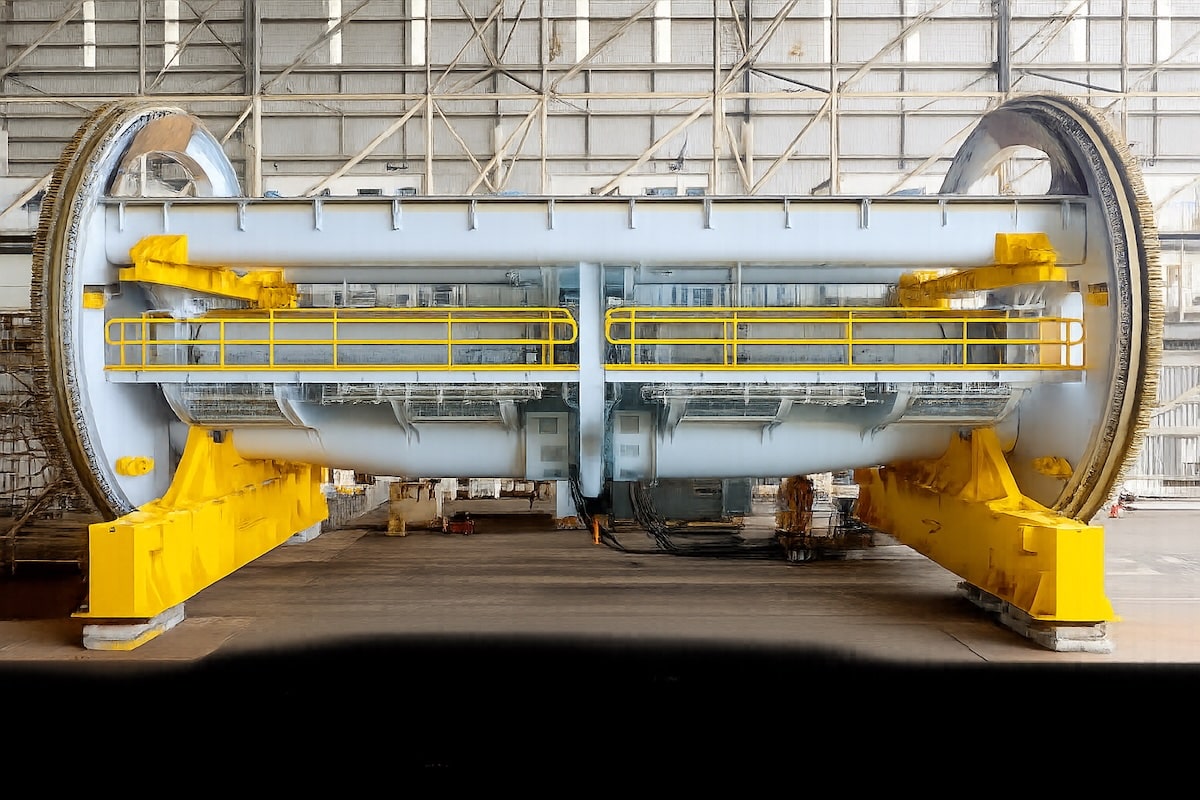
Motion is deploying in-situ machining services to Australian mine sites, bringing line-boring, flange facing and journal repair directly to assets such as car dumpers, draglines and large gearboxes that are too large or time-critical to dismantle. Using portable CNC and orbital machining rigs, technicians can restore bearing seats, slew rings and mill trunnions to tolerance without removing them from foundations or structural frames. The approach reduces crane lifts and transport of multi-tonne components, cutting outage durations and geotechnical or structural risk associated with repeated disassembly.
Technical Brief
- Portable machining rigs are configured to clamp directly onto car dumper barrels and support structures.
- Motion’s teams mobilise with self-contained power, tooling and metrology, avoiding reliance on site cranes or workshops.
- Technicians use on-site measurement to re-establish datum references before cutting, controlling concentricity and alignment tolerances.
- Machining sequences are planned around production schedules to keep conveyors, dumpers and loaders within allowable downtime windows.
- Eliminating heavy lifts reduces personnel exposure to suspended loads and working-at-height rigging activities.
- Fewer disassembly cycles lower risk of damaging grout beds, anchor bolts and embedded structural connections.
- In-situ work limits hot-work zones and exclusion areas to a small footprint around the component.
- Approach supports mine safety management systems by reducing task complexity and interfaces between mechanical, structural and electrical teams.
Our Take
Other recent coverage of Motion in Australia highlights investment in CNC machining and upgraded workshops in Mackay, Rutherford and Perth, suggesting this move to on-site machining is backed by a growing off-site precision capacity that can handle complex rebuilds and QA.
The longwall roof support overhaul piece from February 2026 shows Motion already delivering fully compliant, site-ready packages, so taking machining directly to site likely aims to cut turnaround and transport risk on similar heavy-equipment safety-critical work.
Prepared by collating external sources, AI-assisted tools, and Geomechanics.io’s proprietary mining database, then reviewed for technical accuracy & edited by our geotechnical team.
Related Articles

Related Industries & Products
Mining
Geotechnical software solutions for mining operations including CMRR analysis, hydrogeological testing, and data management.
Construction
Quality control software for construction companies with material testing, batch tracking, and compliance management.
CMRR-io
Streamline coal mine roof stability assessments with our cloud-based CMRR software featuring automated calculations, multi-scenario analysis, and collaborative workflows.
HYDROGEO-io
Comprehensive hydrogeological testing platform for managing, analysing, and reporting on packer tests, lugeon values, and hydraulic conductivity assessments.
GEODB-io
Centralised geotechnical data management solution for storing, accessing, and analysing all your site investigation and material testing data.