Geomechanics.io

  • Free Tools
Sign UpLog In

Geomechanics.io

Geomechanics, Streamlined.

© 2026 Geomechanics.io. All rights reserved.

Geomechanics.io

CMRR-ioGEODB-ioHYDROGEO-ioQCDB-ioFree Tools & CalculatorsBlogLatest Industry News

Industries

MiningConstructionTunnelling

Company

Terms of UsePrivacy PolicyLinkedIn
    Op-Ed
    Sustainability
    Projects

    Managed aquifer recharge for UK floods and droughts: design notes for engineers

    March 13, 2026|

    Reviewed by Joe Ashwell

    Managed aquifer recharge for UK floods and droughts: design notes for engineers

    First reported on New Civil Engineer

    30 Second Briefing

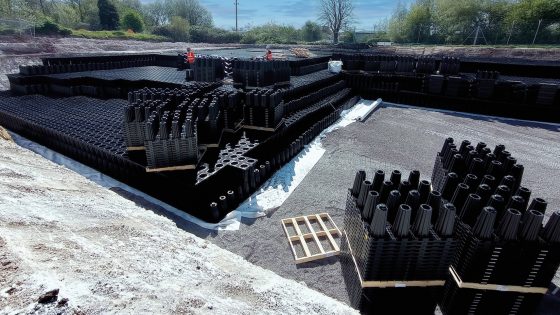
    Stormwater engineer David Schofield argues that large-scale managed aquifer recharge (MAR) using infiltration basins and recharge wells could simultaneously reduce UK surface-water flood peaks and bolster drought resilience. He points to schemes where storm flows are diverted from combined sewers into gravel-filled soakaways and deep injection wells, storing millions of cubic metres in permeable chalk and sandstone rather than building ever-larger attenuation tanks. For geotechnical and civil designers, MAR shifts focus towards subsurface storage capacity, soil permeability, groundwater mounding, and long-term water quality monitoring.

    Technical Brief

    • Managed aquifer recharge is framed as an alternative to escalating hard-defence schemes and river channelisation.
    • The op-ed flags potential clogging of infiltration structures by urban sediments, implying ongoing maintenance and pretreatment.
    • Water quality risks focus on hydrocarbons, metals and pathogens mobilised from urban runoff entering potable aquifers.

    Geotechnical Software for Modern Teams

    Centralise site data, logs, and lab results with GEODB-io, CMRR-io, and HYDROGEO-io.

    No credit card required.

    • Save and export unlimited calculations
    • Advanced data visualisation
    • Generate professional PDF reports
    • Cloud storage for all your projects

    Prepared by collating external sources, AI-assisted tools, and Geomechanics.io’s proprietary mining database, then reviewed for technical accuracy & edited by our geotechnical team.

    Related Articles
    Carbon Direct–Arca mineralisation deal: CDR and tailings stability notes for engineers
    Environmental
    2 days ago

    Carbon Direct–Arca mineralisation deal: CDR and tailings stability notes for engineers

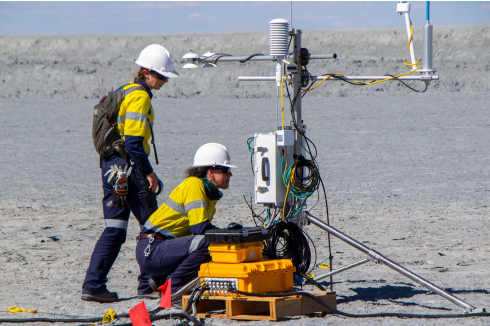
    Carbon Direct has partnered with Arca to co-develop and market Arca’s Industrial Mineralization (IMin) carbon dioxide removal credits, based on accelerated mineralisation of alkaline mine and steelmaking waste. The technology, validated in an 18‑month pilot with BHP at an active Australian mine, has already secured a 10‑year offtake from Microsoft for nearly 300,000 tonnes of CO₂ and an early prepurchase from Frontier. With 16.5 billion tonnes of suitable legacy waste and 3 billion tonnes produced annually, Arca targets durable (>10,000‑year) CO₂ storage with potential tailings stabilisation co‑benefits.

    Embedding biodiversity metrics: design and earthworks notes for engineers
    Environmental
    7 days ago

    Embedding biodiversity metrics: design and earthworks notes for engineers

    Construction clients and contractors are starting to embed biodiversity metrics alongside whole‑life carbon assessment, using quantified habitat units and standardised biodiversity net gain (BNG) calculators to track performance through design, procurement and delivery. Supply chains are being asked to evidence habitat creation, connectivity and species outcomes in product data sheets and contracts, linking materials choices and temporary works to measurable on‑site ecological change rather than qualitative statements. For geotechnical and civil teams, this signals future schemes where cut‑and‑fill, drainage, earthworks phasing and landscape design must all be optimised against both carbon and biodiversity targets.

    Natural England nutrients scheme: design implications for Stodmarsh drainage teams
    Environmental
    10 days ago

    Natural England nutrients scheme: design implications for Stodmarsh drainage teams

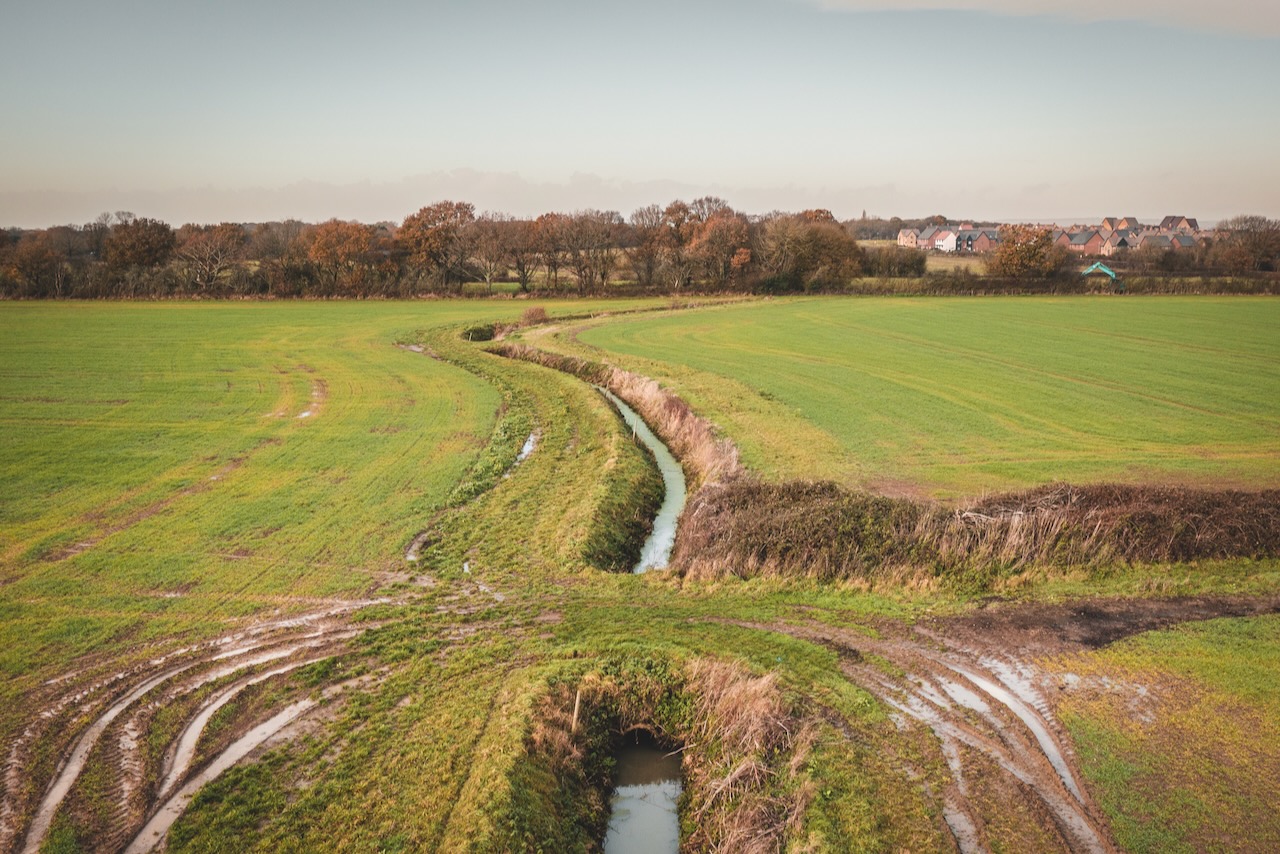
    Natural England has approved the Stodmarsh stream enhancement scheme under the Habitats Regulations, unlocking nutrient neutrality credits to support several thousand new homes around Ashford, Kent. The scheme centres on watercourse and wetland improvements in the Stodmarsh catchment to offset additional nitrogen and phosphorus loads from new foul drainage. Planners, drainage designers and geotechnical teams will need to integrate on-site attenuation, SuDS and connection strategies that align with the credit conditions tied to the Stodmarsh enhancement works.

    Related Industries & Products

    Construction

    Quality control software for construction companies with material testing, batch tracking, and compliance management.

    CMRR-io

    Streamline coal mine roof stability assessments with our cloud-based CMRR software featuring automated calculations, multi-scenario analysis, and collaborative workflows.

    HYDROGEO-io

    Comprehensive hydrogeological testing platform for managing, analysing, and reporting on packer tests, lugeon values, and hydraulic conductivity assessments.

    GEODB-io

    Centralised geotechnical data management solution for storing, accessing, and analysing all your site investigation and material testing data.

    AllGeotechnicalInfrastructureHazardsEnvironmental