Maaden’s US$110bn Saudi build-out: project and infrastructure notes for mine planners
Reviewed by Joe Ashwell
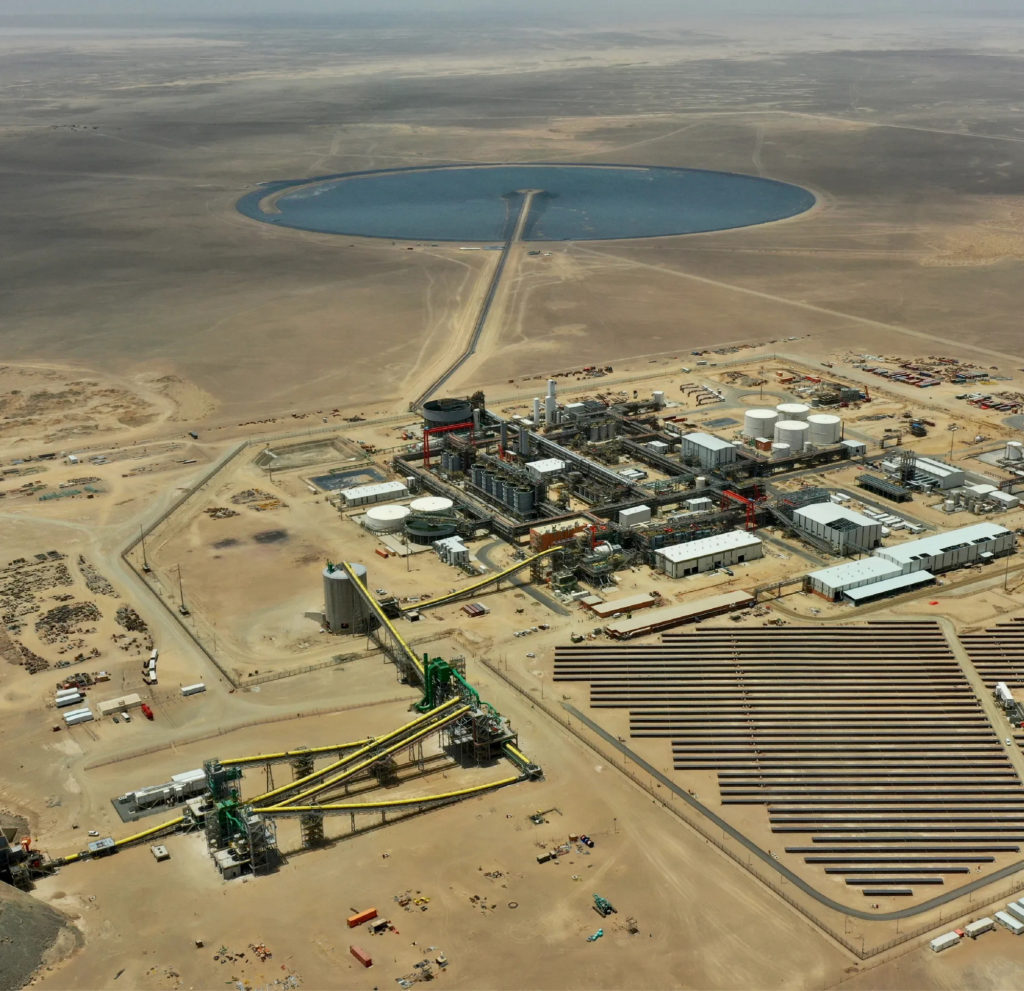
First reported on MINING.com
30 Second Briefing
Maaden will invest US$110 billion over the next decade to triple its phosphate and gold output and double aluminium production, centred on eight megaprojects including the US$22.7 billion Wa’ad Al Shamal phosphate complex and its US$7.7 billion Phosphate 3 expansion due in 2027. Current capacity stands at about 500,000 oz. gold and 7 million tonnes per year of phosphate and aluminium, with phosphate output from Wa’ad Al Shamal and Ras Al Khair alone rated at 6 million tonnes per year. The build-out will drive major new pipelines, ports and rail links in Saudi Arabia and deepen processing partnerships with both MP Materials/US DoD and Chinese firms.
Technical Brief
- Wa’ad Al Shamal’s initial capex of US$22.7 billion makes it among the world’s costliest mining complexes.
- Phosphate 3 at Wa’ad Al Shamal adds a further US$7.7 billion in expansion capital, completion targeted next year.
- Wa’ad Al Shamal processes ore mainly trucked or conveyed from the Al Khabra phosphate mine in northern Saudi Arabia.
- Combined nameplate phosphate capacity of Wa’ad Al Shamal and Ras Al Khair is 6 Mtpa, supporting large-scale fertiliser production chains.
- Maaden drilled four Saudi sites recently, delineating almost 8 million oz. of additional gold resources for future mine development.
- Aluminium output guidance from the Ras Al Khair smelter complex was 850,000–1,150,000 t for the last reported year.
- Gold production guidance for 2025 is 475,000–560,000 oz. from seven operating mines distributed across the kingdom.
- A JV with MP Materials and the US Department of Defense will build a rare earth refinery inside Saudi Arabia, anchoring critical minerals processing capacity.
Our Take
The nearly 8 million oz of added gold resources across four Arabian Shield sites in the 2026-01-13 item in our database underpins Maaden’s plan to triple its gold business, suggesting that the current growth targets are backed by recent exploration success rather than purely aspirational guidance.
The rare earth refinery JV between Maaden, MP Materials and the US Department of War (2025-11-19 entry) indicates that Saudi Arabia is positioning its rare earths and lithium ambitions as part of a US-aligned critical minerals supply chain, which may help de-risk offtake for the planned megaprojects relative to China-centric routes.
Within our 645 Mining stories, Maaden appears unusually active across multiple commodities (gold, aluminium, phosphate and rare earths), signalling that Saudi Arabia is one of the few jurisdictions trying to build an integrated multi-commodity value chain rather than a single-commodity play, which could change competitive dynamics for regional producers in the Middle East and Asia.
Prepared by collating external sources, AI-assisted tools, and Geomechanics.io’s proprietary mining database, then reviewed for technical accuracy & edited by our geotechnical team.
Related Articles


Related Industries & Products
Mining
Geotechnical software solutions for mining operations including CMRR analysis, hydrogeological testing, and data management.
Construction
Quality control software for construction companies with material testing, batch tracking, and compliance management.
CMRR-io
Streamline coal mine roof stability assessments with our cloud-based CMRR software featuring automated calculations, multi-scenario analysis, and collaborative workflows.
HYDROGEO-io
Comprehensive hydrogeological testing platform for managing, analysing, and reporting on packer tests, lugeon values, and hydraulic conductivity assessments.
GEODB-io
Centralised geotechnical data management solution for storing, accessing, and analysing all your site investigation and material testing data.