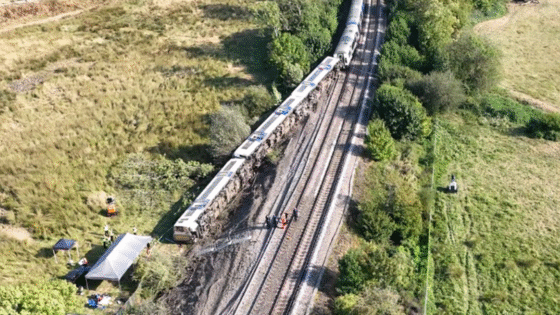
Lewes derailment: RAIB initial findings on heat, rail stress and track design
Reviewed by Tom Sullivan
First reported on New Civil Engineer
30 Second Briefing
A preliminary Rail Accident Investigation Branch report into last week’s Lewes train derailment confirms the inquiry is still examining whether high rail temperatures and associated track behaviour contributed to the incident. Investigators are assessing rail stress management, track geometry and maintenance records on the affected section, alongside train speed, wheel–rail interaction and signalling data. For infrastructure engineers, the case will be closely watched for any implications for hot-weather rail stressing regimes, continuous welded rail design margins and inspection protocols during heat events.
Technical Brief
- Failure investigation will rely heavily on post-incident track surveys, rail profile measurements and fastening integrity checks.
- Monitoring considerations include correlating rail temperature logs with any recorded lateral alignment change or gauge variation.
Our Take
The Rail Accident Investigation Branch features in multiple recent New Civil Engineer pieces in our database, including the Audenshaw freight derailment (January 2026) and the Bedford signal-passed-at-danger collision (June 2026), indicating sustained scrutiny of track condition and operational control failures across the UK network rather than isolated issues at Lewes.
Backlog in implementing RAIB safety recommendations, highlighted in the May 2026 article on still-outstanding national guidance, suggests that any Lewes findings related to asset condition, climate resilience or inspection regimes could take time to translate into uniform practice on similar infrastructure.
Prepared by collating external sources, AI-assisted tools, and Geomechanics.io’s proprietary mining database, then reviewed for technical accuracy & edited by our geotechnical team.
Related Articles


Related Industries & Products
Mining
Geotechnical software solutions for mining operations including CMRR analysis, hydrogeological testing, and data management.
Construction
Quality control software for construction companies with material testing, batch tracking, and compliance management.
CMRR-io
Streamline coal mine roof stability assessments with our cloud-based CMRR software featuring automated calculations, multi-scenario analysis, and collaborative workflows.
HYDROGEO-io
Comprehensive hydrogeological testing platform for managing, analysing, and reporting on packer tests, lugeon values, and hydraulic conductivity assessments.
GEODB-io
Centralised geotechnical data management solution for storing, accessing, and analysing all your site investigation and material testing data.