Geomechanics.io

  • Free Tools
Sign UpLog In

Geomechanics.io

Geomechanics, Streamlined.

© 2026 Geomechanics.io. All rights reserved.

Geomechanics.io

CMRR-ioGEODB-ioHYDROGEO-ioQCDB-ioFree Tools & CalculatorsBlogLatest Industry News

Industries

MiningConstructionTunnelling

Company

Terms of UsePrivacy PolicyLinkedIn
    Projects
    Research

    Korean study on Latin America lithium playbook: project strategy notes for miners

    December 13, 2025|

    Reviewed by Joe Ashwell

    Korean study on Latin America lithium playbook: project strategy notes for miners

    First reported on MINING.com

    30 Second Briefing

    Korean researchers led by Seungho Lee at Jeonbuk National University map five distinct lithium governance models in Chile, Argentina, Brazil, Bolivia and Mexico, linking them to commodity price cycles, geopolitical competition and the maturity of each country’s lithium industry. Chile’s hybrid regime with strong state oversight contrasts with Argentina and Brazil’s decentralised, market-led systems, Bolivia’s tightly controlled state-led model and Mexico’s largely rhetorical nationalisation stance. The two-stage decision-making framework signals that miners, battery manufacturers and state-backed investors must tailor project, offtake and JV strategies to country-specific political settlements rather than apply a single Latin America playbook.

    Technical Brief

    • Two-stage decision framework explicitly sequences assessment of global price/geopolitics, then domestic political settlement.
    • Comparative governance mapping covers five jurisdictions: Chile, Argentina, Brazil, Bolivia and Mexico.
    • Research draws on policy analysis and case-based comparison published in *The Extractive Industries and Society*.
    • Framework links intervention intensity to industry maturity, distinguishing nascent, emerging and established lithium sectors.
    • Study treats lithium as a strategic input to EV and grid-scale storage supply chains.
    • Demand linked to EV production is projected to increase by more than 300% by 2030.

    Our Take

    Lithium and other battery metals now account for a notable slice of our 41 Policy stories, signalling that regulatory and social-licence frameworks in Chile, Argentina and Bolivia are becoming as material to project viability as brine chemistry or processing technology.

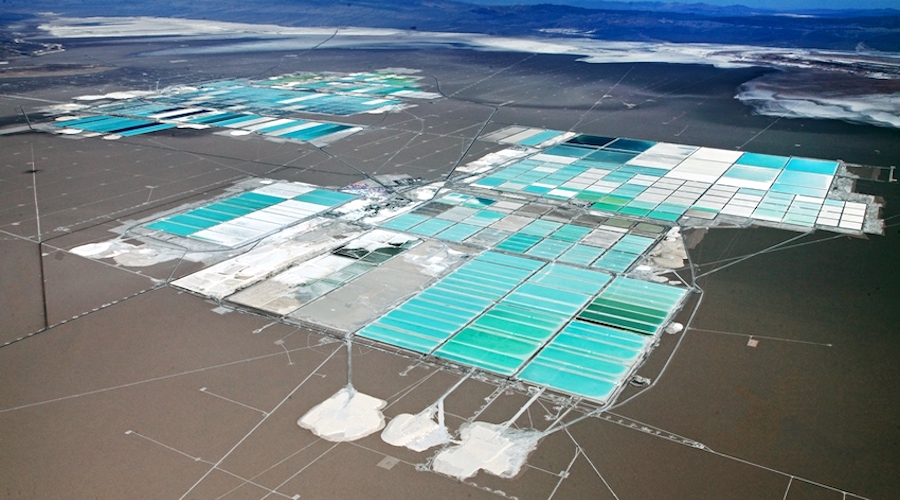
    A forecast 300% rise in lithium demand by 2030 puts additional strategic weight on Atacama’s Salt Flat and other Latin American salars, likely strengthening host-government leverage in royalty, water-use and community-benefit negotiations with operators such as SQM.

    With British Columbia also flagged in this piece alongside Latin America, policymakers and project developers in BC’s hard‑rock lithium space can treat the Korean research as a proxy case study for how Asian offtakers may approach ESG, permitting and state-participation risk across different jurisdictions.

    Geotechnical Software for Modern Teams

    Centralise site data, logs, and lab results with GEODB-io, CMRR-io, and HYDROGEO-io.

    No credit card required.

    • Save and export unlimited calculations
    • Advanced data visualisation
    • Generate professional PDF reports
    • Cloud storage for all your projects

    Prepared by collating external sources, AI-assisted tools, and Geomechanics.io’s proprietary mining database, then reviewed for technical accuracy & edited by our geotechnical team.

    Related Articles

    Heathrow third runway policy move: design and consent notes for engineers
    Policy
    about 2 hours ago

    Heathrow third runway policy move: design and consent notes for engineers

    The UK government has issued a revised Draft Airports National Policy Statement that advances Heathrow Airport Ltd’s proposal for a third runway, signalling renewed political backing for major expansion at the hub. The framework is a key step in the Development Consent Order process under the Planning Act 2008, setting out need, policy tests and assessment criteria for new runway capacity in the South East. Civil and geotechnical teams can now expect more detailed work on ground conditions, surface access corridors and mitigation of construction impacts around the existing two-runway platform.

    ICE Carbon Management Plan: practical implications for civil engineers
    Policy
    1 day ago

    ICE Carbon Management Plan: practical implications for civil engineers

    Delivery of the Institution of Civil Engineers’ Carbon Management Plan is focusing on quantifying and cutting operational emissions from its estate, events and digital activities, with trustees targeting Scope 1, 2 and key Scope 3 sources. Current priorities include metered energy reduction in offices, low‑carbon procurement for facilities management, and tighter travel policies for conferences and committee meetings. For practising engineers, the approach signals stronger expectations on whole‑life carbon reporting, supplier data quality and alignment with PAS 2080 and emerging UK net zero requirements.

    ICE professional registrations 2025: what it means for UK project teams
    Policy
    1 day ago

    ICE professional registrations 2025: what it means for UK project teams

    ICE is bucking the national trend of falling engineering registrations, remaining one of the strongest performing professional institutions in the UK in 2025. While other UK engineering bodies report year‑on‑year declines in new chartered and incorporated engineers, ICE is recording growth in professional registrations across its core civil, structural and infrastructure disciplines. For consultants, contractors and asset owners, this signals a deeper pool of professionally accredited civil engineers for roles tied to NEC4 delivery, safety‑critical design sign‑off and UK-SPEC/CEng competence requirements.

    Related Industries & Products

    Mining

    Geotechnical software solutions for mining operations including CMRR analysis, hydrogeological testing, and data management.

    CMRR-io

    Streamline coal mine roof stability assessments with our cloud-based CMRR software featuring automated calculations, multi-scenario analysis, and collaborative workflows.

    HYDROGEO-io

    Comprehensive hydrogeological testing platform for managing, analysing, and reporting on packer tests, lugeon values, and hydraulic conductivity assessments.

    GEODB-io

    Centralised geotechnical data management solution for storing, accessing, and analysing all your site investigation and material testing data.

    AllGeotechnicalMiningInfrastructureMaterialsHazardsEnvironmentalSoftwarePolicy